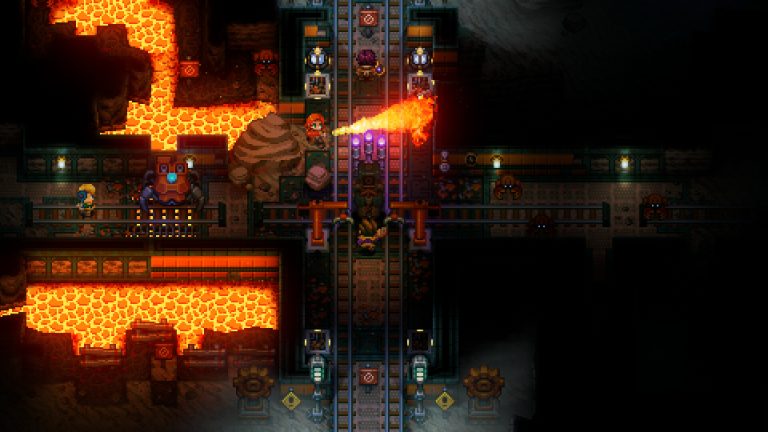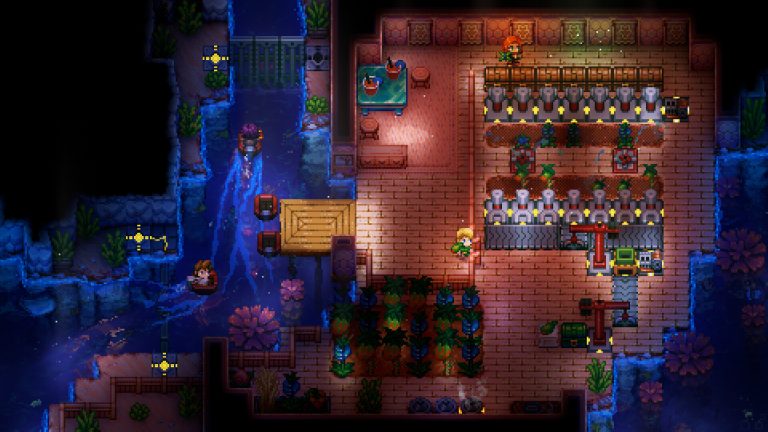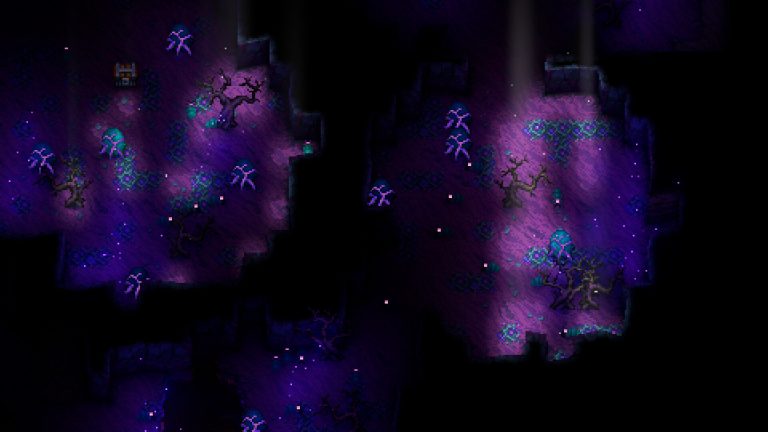
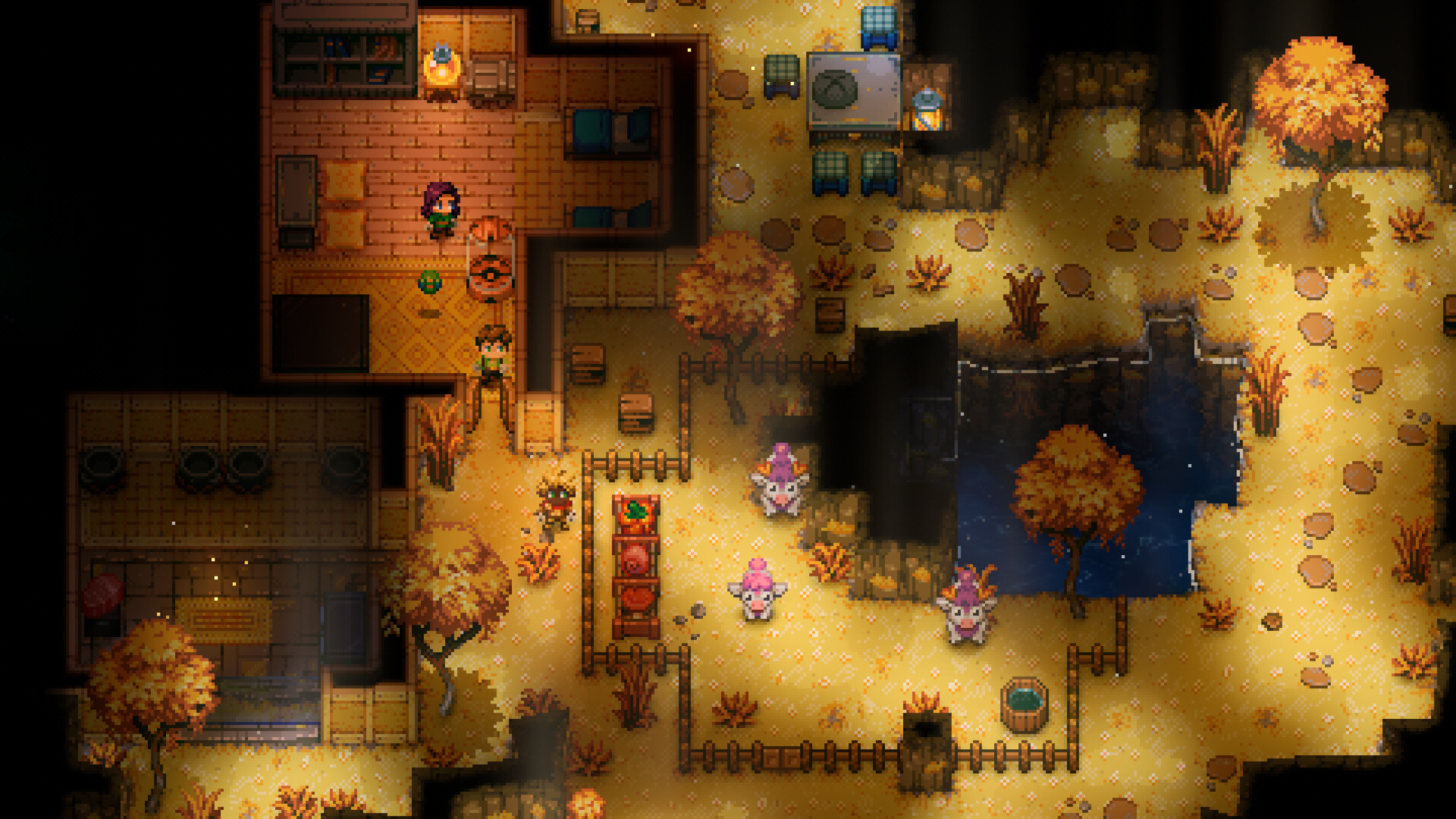
Mining is the backbone of progression in Core Keeper. Almost every meaningful upgrade you craft (tools, armor, weapons, and the crafting stations themselves) starts as a chunk of ore embedded in a wall somewhere underground. The catch is that each ore lives in its own biome, hides inside a specific kind of block, and demands a particular smelter to turn it into a usable bar. This guide walks through every ore in the game, where to dig for it, and what you need to process it.
How mining works in Core Keeper
You break wall blocks by swinging at them with a pickaxe. Every wall has its own health and a “damage reduction” value, and what matters is your mining damage stat. If your mining damage is equal to or below a wall’s damage reduction, you simply can’t break it. Instead of progress, you’ll see the game tell you that your mining damage is too low. That is the core gate behind ore progression: deeper biomes have tougher walls, so you need better pickaxes to keep digging.
Two things push your mining damage up. The first is your pickaxe, which is the main source by a wide margin. The second is the Mining skill, which increases your mining damage by +1 per level, up to a maximum of +100 at level 100, just by mining over time. Ores themselves are easy to spot once you know the tell: most of them appear as white sparkles on the dark, unlit parts of your screen, embedded in the surrounding block. Shine your character’s light over a wall and the glittering nodes are your targets.
Ore tiers and where to find them
Ores roughly follow the order you explore the world’s biomes, so the list below doubles as a progression path. Copper is your starting metal; galaxite and beyond are deep, late-game materials.
- Copper Ore — Found abundantly in The Undergrounds (the Dirt Biome you spawn in), commonly in dirt walls, with smaller amounts turning up in the Clay Caves and Forgotten Ruins. This is your first metal and the basis of your starting tools.
- Tin Ore — Found in the Clay Caves, embedded in Clay Blocks. Combined with copper it opens up early upgraded gear.
- Iron Ore — Found in the Forgotten Ruins, embedded in Stone Blocks. A major step up that unlocks stronger tools, armor, and stations.
- Gold Ore — Spread across several biomes: Clay Caves, Forgotten Ruins, Azeos’ Wilderness, the Sunken Sea, and the Desert of Beginnings, plus rarely in The Undergrounds. Gold is a softer metal aimed at blacksmithing and jewelry rather than top-tier tools.
- Scarlet Ore — Found in Azeos’ Wilderness, embedded in Grass Blocks. A mid-game metal behind a noticeable power jump.
- Octarine Ore — Found in the Sunken Sea, embedded in Beach Blocks. High-tier gear material for the mid-to-late game.
- Galaxite Ore — Found in the Desert of Beginnings, embedded in Desert Blocks. One of the late-game metals and a gateway to the strongest crafting.
- Solarite Ore — Found in the Shimmering Frontier, embedded in Crystal Blocks. A deep, late-game ore.
- Pandorium Ore — The odd one out: it is not embedded in walls like the others. Instead it’s primarily dropped by Pandorium Crystals (found in The Passage) and by Pandorium Ore Boulders.
Worth knowing: rare ore boulders spawn throughout the world and contain a large stockpile of their respective ore (the wiki lists 1,800 ore per boulder), making them a huge windfall if you stumble onto one. Solarite has its own dedicated boulders as well.
Ore, biome and smelter reference table
| Ore | Biome | Embedded in | Smelter |
|---|---|---|---|
| Copper | The Undergrounds (also Clay Caves / Forgotten Ruins in smaller amounts) | Dirt walls | Furnace |
| Tin | Clay Caves | Clay Blocks | Furnace |
| Iron | Forgotten Ruins | Stone Blocks | Furnace |
| Gold | Clay Caves, Forgotten Ruins, Azeos’ Wilderness, Sunken Sea, Desert of Beginnings (rare in Undergrounds) | Various blocks | Smelter Kiln |
| Scarlet | Azeos’ Wilderness | Grass Blocks | Smelter Kiln |
| Octarine | The Sunken Sea | Beach Blocks | Smelter Kiln |
| Galaxite | Desert of Beginnings | Desert Blocks | Fury Forge |
| Solarite | Shimmering Frontier | Crystal Blocks | Fury Forge |
| Pandorium | The Passage (from Pandorium Crystals) and ore boulders | Not wall-embedded | Fury Forge |
Smelting ore into bars
Raw ore isn’t directly useful for most recipes; you first smelt it into bars at the right station. Core Keeper splits this across three metal smelters, each handling a tier band of ores:
- Furnace — turns Copper, Tin, and Iron Ore into their respective bars. This is your early-game workhorse.
- Smelter Kiln — turns Gold, Scarlet, and Octarine Ore into bars. Build this as you reach the mid-game biomes.
- Fury Forge — turns Galaxite, Solarite, and Pandorium Ore into bars for the deepest crafting.
(There’s also a Glass Smelter, but that one is for turning sand into glass rather than smelting metal ore.) Once you have bars, you take them to the appropriate workbench or anvil to craft upgraded tools, armor, weapons, and the next tier of stations. Gold specifically is described as a soft metal for blacksmithing and jewelry, so plan to feed it into a Jewelry Workbench for accessories rather than expecting top-tier weapons from it.
Which pickaxe you need
Because deeper walls have higher damage reduction, you generally craft each pickaxe tier from the ore you just unlocked and use it to reach the next one. Base mining damage climbs sharply as you go: the Copper Pickaxe sits at +42 base mining damage, the Iron Pickaxe at +180, the Scarlet Pickaxe at +289, the Octarine Pickaxe at +417, and the Galaxite Pickaxe at +576. The practical takeaway is simple: if a wall won’t break, you usually need to come back with the next pickaxe up rather than grinding the same swing. Topping up your Mining skill helps at the margins, but the pickaxe tier does the heavy lifting.
If you’re working through the wider game alongside mining, our Core Keeper progression guide lays out the biome-by-biome order, the bosses guide covers the gatekeepers between zones, and the best weapons and builds guide helps you spend all that smelted metal wisely.
FAQ
What is the rarest ore in Core Keeper?
The late-game ores are the hardest to obtain because they sit behind the toughest walls and deepest biomes. Pandorium is unusual in that it isn’t mined from walls at all; it mostly comes from Pandorium Crystals in The Passage and from rare Pandorium Ore Boulders, which makes it feel scarcer than the wall-embedded metals.
Why can’t I mine certain walls?
Each wall has a damage reduction value, and if your mining damage is equal to or lower than it, you deal no damage and get a “mining damage too low” message. The fix is almost always a higher-tier pickaxe; leveling the Mining skill (+1 mining damage per level, up to +100 at level 100) adds a smaller secondary boost.
How do I turn ore into bars?
Smelt it at the matching station. The Furnace handles copper, tin, and iron; the Smelter Kiln handles gold, scarlet, and octarine; and the Fury Forge handles galaxite, solarite, and pandorium. You then craft with the bars at workbenches and anvils.
Mining is far more efficient as a group, since you can split biomes, share ore boulder finds, and keep a base smelting while others dig. If you want a persistent world that’s always online for your group, a dedicated Core Keeper server keeps your map running around the clock. For setup help, our Core Keeper server documentation walks you through getting one configured.
Ready to play?
Run your own Core Keeper server with XGamingServer
Spin up an always-on Core Keeper server your friends can join in minutes — no port-forwarding, no tech headaches.