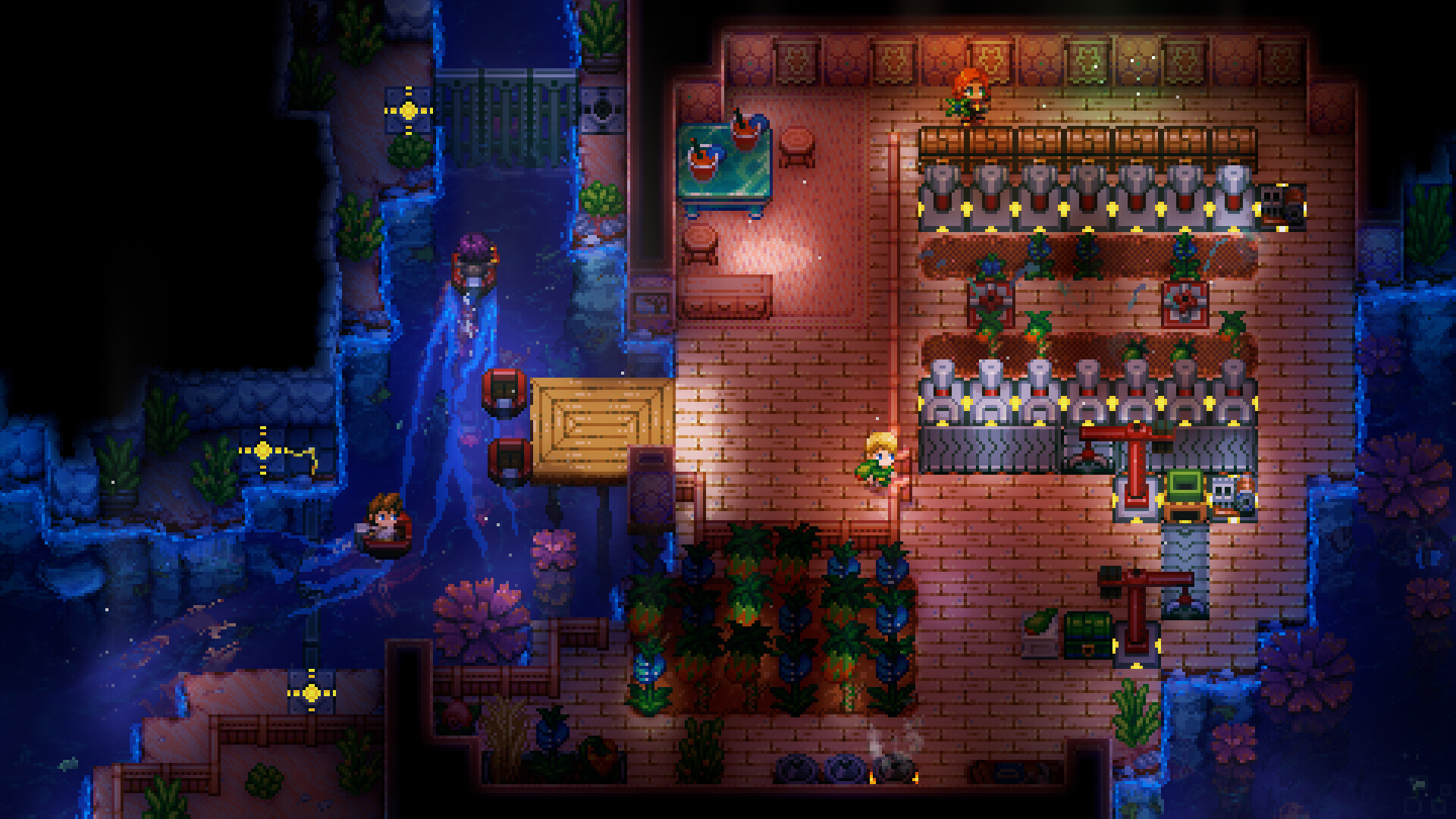
Combat in Core Keeper rewards commitment. The game splits weapons into four families, each tied to its own skill and talent tree, and the items you craft scale through the same ore progression that drives the rest of your run. This guide breaks down how the weapon types differ, how the skill system pushes you toward a build, and which weapons are worth chasing at each stage. Every mechanic below is drawn from the official Core Keeper Wiki.
The four weapon families
Core Keeper has roughly 70 weapons spread across four categories: melee, range, magic and summon. Each deals a distinct damage type and is amplified by its own skill, so your gear and your skill points should point in the same direction.
- Melee (around 33 weapons) deal physical melee damage in close to mid-range. This family covers swords, daggers, spears and other close-quarters tools.
- Range (around 22-23 weapons) fire projectiles. Bows fire arrows and guns fire fast bullet-type projectiles. They deal physical range damage.
- Magic (10 weapons, including 9 staves) deal magic damage and consume mana rather than ammo.
- Summon (6 weapons) spawn temporary minions that fight for you using mana, with each minion type having its own attack pattern.
Most weapons also carry a secondary use, triggered by holding the use button. Bows charge into a Strong Shot or Strong Multishot, crossbows fire a Piercing Shot that passes through enemies, and several staves and summon tomes have their own held actions. Learning the secondary is often the difference between clearing a pack and getting cornered.
Skills and talent trees
There are 12 skills in total: Mining, Running, Melee combat, Vitality, Crafting, Range combat, Gardening, Fishing, Cooking, Magic, Summoning and Explosives. The combat skills all scale identically: Melee combat, Range combat, Magic and Summoning each add +0.5% to their respective damage per level, up to +50% at level 100.
You gain a skill level by using it (one experience per successful melee swing, per range or magic hit, or per minion hit for summoning). Every 5 levels grants a talent point to spend in that skill’s talent tree. Talents are organized into tiers, and you unlock the next tier by investing 5 points in lower-tier nodes. Because damage scaling is per-skill, spreading points across every combat style is far weaker than committing to one. Pick a primary weapon family early and pour swings into it.
How weapons scale through progression
Weapon power tracks the ore and crafting-station progression. Anvils and workbenches advance through the material tiers: Copper, Tin, Iron, Scarlet, Octarine, Galaxite and Solarite, with later stations able to craft earlier-tier recipes too. As a rule, higher-tier ore means higher base damage, so your weapon upgrades line up with the bosses and biomes that gate each ore. (For where each ore lives, see the mining guide linked below.)
The table below summarizes representative weapons by family. Treat it as a progression map rather than a strict tier list. Exact numbers shift with patches, so use it to understand relative power and the kind of secondary each weapon brings.
| Family | Early game | Mid game | Late game | Notable trait |
|---|---|---|---|---|
| Melee (sword) | Copper/Tin tier swords | Scarlet / Octarine swords | Galaxite Sword | Best reach and per-hit damage of the melee types |
| Melee (dagger) | Rusty Dagger | Ritual Dagger | Galaxite Dagger | Fast (3.33 attacks/sec) with built-in crit chance; nudges you forward on swing |
| Range (bow) | Wood Bow, Iron Bow | Octarine Bow | Higher-tier bows/crossbows | Charged Strong Shot / Multishot secondaries |
| Range (crossbow) | Early crossbows | — | Solarite Crossbow | Piercing Shot passes through multiple enemies |
| Magic (staff) | Scholar’s Staff | Arcane Staff, Fireball Staff | High-tier staves | Spend mana, no ammo; Fireball Staff applies burn |
| Summon (tome) | Tome of the Dark / Deep / Dead | — | Higher-tier tomes | Minions (60s base lifespan) fight while you reposition |
Build styles
Sword melee (the all-rounder)
Swords are the most forgiving entry point: 14 exist across the tiers, they hit hard per swing, and they have the best reach of the melee weapons. Pair a tier-appropriate sword with the Melee combat tree and Vitality so you can trade blows. The Galaxite Sword is a standout late-game craft, and its base damage has been buffed across recent updates. This is the build to default to if you’re unsure.
Dagger crit melee
Daggers trade reach and per-hit damage for raw attack speed and built-in critical hit chance. The Galaxite Dagger, for example, attacks at 3.33 per second and grants +14% critical hit chance, while the Ritual Dagger adds both crit chance and crit damage. Daggers also shove you forward slightly on each swing, which suits aggressive, in-your-face play. Stack critical-hit and melee attack-speed accessories to lean into the playstyle, and respect the shorter range against bosses with big telegraphs.
Ranged kiter
Range weapons let you fight from safety, which is invaluable against hard-hitting bosses. Bows reward charging: the Wood Bow’s Strong Shot deals double damage, the Iron Bow’s Strong Multishot adds up to two extra arrows, and the rare Octarine Bow’s Multishot adds up to three. Crossbows instead offer Piercing Shot, with the Solarite Crossbow punching through whole lines of enemies. Invest in Range combat and keep ammo stocked. Note that some range buffs are physical-range specific, so check that your accessories match your weapon type.
Mage
Magic weapons swap ammo for mana, so the build hinges on mana sustain alongside the Magic skill. Staves like the Fireball Staff add an on-hit burn, giving you damage-over-time on top of the hit. It’s a strong ranged alternative if you’d rather manage mana than arrows, and it scales well once you’ve sunk talent points into the Magic tree.
Summoner
Summoners let minions do the fighting. Tomes spend mana to spawn a minion with its own attack: the Tome of the Dark summons a bat that fires projectiles, the Tome of the Deep an orbiting jellyfish that deals contact damage, and the Tome of the Dead a skeleton melee fighter. Minions have a 60-second base lifespan and scale with the Summoning skill plus minion-boosting gear. The tome’s primary use commands minions to move or focus a target, so it plays like a pet-management style rather than direct attacking.
Frequently asked questions
What is the best weapon in Core Keeper?
There isn’t one universal best weapon, because each family scales off its own skill. For a forgiving all-round melee pick, a high-tier sword such as the Galaxite Sword is excellent. If you prefer speed and crits, daggers like the Galaxite Dagger shine; for safety, a high-tier bow or the Solarite Crossbow keeps you at range. The “best” weapon is the one your skill points and accessories are built around.
Should I spread skill points or focus one combat style?
Focus. Each combat skill only buffs its own damage type (up to +50% at level 100), so splitting points across melee, range and magic dilutes all of them. Pick a primary family, level it by using it, and spend talent points down that one tree.
How do weapons get stronger as I progress?
Weapon tiers follow the ore and crafting-station progression: Copper, Tin, Iron, Scarlet, Octarine, Galaxite and Solarite. Higher-tier ore generally means higher base damage, and later anvils can still craft earlier recipes. Combine better weapons with skill levels and damage-boosting armor and accessories to multiply your output.
Keep digging deeper
Your weapon is only half the picture. Pair this with the Core Keeper bosses guide to know what each build will face, the progression guide for the right order to tackle the world, and the mining and ores guide to find the materials your late-game weapons need. Food matters too, so the farming guide and fishing guide cover the buffs that round out a combat build.
Builds also click into place faster with friends each maining a different weapon family. If you want a persistent world where the group can grind skills and farm bosses together at any hour, you can spin up a dedicated Core Keeper multiplayer server, and the Core Keeper setup docs walk through getting it configured.
Ready to play?
Run your own Core Keeper server with XGamingServer
Spin up an always-on Core Keeper server your friends can join in minutes — no port-forwarding, no tech headaches.