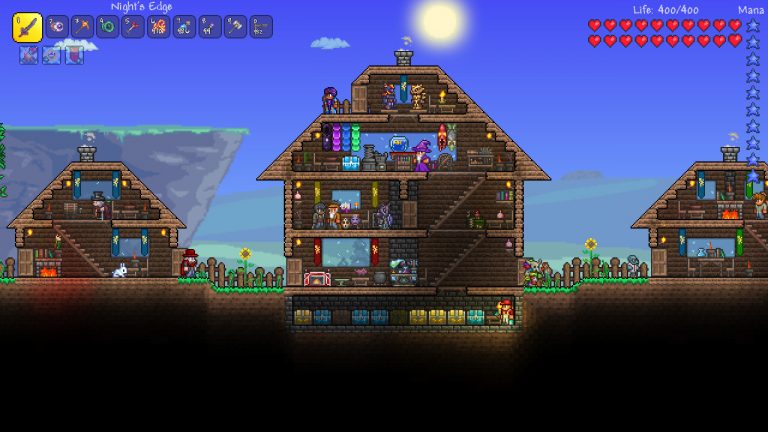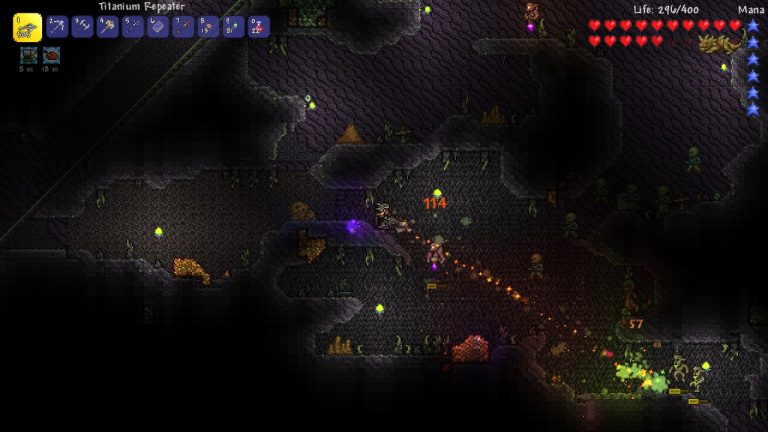
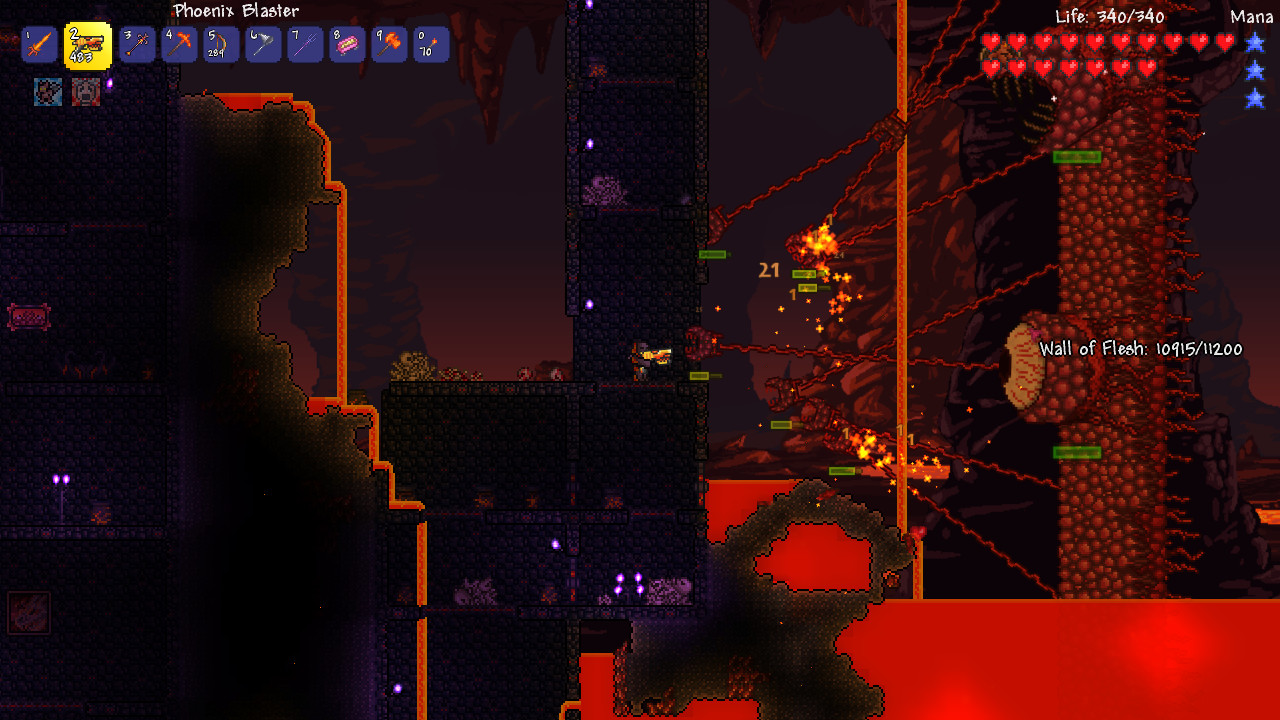
Terraria’s world is divided into distinct biomes, each with its own blocks, music, background, enemies, and loot. Knowing what lives where, and which biomes actively spread, is the difference between a thriving world and one slowly swallowed by purple wasteland or red gore. This guide walks through every major biome, what spawns in it, and how the infectious biomes behave once you enter Hardmode.
How biomes are determined
Most biomes are defined by a tile count within a detection area around the player, measured roughly 84 tiles to each side and a few dozen tiles above and below. Cross the threshold of themed blocks and the music, background, and enemy spawns switch over. The Forest is the default biome that fills any area not claimed by another. Some representative thresholds from the official wiki:
- Corruption or Crimson: at least 300 themed tiles
- The Hallow: at least 125 themed tiles
- Desert: at least 1,500 Sand, Hardened Sand, or Sandstone blocks
- Jungle: a minimum of 140 Jungle-related tiles
- Glowing Mushroom: 100 mushroom tiles (161 for the underground background)
Forest, Desert, Snow, and Ocean
The Forest is your starting biome and the default. The Desert consists of sand and cacti, with Vultures and Antlions in pre-Hardmode and Mummies in Hardmode; a Sandstorm event can trigger when wind speed exceeds 30 mph, spawning special enemies. The Underground Desert beneath it holds its own enemies and the rare Desert Key. The Snow biome features ice and snow blocks with enemies like Ice Slimes and Ice Bats, extending into an Ice biome in the cavern layer. At the world’s two edges sit the Ocean biomes, full of water and sand with aquatic foes and exclusive drops such as the Reaver Shark.
The evil biomes: Corruption vs Crimson
Every world generates with one of two mutually exclusive evil biomes. The Corruption is a dark purple wasteland of Corrupt grass, Corrupt Trees, and thorny bushes, with vertical chasms lined in Ebonstone that descend to Demon Altars and Shadow Orbs. Breaking Shadow Orbs yields gear like the Musket, Ball O’ Hurt, Vilethorn, and Band of Starpower, and breaking enough can summon the Eater of Worlds. Common enemies include Eaters of Souls and Devourers.
The Crimson is the fleshy red alternative, built from Crimstone, Crimson grass, and Crimtane ore with red water. Its underground Crimson Hearts replace Shadow Orbs and drop items such as The Undertaker (a revolver), The Rotted Fork, Crimson Rod, and the Panic Necklace. Breaking Hearts can summon the Brain of Cthulhu. Pre-Hardmode enemies include Face Monsters, Crimera, and Blood Crawlers. Both evil biomes actively spread, which is covered below.
The Hallow
The Hallow does not exist until Hardmode. When you defeat the Wall of Flesh for the first time, a diagonal stripe of Hallow generates from the surface to the bottom of the world. It is a pastel, fairytale biome with cyan grass, multicolored trees, a rainbow skyline, and blocks like Pearlstone and Pearlsand. Enemies include Unicorns, Pixies, and nighttime Gastropods. Crucially, the Hallow spreads like the evil biomes but cannot spread through mud, so it will not consume Jungles or Glowing Mushroom biomes, making it a useful buffer.
Jungle and Underground Jungle
The surface Jungle is mud with Jungle grass, vines, mahogany trees, and bamboo. Enemies include Jungle Slimes, Jungle Bats, Piranhas, and Snatchers, with tougher Hardmode additions like Angler Fish and Angry Trappers. The Underground Jungle at cavern depth is one of the most rewarding areas in the game: it contains Bee Hives (home to Queen Bee), Jungle Shrines with loot, and in Hardmode it grows Plantera’s Bulbs (which summon the boss Plantera) and Life Fruit, a permanent +5 health item that lets you push your maximum life from 400 up to 500. Defeating Plantera also slows evil and Hallow spread by 50%.
The Dungeon
The Dungeon is guarded by the Old Man, who transforms into Skeletron at night when you select the Curse option. You must defeat Skeletron to enter safely; venturing deep beforehand spawns nearly invincible Dungeon Guardians. Inside, pre-Hardmode enemies include Cursed Skulls, Dark Casters, Angry Bones, and Spike Balls. Locked Gold Chests (opened with Golden Keys) hold items like the Muramasa and Cobalt Shield, and the Water Bolt can be found on shelves. After Plantera dies, far deadlier enemies appear, including Diabolists, Necromancers, Paladins, and Bone Lee, along with biome chests opened by keys like the Jungle Key and Frozen Key.
The Underworld
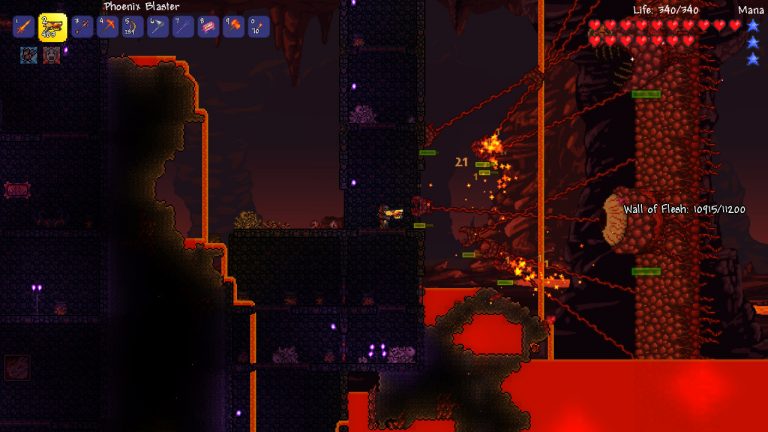
The Underworld is the deepest layer, a hellscape of Ash Blocks, lava pools, Hellstone, and Obsidian Brick Ruined Houses containing Hellforges and Shadow Chests (opened with a Shadow Key) that hold the Sunfury, Flower of Fire, Dark Lance, and Hellwing Bow. Enemies include Demons, Voodoo Demons, Fire Imps, Lava Slimes, Hellbats, and Bone Serpents, with Red Devils arriving after the mechanical bosses. This is where the Wall of Flesh is summoned by dropping a Guide Voodoo Doll into lava; defeating it flips the world into Hardmode.
Glowing Mushroom biome
Underground Glowing Mushroom biomes generate naturally as large, glowing caverns of Mushroom grass and Giant Glowing Mushrooms on mud, home to enemies like the Mushi Ladybug, Fungi Bulb, and Anomura Fungus. Surface versions do not generate naturally; you create one by planting Mushroom Grass Seeds on mud above ground, which is required to recruit the Truffle NPC in Hardmode.
Biome reference table
| Biome | Signature blocks | Notable spawns / loot |
|---|---|---|
| Forest | Dirt, grass (default) | Slimes, Zombies; starting biome |
| Corruption | Ebonstone, Corrupt grass | Eater of Souls; Shadow Orbs, Eater of Worlds |
| Crimson | Crimstone, Crimson grass | Face Monster, Crimera; Crimson Hearts, Brain of Cthulhu |
| The Hallow | Pearlstone, Pearlsand | Unicorn, Pixie; Hardmode-only, cannot spread on mud |
| Jungle | Mud, Jungle grass | Queen Bee; Plantera, Life Fruit underground |
| Dungeon | Dungeon Brick | Skeletron gate; Muramasa, Water Bolt, biome chests |
| Underworld | Ash, Hellstone | Demon, Bone Serpent; Wall of Flesh, Shadow Chests |
| Desert | Sand, Sandstone | Antlion, Mummy; Sandstorm event, Desert Key |
| Glowing Mushroom | Mushroom grass on mud | Mushi Ladybug; Truffle NPC on surface variant |
Biome spread and how to stop it
Corruption, Crimson, and Hallow are the three infectious biomes. Before Hardmode, spread is extremely limited, mostly grass and thorny bushes converting adjacent tiles. After you defeat the Wall of Flesh, spread accelerates dramatically: infectious tiles can convert susceptible grass, stone, mud, ice, sand, and sandstone within a few tiles in any direction. Thorny bushes, Mushroom grass, and Ash grass cannot be converted at any stage.
To contain spread you need a barrier of non-convertible blocks or open space at least three tiles wide, though thorns can bridge pure air gaps. Defeating Plantera halves the spread rate, and the Clentaminator with the appropriate solution lets you manually purify infected ground.
Frequently asked questions
Does every world have both Corruption and Crimson?
No. Corruption and Crimson are mutually exclusive evil biomes, so each world generates with only one of the two. The choice can be made when creating a world on modern versions, otherwise it is random.
When does the Hallow appear?
The Hallow only generates when you defeat the Wall of Flesh and the world enters Hardmode. At that moment a diagonal stripe of Hallow is created from the surface to the bottom of the world, alongside a new evil biome stripe.
How do I stop Corruption or Crimson from spreading?
Dig containment trenches at least three tiles wide using non-convertible blocks, defeat Plantera to halve the spread rate, and use the Clentaminator with Green Solution to purify affected tiles. Note that mud and Jungle areas resist Hallow spread entirely.
Biomes are also where your build choices matter most. If you want to explore an entire world with friends, defend the Jungle from spread together, and tackle Plantera or the Wall of Flesh as a team, it helps to play on an always-on Terraria server so the same world keeps progressing whether you are online or not. For setup walkthroughs, see the Terraria server documentation.
Related reading: Terraria Housing Guide: Valid House Requirements for NPCs, How to Beat the Wall of Flesh in Terraria, and How to Beat Plantera in Terraria.
Ready to play?
Run your own Terraria server with XGamingServer
Spin up an always-on Terraria server your friends can join in minutes — no port-forwarding, no tech headaches.