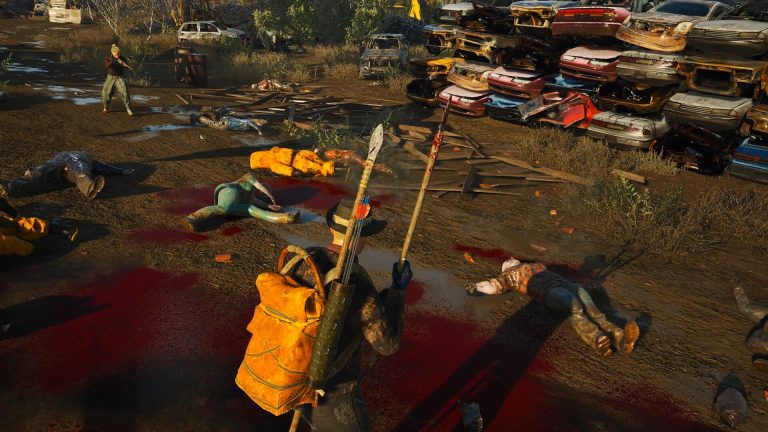
On the island, ammo and looted cans run out fast, but the rivers, forests and coastline never do. Learning to fish, hunt and cook is what turns a starving prisoner into a self-sufficient survivor in SCUM. This guide covers the verified mechanics of catching fish, tracking and butchering animals, cooking over a fire, and keeping your food and water from killing you. SCUM is in active development, so exact recipes, timers and item lists shift between patches, treat the qualitative descriptions here as the reliable part and check the in-game crafting menu for current numbers.
Fishing: Rods, Bait and the Reeling Mini-Game
Rod fishing in SCUM requires five components: a rod, a reel, a line, a hook and a floater. Every one of these has both an improvised (craftable) version and a manufactured version you can loot or trade for. Improvised gear gets you started; better manufactured lines and reels handle bigger fish without snapping. Lines range from a thin 0.12 mm nylon up to a thick 0.5 mm nylon, plus the improvised fishing line, and hooks come in small, medium, treble, double and improvised varieties. You also need bait, of which there are many types (worms, corn, bread, meat, cheese, insects and fish-based options among them), and different baits work better on different species.
Once your rod is assembled and equipped, fishing happens in two phases. First, casting: hold left click and the longer you hold, the farther the line flies. Then watch your floater. When it gets pulled under the water, click to set the hook. If a fish has bitten, you enter the reeling phase, a tension mini-game shown as a bar on the side of the screen. Use the scroll wheel to manage that tension, scroll down to reel the fish closer, scroll up to give it line, and hold shift to reel faster. The key rule: if you stay in the red zone too long, the line snaps and you lose your line, floater, hook and bait. Patience beats greed.
What you catch depends on time of day, the size of the water body, your bait and your line quality. There are roughly ten freshwater species (Carp, Pike, Bass and Catfish among them) and a handful of saltwater species such as Tuna and Dentex out on the coast. Note that a passive “Fish Trap” item exists in the files but, per the wiki, is currently not obtainable through normal gameplay, so don’t plan your food strategy around it. Rod fishing is the reliable method.
Hunting: Tracking, Focus Mode and Dangerous Animals
Hunting in SCUM is an active tracking process, not just shooting whatever wanders by. It starts with your ears: listen for an animal sound, then move toward where it came from. Hold right click to enter focus mode, which lets you scan the ground for tracks and clues (usually flagged with a blue/white prompt). Interact with a track to trigger the next animal sound, and repeat the find-a-track loop successfully about three to five times. Do that and the animal spawns in close enough to kill, skin and harvest. Be aware that focus mode dampens proximity sounds, slightly reducing your ability to hear further cues, and if you fail to pick up tracks in time the hunt fails and the animal won’t spawn. Your character’s awareness affects the radius in which you can detect tracks.
The island hosts a wide range of animals including Deer, Boar, Rabbit, Goat, Chicken, Donkey, Horse, plus predators like Wolf and Bear, and birds such as Seagull and Crow. Most animals flee when they detect you, so a quiet approach and a ranged weapon (a bow is great for not scaring the herd) pays off. The Bear is the dangerous exception: when it spots you, it attacks. Treat bears as a genuine threat rather than a meat piñata.
Butchering: Turning a Carcass into Meat and Skin
Once an animal is down, you need a blade to process it. A simple Stone Knife, craftable from two stones, is enough to start carving. Butchering a carcass yields meat, animal skin and other resources depending on the animal. The skin feeds into leather crafting, and the raw meat goes straight to your cooking setup, but don’t eat it raw. Raw and especially spoiling meat carries a real risk of food poisoning, which is exactly what cooking is for.
Cooking: Fireplaces, Skewers and Stoves
The first cooking station most players build is the Improvised Fireplace, crafted from 5 small sticks plus one portion of a flammable starter (rags, rag strips, paper, tinder, gun powder or brake oil). Light it with a lighter (about 0.75 seconds) or a fire drill (about 7 seconds). The fire then moves through three stages: a standing fire for roughly the first 15 minutes, then hot embers for another 15 minutes, then ash, a total useful burn time of about 30 minutes. The embers stage is the safest for cooking because it runs cooler.
The simplest meal is a meat skewer: open the crafting menu at the fire and combine meat with a long wooden stick. The crucial mechanic is the food item’s durability bar. As food cooks, watch that bar; as long as durability remains, the food is edible. The closer you place food to the flame, the faster it cooks but also the faster it burns, and a high-temperature standing fire burns food more easily than embers. If you overcook until the durability bar hits zero, the “Eat” option disappears and the ruined food must be discarded. For bigger meals, a working stove plus pots and pans (powered by a gas tank or generator) unlocks stews, goulash, seafood dishes and more. Recipes come from cookbooks found in house kitchens and on bookshelves, and cooking a dish successfully lets you remember the recipe afterward. The Cooking skill improves your results over time.
| Food activity | What you need | Key mechanic |
|---|---|---|
| Rod fishing | Rod, reel, line, hook, floater, bait | Cast by holding click; manage tension in the reeling mini-game, avoid the red zone or the line snaps |
| Hunting | Ranged/melee weapon, sharp ears | Focus mode tracking, find tracks ~3-5 times to spawn the animal |
| Butchering | Stone Knife (2 stones) or better blade | Yields meat, animal skin and other resources |
| Campfire cooking | Improvised Fireplace (5 sticks + starter), lighter/fire drill | ~30 min burn; cook on embers; watch the durability bar so food doesn’t burn |
| Stove cooking | Stove, pots/pans, gas tank or generator, cookbook | Unlocks stews and complex recipes; success memorizes the recipe |
Water and Food Spoilage
Water is its own survival system. You can refill bottles and canteens at pumps, wells, fountains, lakes, rivers and ponds, but tainted or dirty water sources can make your character seriously ill. The safe play is to favour clean sources and purify questionable water, boiling it over your fire is the standard approach. The exact tooling and timing for purification has changed across patches, so confirm the current method in-game rather than trusting old numbers.
Food spoilage is the reason hunting and fishing are ongoing chores rather than one-time stockpiling. Meat and cooked dishes degrade over time, and eating spoiled or raw food risks food poisoning and other negative status effects. SCUM models nutrition in detail (calories, protein, carbs, fats and water per item), so spoilage and freshness are tracked alongside those values. Because exact decay timers and poisoning thresholds are version-dependent and not cleanly published, the practical rule is simple: cook food properly, eat it reasonably fresh, and don’t hoard raw meat you can’t preserve.
Frequently Asked Questions
Why does my fishing line keep snapping?
During the reeling phase you must keep tension out of the red zone. Scroll down to reel in and scroll up to release line when the fish pulls hard; staying in the red too long snaps the line and you lose your line, floater, hook and bait. A stronger manufactured line and reel also helps land bigger fish.
How do I find animals to hunt?
Listen for animal sounds, move toward them, then hold right click to enter focus mode and scan for tracks marked with a prompt. Interact with tracks successfully around three to five times and the animal spawns nearby. Approach quietly, since most animals flee, except bears, which will attack you on sight.
How do I stop burning my food on a campfire?
Cook on the cooler embers stage rather than a roaring standing fire, and don’t place food right against the flame. Watch the item’s durability bar: while durability remains it’s edible, but once it hits zero the food is ruined and can’t be eaten. Closer to the fire means faster cooking and faster burning.
Keep Surviving
Food is just one pillar of staying alive. Pair this with our SCUM Metabolism Guide to understand how calories and vitamins feed back into your stats, brush up on threats in the SCUM Enemies Guide, and if you are new to the island start with the SCUM Beginners Guide. Hunting and cooking are far more rewarding with a squad splitting the work, so if you want to run a private island with friends, spinning up your own dedicated SCUM server makes it easy, and our SCUM server setup documentation walks you through configuration step by step.
Ready to play?
Run your own SCUM server with XGamingServer
Spin up an always-on SCUM server your friends can join in minutes — no port-forwarding, no tech headaches.