A single bullet in Arma Reforger does not end a fight the moment it lands. What kills players is untreated bleeding draining blood until consciousness is gone. Understanding the medical system — not just knowing that bandages exist — separates squads that hold ground from ones that respawn repeatedly. This guide covers every item, the correct treatment sequence, and what to do when a teammate is already down.
The Four Medical Items
Arma Reforger’s health system revolves around four consumables. Each fills a specific role in the treatment chain, and using them in the wrong order wastes precious seconds.
| Item | Primary Function | Body Parts | Reusable | Weight |
|---|---|---|---|---|
| Tourniquet | Dramatically slows limb bleeding | Arms and legs only | Yes | 0.02 kg |
| Bandage (Field Dressing) | Stops bleeding completely | All body parts | No | 0.1 kg |
| Saline Bag | Restores blood volume over time | Arm IV only | No | 0.5 kg |
| Morphine Injector | Boosts regeneration, reduces sway, speeds wake-up | Injection site | No | 0.02 kg |
How Bleeding and Blood Loss Work
Every wound that breaks the skin creates active bleeding. Blood drains continuously while bleeding is uncontrolled. As blood levels fall, your screen desaturates — colours wash out into grey — and your vision narrows. If blood drops far enough without intervention, you lose consciousness entirely. From that point you can still talk over voice comms, but you cannot move, shoot, or treat yourself. A teammate must reach you.
The HUD tells you exactly where you stand. A barbed-wire icon represents an injury: blue means it is healing on its own or already treated; red means it needs attention. A blood drop on the barbed-wire icon means active bleeding is in progress. Watch both icons — a red barbed wire without a blood drop means the wound exists but is no longer bleeding; a blood drop present means the clock is running.
The Standard Treatment Sequence
Speed matters. Aim to complete the full treatment chain within roughly sixty seconds when dealing with a serious limb wound. The sequence changes slightly depending on which part of the body is injured.
Limb injuries (arms and legs)
- Apply a tourniquet first. A tourniquet dramatically slows bleeding — buying you time to find cover, reload, or wait for a medic. It applies faster than a bandage. The trade-off is real: a tourniquet on a leg reduces your movement speed, and one on an arm degrades weapon accuracy. Remove it as soon as possible.
- Apply a bandage. The bandage permanently stops the bleeding at that location. It is slower to apply than a tourniquet, which is why the tourniquet buys you that window. Each standard soldier carries two bandages; medics carry more.
- Administer saline if the patient has lost significant blood — watch for the red blood-drop icon. Saline restores blood volume over a roughly 90-second infusion and does not stop bleeding on its own. Always stop the bleeding before reaching for a saline bag, or you are filling a bucket with a hole in it.
- Use morphine to boost health regeneration and clear residual pain effects such as weapon sway and blurred vision. Morphine also accelerates how quickly an unconscious patient wakes up — it is the most important tool when standing over a downed teammate.
- Remove the tourniquet. Once the wound is bandaged and blood is stabilising, pull the tourniquet. Leaving it on indefinitely continues restricting mobility and accuracy for no benefit.
Torso, neck, and head injuries
Tourniquets cannot be applied to the head, chest, or abdomen. Skip straight to step 2 — bandage the wound immediately. These injuries are more urgent precisely because you have no fast temporary fix. If you are treating yourself in these areas, find hard cover first because bandaging takes time.
Treating an Unconscious Teammate
When a squadmate goes down from excessive blood loss or a burst of heavy damage, the revive loop has a strict order of operations:
- Identify and stop all active bleeding first. Reviving someone while they are still losing blood drops them again within seconds.
- Apply saline if their blood level is critically low (red blood-drop icon). A patient with severe loss may not regain consciousness at all until saline starts restoring volume — morphine alone is not enough in that state.
- Administer morphine to accelerate recovery from unconsciousness. The injector temporarily increases health regeneration and shortens the time the patient spends unable to fight.
- If the patient is only lightly injured, they may regain consciousness on their own given time. The danger is that falling unconscious again with no blood reserves and no treatment nearby means death.
The unconscious player can still communicate — use voice comms to tell your medic which limb is hit, whether you already applied a tourniquet, and your last known position. Good information saves lives faster than any item.
Medic Role: Loadout and Priorities
Conflict mode’s medic class is built around carrying surplus medical supplies for the whole squad. A practical medic loadout packs the backpack with extra bandages, tourniquets (reusable, so carry a few to cycle between patients), saline bags, and morphine. Saline is the heaviest item at 0.5 kg per bag, so balance how many you carry against total weight.
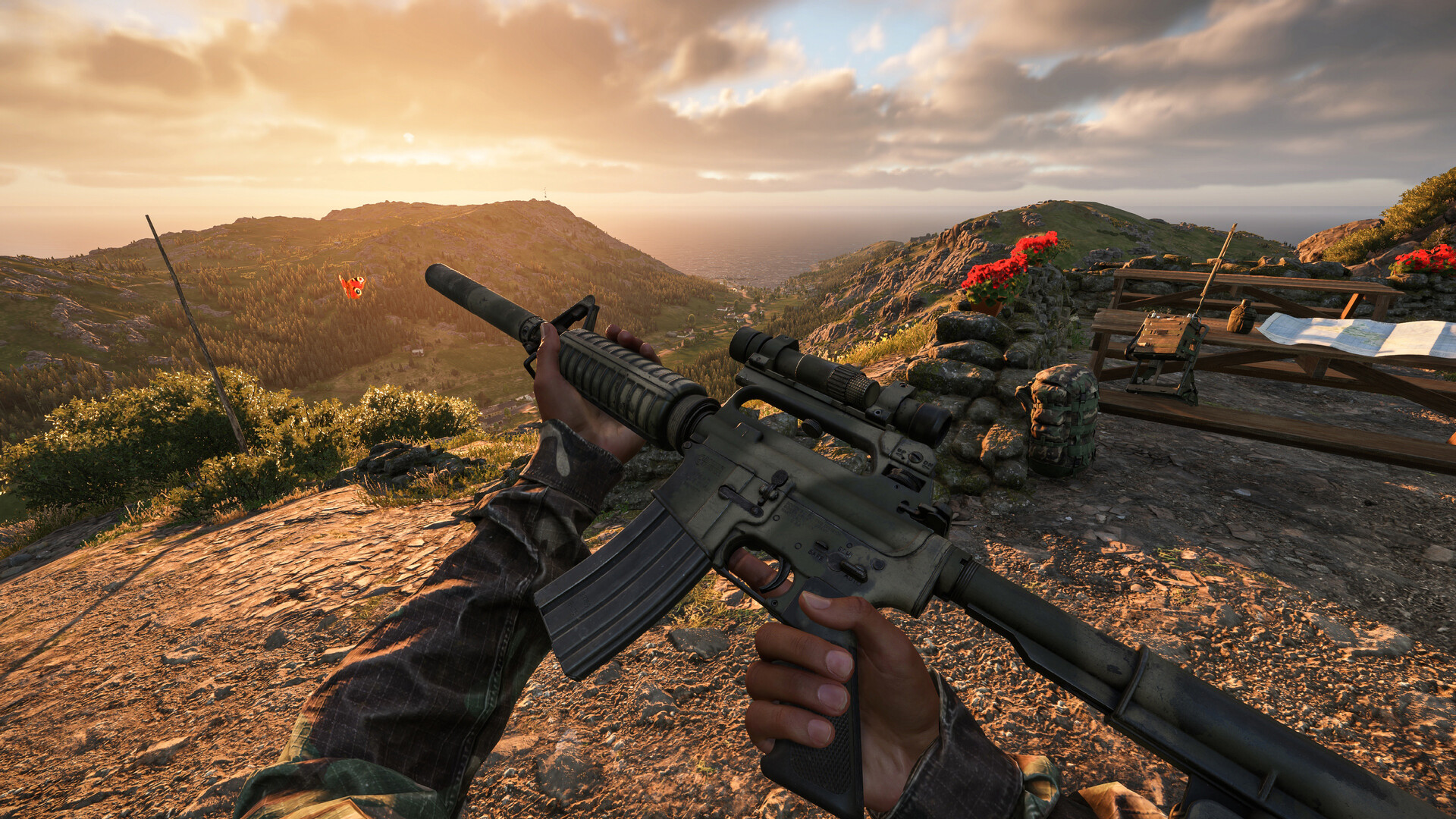
On the weapon side, medics are better served by a lighter carbine than a full-length rifle — US forces typically run the M16 Carbine and Soviet forces the AKS-74U. Fewer magazines in the vest means more room for supplies. A medic who runs dry on bandages mid-battle is a liability, not an asset.
If you are running a community server and want fine-grained control over respawn timers, supply caches, and medical mod settings, check the Arma Reforger server setup documentation for configuration options. Server operators can adjust how punishing the health system feels — from vanilla Conflict to hardcore milsim sessions where a single casualty evacuation can swing an objective.
For a deeper look at how individual roles complement each other on the field, the Arma Reforger combat roles guide covers the full squad composition, while the supply system guide explains how medical resupply points feed into a sustained operation.
Quick-Reference Tips
- Always carry at least two bandages even as a non-medic — they are light and you will need them.
- Tourniquets are reusable. Collect them off treated patients and cycle them to the next casualty.
- Saline does not stop bleeding. Never reach for a saline bag before the wound is sealed.
- Morphine does not restore blood. It is a regeneration booster and a wake-up aid, not a substitute for saline after heavy loss.
- Grayscale vision is your warning: administer saline now, before unconsciousness sets in.
- For torso and head wounds, move to cover before bandaging — the animation takes several seconds.
- On a community server, coordinate a designated medic per fireteam. Two medics per squad in large-scale operations is not overcaution — it is doctrine.
Running a private server dedicated to realistic tactical play makes a significant difference in how these mechanics land. When you control respawn settings and supply availability, the medical system transforms from a minor inconvenience into a genuine tactical layer. Hosting your own Arma Reforger server lets your group tune those settings to exactly the level of intensity your community wants.
Frequently Asked Questions
Can I treat myself while unconscious in Arma Reforger?
No. Once unconscious, all actions except voice communications are disabled. You cannot apply bandages, tourniquets, saline, or morphine to yourself. You are entirely dependent on a nearby teammate. If your blood levels are not critically low, you may regain consciousness on your own — but act immediately when you do, because a second collapse with no treatment means death.
What is the correct order: saline or morphine first?
Saline first if blood loss is significant, morphine second. Saline restores the blood volume that keeps the patient alive and conscious; morphine accelerates healing regeneration and shortens unconsciousness, but it cannot replace lost blood. That said, on a barely-injured patient with minor blood loss, morphine alone alongside a bandage may be sufficient — saline is the priority only when blood levels have dropped noticeably.
How long does a tourniquet need to stay on?
Only as long as it takes to apply a bandage to the same limb. The tourniquet is a stopgap — it slows bleeding fast while you get into position or wait for a medic. The moment the bandage is applied and bleeding has stopped, remove the tourniquet to restore full movement and accuracy. Leaving it on indefinitely penalises your mobility or your aim for no benefit, and in a firefight that penalty can be fatal.
Ready to play?
Run your own Arma Reforger server with XGamingServer
Spin up an always-on Arma Reforger server your friends can join in minutes — no port-forwarding, no tech headaches.