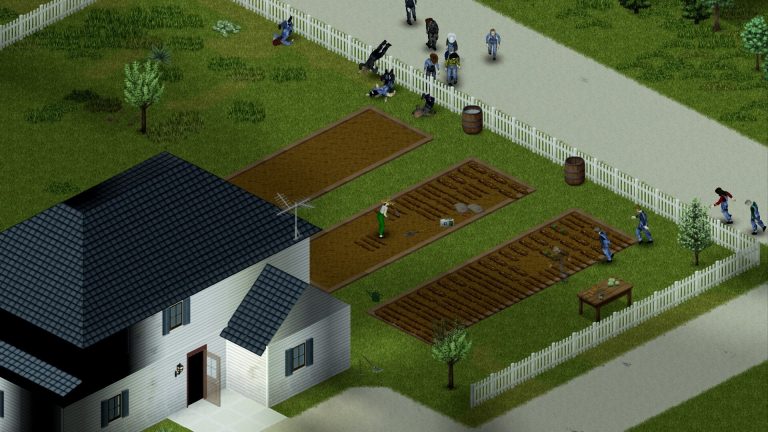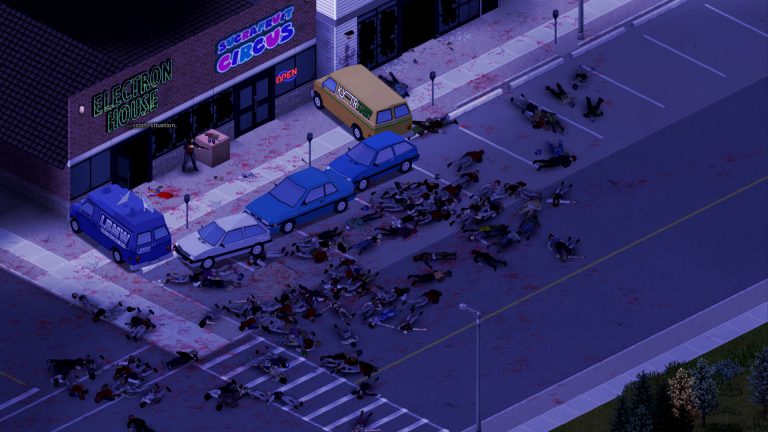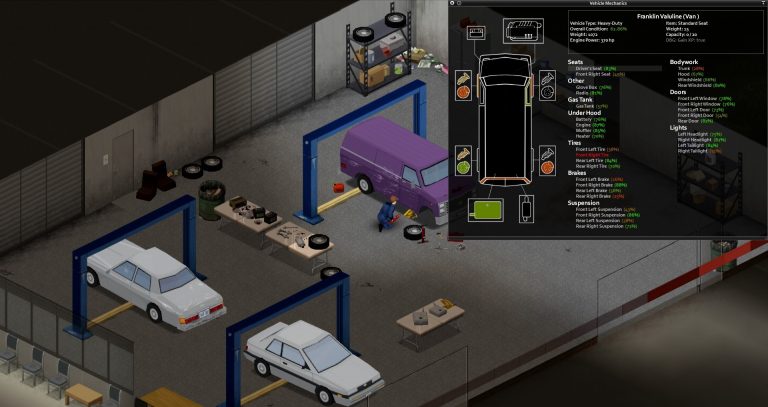
The entire Project Zomboid world is one large, hand-crafted map called Knox Country, a partly real and partly fictional slice of northern Kentucky modelled on the area around Fort Knox and Louisville. It is a single connected landscape rather than a set of separate levels, so you can walk (or drive) from one town to the next. This guide breaks down each major town by size, loot, danger and how friendly it is to a fresh character. All of the below reflects the stable Build 41 (41.78) game, with the Build 42 unstable beta (42.x) called out separately where it changes things.
How starting towns work
When you create a character you pick one of four starting towns: Muldraugh, Riverside, Rosewood or West Point. Your exact spawn building is then chosen by your occupation, and several professions (Chef, Construction Worker, Doctor, Firefighter, Park Ranger, Police Officer, DIY Expert, Security Guard and Custom) have explicitly defined start points. March Ridge and Louisville are not starting towns; you have to travel to them. So your very first decision is essentially a difficulty setting disguised as a map pin.
The four starter towns
Rosewood — the gentle start
Rosewood is a fictional town in the south-west and the most forgiving place to learn the game. It carries a notably low zombie count, which is exactly what a new survivor wants while they figure out fighting, panic and looting. The trade-off is that high-tier loot is thinner here than elsewhere, though houses and small businesses still cover the basics. Rosewood is also famous for its fire station (a popular early base) and for the prison just outside town, which is high-risk but loot-rich. If you have never survived past week one, this is the recommended pick.
Riverside — the safe waterfront
Riverside sits north-west on the Ohio River and is widely considered the calmest starter alongside Rosewood. The river forms a natural barrier to the north, so threats only really come from limited directions, and a fishing pole plus bait gives you a near-endless food supply. The town still has a police station, a school and enough shops within reach to keep a character equipped. It is an excellent low-stress option that, unlike Rosewood, leans on the water for its safety net.
Muldraugh — the balanced classic
Muldraugh is the iconic original town, a real Kentucky settlement recreated roughly in the centre of the map. It has a sizeable zombie population compared with most towns, but the horde tends to cluster around a few key areas rather than spreading evenly, which keeps it manageable. In return you get a strong spread of loot: numerous self-storage lots, the McCoy Logging Co., a police station, the Cortman Medical building and warehouse-style factories on the outskirts. New players can do well here because spawns are typically in stocked houses that are not far from stores. Think of Muldraugh as the standard middle-difficulty experience.
West Point — high reward, high risk
West Point sits central-north and is the hardest of the four starter towns. It is dense and packed with the best overall loot of the starting locations, including a supermarket (the GigaMart) and a gun store, with firearms and ammunition scattered widely. The catch is that large zombie crowds are found almost everywhere, making it a death wish for all but experienced survivors. Veterans love West Point precisely because the loot ceiling is so high; beginners usually get overwhelmed in the open streets.
March Ridge — the southern military town
March Ridge is a small gated town south of Muldraugh and south-east of Rosewood, with Dixie Highway (Route 31W) on its east side. It is mostly residential with a somewhat high zombie population, but the business district in the middle holds a large amount of loot, including plenty of firearms — making it a fine spot to level Aiming and Reloading. Notable buildings include the Knox Military Apartments, the March Ridge Community Center, the large Nourish Food Mart and the post office. Overall it is medium difficulty: harder than Rosewood or Riverside, easier than Muldraugh. The biggest trap is underestimating the Knox Military Apartments, which you should not try to clear without real preparation.
Louisville — the endgame city
Louisville is the large city on the north-east edge of the map and the ultimate loot destination. It is ringed by an unbroken military quarantine fence, so you cannot simply walk in: you typically need a sledgehammer to break barriers, or you destroy the highway gate and clear the southern checkpoint to bring a car through. That checkpoint itself is a worthwhile early stop for military firearms. Inside waits the Grand Ohio Mall — an L-shaped, four-storey megastore (five including utility levels) holding weapons, armour, food, tools and generators — plus gun shops such as Stars & Stripes. The catch is an enormous zombie population both inside and around the mall, so Louisville is firmly endgame content for prepared, well-armed survivors.
Town comparison at a glance
| Town | Location | Difficulty | Loot ceiling | Good for |
|---|---|---|---|---|
| Rosewood | South-west | Easy | Low–medium | First-time players |
| Riverside | North-west (river) | Easy | Medium | Calm, food-secure start |
| Muldraugh | Central | Medium | Medium–high | Balanced standard run |
| March Ridge | South | Medium | Medium–high (guns) | Gun farming / travel target |
| West Point | Central-north | Hard | High | Experienced survivors |
| Louisville | North-east (walled) | Very hard | Highest | Endgame raids |
What Build 42 changes
The Build 42 beta (still on the unstable branch as of mid-2026, with 41.78 the stable default) expands Knox Country westward with newly built towns such as Brandenburg, Ekron and Irvington, and adds a vertical dimension via procedurally generated basements beneath many buildings. Ekron is the westernmost town, far smaller than Irvington but proportionally denser with zombies. Treat anything Build 42 here as work-in-progress: layouts, loot and town boundaries can still shift before the update is finalised, so plan permanent bases around the stable Build 41 map for now.
Picking your town: practical advice
If you are new, start in Rosewood or Riverside, learn to manage zombies and food, then graduate to Muldraugh for a fuller loot pool. Use March Ridge as a mid-game gun run and only push for West Point or Louisville once you can reliably handle large crowds and have transport. For where to actually settle once you have chosen a town, see our Project Zomboid Best Base Locations in Knox Country guide, and pair your route with the right loadout from the Best Traits & Occupations and Best Weapons guides. If you plan to cover ground between towns, a working car helps — read the Vehicles Guide.
Frequently asked questions
What is the best starting town for new players?
Rosewood or Riverside. Rosewood has a notably low zombie count, and Riverside is shielded by the Ohio River to its north and offers reliable fishing food. Both let you learn the game without being swarmed.
Why is Louisville locked off?
Louisville is enclosed by a continuous military quarantine fence. You usually need a sledgehammer to smash barriers, or you clear the southern highway checkpoint and gate to drive in. It holds the highest-tier loot in the game, including the Grand Ohio Mall, but also enormous zombie crowds, so it is endgame territory.
Are the Build 42 western towns finished?
No. Build 42 (which adds Brandenburg, Ekron, Irvington and building basements) is still on the unstable beta branch as of mid-2026; Build 41.78 remains the stable release. Those areas may change before launch, so don’t treat their current layout or loot as final.
Exploring Knox Country is far more fun with company — clearing West Point or raiding the Grand Ohio Mall as a group changes the whole experience. If you want a persistent world your friends can join any time, you can run a dedicated Project Zomboid server and keep your shared map alive between sessions, and our Project Zomboid server setup docs walk through configuration step by step.
Ready to play?
Run your own Project Zomboid server with XGamingServer
Spin up an always-on Project Zomboid server your friends can join in minutes — no port-forwarding, no tech headaches.