Water is one of the most underrated killers in The Isle Evrima. A river crossing that looks trivial can drown a heavy herbivore, strand a clumsy carnivore, or deliver you straight into the jaws of a Deinosuchus lurking on the riverbed. Understanding how swimming, diving, oxygen and drowning actually work is the difference between a confident migration and a panicked, screen-fading death. This guide breaks down every water mechanic in the current Evrima build (June 2026) and explains how each part of the playable roster handles the wet stuff.
How swimming works in Evrima
Every playable dinosaur can enter water and swim, but they are far from equal. Swimming speed depends on each creature’s weight, size and abilities, so a lightweight Dryosaurus paddles very differently from a bulky Stegosaurus. Larger, heavier bodies tend to move slowly and sink more readily, while smaller or specialized species stay more buoyant and controllable. Treat deep water as terrain that has its own movement rules, not as a flat shortcut across the map.
To dive beneath the surface, hold your Crouch key (CTRL by default; right-click also works on some species) once you are in deep water. Releasing the dive input lets you rise back toward the surface. If you want to grip the riverbed and walk along the bottom rather than float upward, swim down, hold Crouch at the bottom, and press Spacebar to release the grip when you want to surface again.
Oxygen and drowning
Once you are fully underwater, your oxygen begins to drain, and the depletion rate varies per species. Stay under too long and you start drowning: the screen fades toward black and your heartbeat becomes audible, beating faster the closer you are to death. Surfacing for air resets the danger, so the safe rule is to break the surface well before your vision starts dimming.
Stamina is the second water trap. If you exhaust your stamina while swimming, your character slowly sinks underwater instead of staying afloat, which means an out-of-shape sprinter can drown simply from being tired in the wrong place. Never enter a wide channel with an empty stamina bar, and avoid sprint-swimming the entire crossing.
Bleed makes water even nastier. Bleed ticks continuously, and it keeps draining you even while you are standing or treading water still; the only thing that stops it is wallowing in mud. A wounded animal cannot heal a bleed in open water, so if you take a bite mid-crossing, the clock is now running on two fronts at once.
Which dinosaurs handle water best
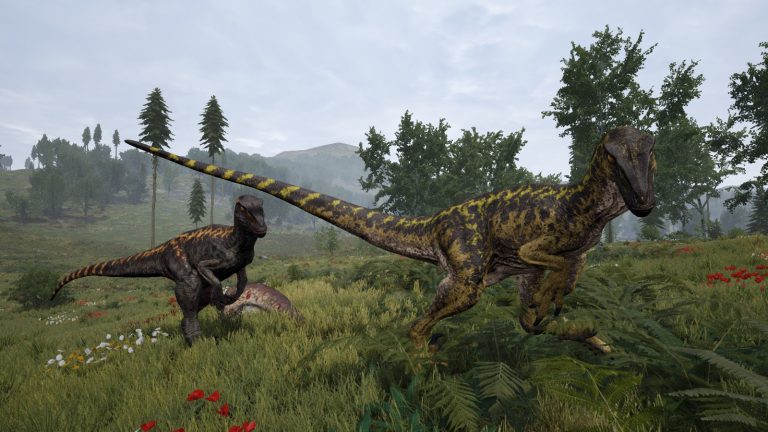
The roster splits into genuine water specialists and everyone else who is just trying to get to the other side. Deinosuchus is the apex of the rivers, a semi-aquatic ambush predator built to live in freshwater. Baryonyx leans into an amphibious playstyle as well, comfortable around shorelines and shallows. The small omnivore Beipiaosaurus is notably buoyant and can grip the riverbed for underwater navigation.
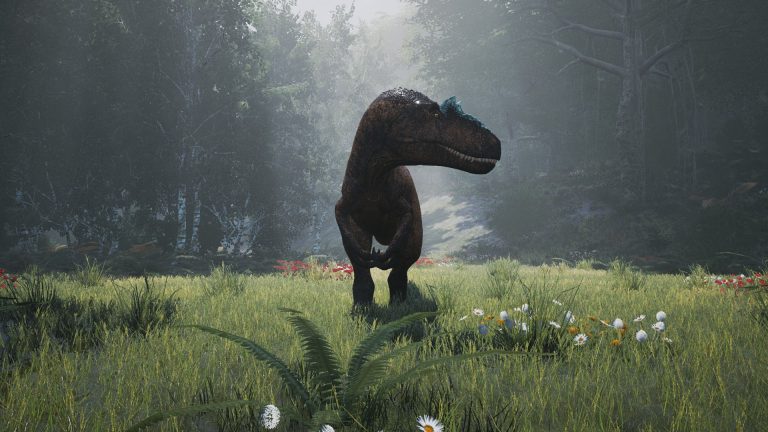
Crucially, do not confuse “fast on land” with “fast in water.” Carnotaurus is the fastest apex land predator in the game, a sprinting hunter built for open ground, and it is emphatically not a semi-aquatic swimmer. Deep water neutralizes its speed advantage and can leave it vulnerable, so a Carno should treat rivers as obstacles to be crossed quickly, never as hunting grounds.
| Dinosaur | Water role | Notes |
|---|---|---|
| Deinosuchus | Aquatic apex ambusher | Freshwater specialist; grabs and drowns prey from the riverbed |
| Baryonyx | Amphibious carnivore | Comfortable around shorelines and shallow water |
| Beipiaosaurus | Buoyant omnivore | Floats well; can grip the riverbed to walk underwater |
| Carnotaurus | Land apex only | Fastest on land, NOT a swimmer; cross water fast and leave |
| Stegosaurus / heavy herbivores | Slow, sinking swimmers | Vulnerable in deep water; can be grabbed while swimming |
The Deinosuchus threat: how it drowns prey
Deinosuchus is freshwater-only and gains nothing from the ocean, so it lives in rivers and ponds. It is the slowest dinosaur on land and suffers increased water drain when beached, which keeps its gameplay firmly aquatic. In the water it can cover roughly 500m underwater or 450m on the surface before running out of stamina, and at zero stamina it sinks to the bottom.
Its signature move is the grab. While moving along the riverbed it can lunge with right-click, snap onto prey, and drag it underwater to drown it; holding right-click maintains the grip. Normally it can only seize creatures up to a fraction of its own weight, but the threshold shifts in the water: a target that is swimming becomes much easier to grab, to the point that even a fully grown Stegosaurus can be snatched mid-crossing. This is exactly why deep-water travel is so dangerous for heavy dinos.
- Scout the far bank before entering; a still Deino is nearly invisible.
- Cross at the narrowest, shallowest point so your body stays in waterwalking depth rather than full swim.
- Keep a stamina reserve so you never sink mid-channel.
- If you are a carnivore, watch your scent vision: footprints glow yellow and blood pools or trails glow red, which can reveal recent activity at a crossing.
Running a server where these encounters happen reliably means stable tick rates and low latency, since a laggy grab feels deeply unfair to both predator and prey. Reliable, low-ping Evrima server hosting keeps water fights crisp, and our The Isle setup documentation walks you through configuration. For broader survival fundamentals, see our Evrima first-life survival guide and the hunting and ambush guide.
Crossing rivers safely
- Top up stamina and food before a long crossing; tired animals sink.
- Pick the shortest line across; minimize time fully submerged to protect oxygen.
- Surface before your screen begins to fade — that is your last warning.
- Avoid crossing while bleeding; you cannot mud-wallow in open water to stop it.
- Heavy herbivores should cross in shallows, since swimming makes them grabbable by Deinosuchus.
FAQ
Can Carnotaurus swim in The Isle Evrima?
Carnotaurus can enter and paddle across water like any dinosaur, but it is a land apex predator, not a semi-aquatic swimmer. Its strength is being the fastest creature on land, and deep water removes that advantage. Cross quickly and never treat rivers as a Carno hunting ground.
How do you stop drowning?
Surface for air before your oxygen runs out — the screen fading to black and a rising heartbeat are the warning signs. Keep enough stamina that you do not sink mid-swim, and exit deep water as soon as you can to recover.
Which dinosaur is most dangerous in water?
Deinosuchus, the freshwater semi-aquatic ambusher. It grabs prey from the riverbed and drags it under to drown, and because swimming raises its grab threshold, even very heavy herbivores can be seized while crossing deep water.
Free The Isle Tools
Speed up your server with our free The Isle tools:
Ready to play?
Run your own The Isle Evrima server with XGamingServer
Spin up an always-on The Isle Evrima server your friends can join in minutes — no port-forwarding, no tech headaches.