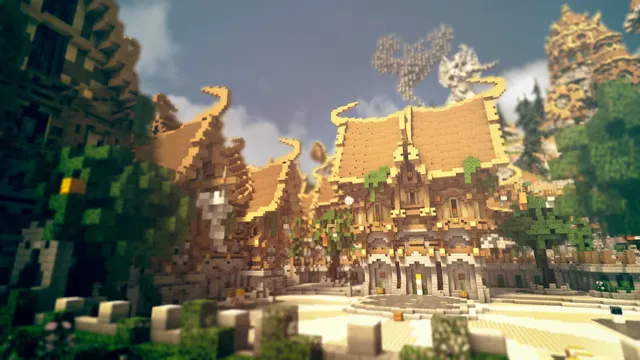

A biome is a region of a Minecraft world with its own terrain, plants, mobs, temperature and colors. Biomes are decided during world generation and split the map into environments like forests, deserts, oceans and the alien landscapes of the Nether and the End. This guide covers every biome in current Minecraft — what generates there, which mobs spawn, and what makes each one worth visiting — grouped by category for easy reading.
There are 64 biome types in Java Edition (53 Overworld, 5 Nether, 5 End) and 90 in Bedrock. You can find any biome with the /locate biome command, and in Java change one with /fillbiome. The categories below are for convenience and aren’t official Mojang groupings.
Overworld: ocean & mushroom biomes
Open, water-filled biomes that fill the spaces between landmasses, plus the rare mushroom island.
| Biome | Highlights |
|---|---|
| Ocean / Deep Ocean | Gravel floor; deep variants generate ocean monuments (guardians, prismarine, sponges) and underwater ravines. |
| Warm Ocean | Teal water, sand floor — the only ocean with coral reefs and sea pickles. No deep variant. |
| Lukewarm / Cold Ocean (+ Deep) | Sand or gravel floors, kelp and seagrass; cold variants have salmon. Deep variants add monuments. |
| Frozen Ocean (+ Deep) | Icebergs of packed/blue ice; strays and polar bears spawn, no dolphins. |
| Mushroom Fields | Rare mycelium island always next to deep ocean. Only mooshrooms spawn — no hostile mobs, even in caves. Huge mushrooms grow in sunlight. |
Highland & mountain biomes
High-altitude, rugged terrain with snow-capped peaks above the snow line — great for ores exposed in cliff faces.
| Biome | Highlights |
|---|---|
| Jagged Peaks | Tall pointy peaks (up to y=256), snow over stone with exposed coal/iron/emerald. Only goats spawn. |
| Frozen Peaks | Snow and packed ice on smoother peaks. Goats only. |
| Stony Peaks | Warm-region peaks of stone and calcite, no snow. |
| Meadow | Flowery grassland plateau; oak/birch trees always carry a bee nest. Villages and pillager outposts generate. |
| Cherry Grove | Pink cherry trees, pink petals — beautiful and resource-rich with sparse trees. |
| Grove / Snowy Slopes | Spruce forest / powder-snow slopes beneath peaks. Foxes, rabbits, wolves, goats; igloos generate in snowy slopes. |
| Windswept Hills / Forest / Gravelly Hills | Steep cliffs, waterfalls and overhangs; one of few biomes with emerald ore, infested stone and llamas. |
Woodland biomes
Tree-rich biomes — the best places to gather wood, though dense canopies make night dangerous.
| Biome | Highlights |
|---|---|
| Forest / Flower Forest | Oak and birch, plenty of wood; flower forest overflows with nearly every flower (great for dyes). |
| Taiga / Snowy Taiga | Spruce forest, ferns, sweet berry bushes; wolves and foxes. Villages and outposts generate; snowy taiga has igloos. |
| Old Growth Pine / Spruce Taiga | Giant 2×2 spruce trees, podzol, mossy boulders, mushrooms. |
| Birch / Old Growth Birch Forest | Birch-only forest; old-growth variant grows ~11-block-tall birches. |
| Dark Forest | Dense dark-oak canopy dark enough for daytime mob spawns. The only biome with woodland mansions. |
| Pale Garden | Gray pale-oak variant of the dark forest — the only home of the creaking, creaking heart and resin. No passive mobs, no music. |
| Jungle / Sparse / Bamboo Jungle | Tall jungle trees, vines, melons, cocoa; ocelots, pandas, parrots. Bamboo jungles are dense with bamboo; jungle pyramids generate. |
Wetland biomes: rivers, swamps & beaches
| Biome | Highlights |
|---|---|
| River / Frozen River | Cut through terrain; reliable clay source, good fishing. Drowned (and strays on frozen ice) at night. |
| Swamp | Lily pads, blue orchids, vines; slimes at night (full moons), swamp huts with a witch, temperate frogs. Mushrooms and sugar cane abundant. |
| Mangrove Swamp | Mangrove trees on mud, teal water; warm frogs only. Slimes at night. |
| Beach / Snowy Beach | Sand transition to ocean; turtles spawn on beaches, buried treasure under snowy beaches. |
| Stony Shore | Stone cliffs where mountains meet ocean; gravel strips, no passive mobs. |
Flatland biomes
| Biome | Highlights |
|---|---|
| Plains / Sunflower Plains | Flat grassland, common villages, horses spawn; sunflower plains is the only source of natural sunflowers. |
| Snowy Plains | Snow-covered flatland; only rabbits and polar bears, plus strays at night. Villages, outposts and igloos generate. |
| Ice Spikes | Rare snowy-plains variant with huge packed-ice spikes (some 50+ blocks tall). |
Arid-land biomes
It never rains or snows here, and vegetation is sparse.
| Biome | Highlights |
|---|---|
| Desert | Sand, cacti, fossils; husks replace zombies at night. Exclusive home of desert villages, wells and pyramids. |
| Savanna / Plateau / Windswept | Dull-green grass, acacia trees; villages of acacia wood, horses, armadillos, llamas. Windswept savanna has extreme, near-vertical mountains. |
| Badlands / Wooded / Eroded | Terracotta and red sand; extra gold ore generates up to y=256. Wooded variant adds oak forests; eroded variant has tall hoodoo spires. |
Cave biomes
| Biome | Highlights |
|---|---|
| Dripstone Caves | Stalactites/stalagmites of pointed dripstone, big copper ore blobs. |
| Lush Caves | Moss, azaleas, glow berries, dripleaf and clay pools — the only place axolotls spawn. Azalea trees mark them from the surface. |
| Deep Dark | Sculk biome in the deepslate layer with sculk sensors and shriekers that summon the Warden. The only place Ancient Cities (and their elite loot) generate. No normal mobs spawn. |
The Deep Dark is the most dangerous Overworld biome — see our Warden & Deep Dark survival guide before you go looting.
The Nether biomes
A separate dimension where water can’t be placed. Five biomes:
| Biome | Highlights |
|---|---|
| Nether Wastes | The classic netherrack expanse; ghasts, piglins, zombified piglins, magma cubes. |
| Soul Sand Valley | Soul sand/soil, nether fossils, blue fog; ghasts and skeletons — very dangerous. Soul Speed helps here. |
| Crimson Forest | Red fungal forest; piglins, zombified piglins and hoglins (great food/bartering hub — wear gold). |
| Warped Forest | Cyan fungal forest; only striders and endermen spawn — the safest Nether biome and best for ender pearls. |
| Basalt Deltas | Basalt/blackstone, lava pools, chaotic terrain; high magma-cube spawn rate (best magma-cream farming). |
Heading to the Nether? Our Nether survival guide and Nether fortress guide cover what to find and how to survive it.
The End biomes
| Biome | Highlights |
|---|---|
| The End | The central island with the ender dragon, obsidian pillars and end crystals. Lots of endermen. |
| End Highlands | Outer-island hilltops — the only End biome with both chorus trees and end cities. |
| End Midlands | Sloped outer islands; end cities generate but no chorus trees. |
| Small End Islands | The scattered small islands between the larger outer islands. |
| End Barrens | Outer-island edges with steep cliffs; no cities or chorus trees. |
You reach the outer End islands through end gateways after beating the dragon — see how to beat the Ender Dragon.
How biome climate works
Each biome has a base temperature, a downfall value and a precipitation flag that together decide grass/water colors and whether it rains or snows. If precipitation is on, a spot rains when its temperature is above 0.15 and snows otherwise — which is why snow forms higher up cold mountains and never falls in deserts. Temperature also drops about 0.00125 per block above y=80, so tall peaks turn snowy even in mild regions.
Explore every biome on your own server
Biome hunting — chasing cherry groves, mushroom fields, ancient cities or a perfect village spot — is far more fun with friends on a persistent world that’s always online. You can rent a Minecraft server with instant setup and one-click version updates, or read the Minecraft server docs to get started.
Frequently asked questions
How many biomes are in Minecraft?
Java Edition has 64 biome types (53 Overworld, 5 Nether, 5 End); Bedrock has 90, including unused ones. The Overworld total includes all the variants like sunflower plains and old-growth taigas.
What is the rarest biome in Minecraft?
Mushroom fields are among the rarest naturally generating biomes, alongside the Deep Dark’s Ancient Cities and (for its loot) the eroded badlands. The mushroom fields biome is prized because no hostile mobs spawn there.
How do I find a specific biome?
Use /locate biome <biome> in chat to get the coordinates of the nearest one. On a server, an operator can run it — handy for finding a cherry grove or ocean monument fast.
Free Minecraft Tools
Speed up your server with our free Minecraft tools:
Related structures: the dark forest hides the Woodland Mansion, and deep oceans hold the Ocean Monument.
Ready to play?
Run your own Minecraft server with XGamingServer
Spin up an always-on Minecraft server your friends can join in minutes — no port-forwarding, no tech headaches.