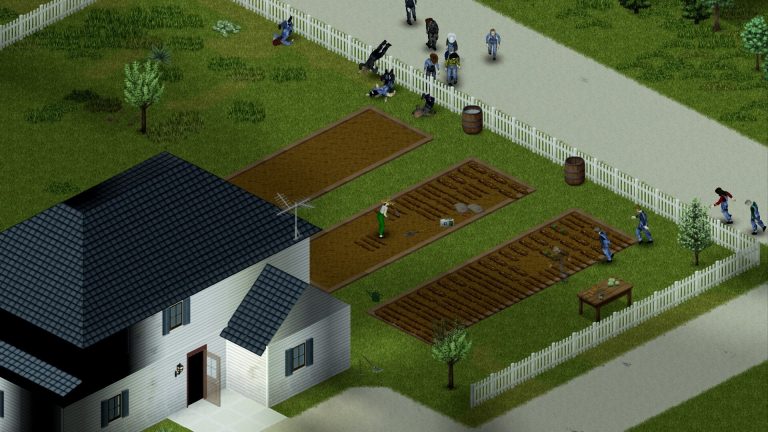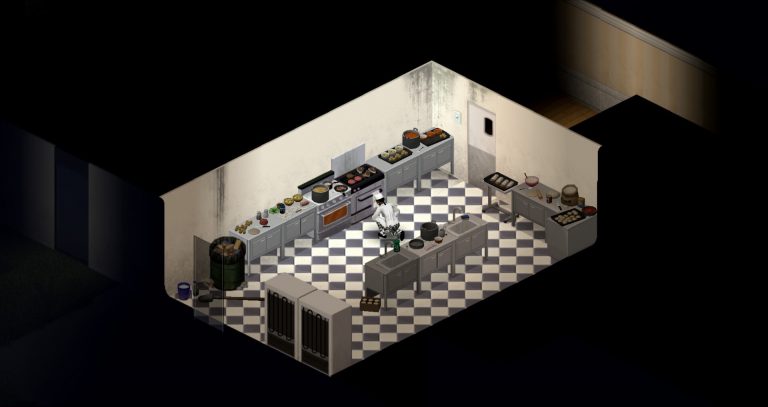
Skills are the backbone of long-term survival in Project Zomboid. Every plank you saw, zombie you crack, and crop you harvest feeds experience into one of your character’s abilities, and those levels decide whether your barricades hold, your meals nourish, and your aim lands. This guide breaks down exactly how XP works, how skill books and the Life and Living TV channel accelerate training, and the fastest legitimate ways to grind the skills that matter most. Mechanics described here are for Build 41 (the stable release); where Build 42 (the unstable beta) changes things, it is called out explicitly.
How XP and Leveling Work
Project Zomboid groups its abilities into six categories: Passive (Strength and Fitness), Agility, Combat, Crafting, Firearm, and Survivalist. Every skill caps at level 10, and every action tied to a skill awards experience points (XP) toward it. Once you bank enough XP, the skill ticks up a level, which unlocks better outcomes and, in most cases, lets you earn XP faster going forward. Hovering over a skill in the character menu shows the XP needed for the next level.
Crucially, the XP cost per level is not linear, and Passive skills (Strength and Fitness) follow a far steeper curve than everything else. That is why a survivor can hit Carpentry 5 in a week of building yet still sit at Fitness 5 after months. The per-level XP requirements, taken from the official PZ wiki, are:
| Level reached | Regular skill (XP) | Passive skill (XP) |
|---|---|---|
| 1 to 2 | 75 | 1,500 |
| 2 to 3 | 150 | 3,000 |
| 3 to 4 | 300 | 6,000 |
| 4 to 5 | 750 | 9,000 |
| 5 to 6 | 1,500 | 18,000 |
| 6 to 7 | 3,000 | 30,000 |
| 7 to 8 | 4,500 | 60,000 |
| 8 to 9 | 6,000 | 90,000 |
| 9 to 10 | 7,500 | 120,000 |
| 10 (final) | 9,000 | 150,000 |
Two character-creation traits bend the whole curve. Fast Learner grants 130% XP gain across your skills, while Slow Learner cuts it to 70%. Both traits explicitly exclude Strength and Fitness, which are unaffected by any XP-rate modifier. So if you want to power through crafting and combat skills, Fast Learner pays for itself; just do not expect it to help your gym gains.
Skill Books: The Single Biggest Multiplier
Skill books are the most powerful tool for fast leveling, and they exist only for skills in the Crafting and Survivalist categories. A book does not grant XP directly; instead it multiplies the XP you earn from doing the activity. Reading is also progressive: every 10% of pages you finish unlocks 10% of the book’s maximum bonus, so a half-read book gives roughly half its multiplier. Finish the whole book to get the full effect.
Each book covers a specific two-level window and applies a fixed multiplier inside that window. Using Carpentry’s five volumes as the model, the tiers line up like this:
| Volume | Skill levels covered | XP multiplier |
|---|---|---|
| Vol. 1 (Beginner) | Levels 1 to 2 | 3x |
| Vol. 2 (Intermediate) | Levels 3 to 4 | 5x |
| Vol. 3 (Advanced) | Levels 5 to 6 | 8x |
| Vol. 4 (Expert) | Levels 7 to 8 | 12x |
| Vol. 5 (Master) | Levels 9 to 10 | 16x |
You can only read a book that matches your current skill level, and the multiplier switches off once you have leveled past the range it covers, dropping XP back to 1.0x until you read the next volume. The practical takeaway: never grind a book skill without the matching volume read first. A 16x multiplier on a Master-tier skill turns a soul-crushing grind into something achievable.
Life and Living TV and VHS Tapes
Early in a save you get a second free boost: the Life and Living TV channel (channel 203). When a skill show is broadcasting and your character sits in the same room with the TV tuned in, you passively soak up XP for that show’s skill. The schedule covers Crafting and Survivalist skills, with shows like the carpentry-focused “Woodcraft,” “The Cook Show” (which also teaches recipes), and “Exposure Survival” covering fishing, foraging, trapping, agriculture, and some carpentry.
The catch is the window. Life and Living only broadcasts during roughly the first nine in-game days, and it stops entirely once the power grid goes down. To squeeze maximum value, read the matching skill book before the show airs so the broadcast XP is multiplied. VHS tapes carry the same shows; if you find a VCR and the right tapes, you can watch them later, even after the broadcast period ends, including a few skill tapes not on the regular schedule.
One important balance note: searches indicate Build 42 caps the XP you can gain from watching TV and VHS at skill level 3, meaning the channel is an early-game jump-start rather than a path to mastery in the beta. Treat TV as a way to skip the slowest opening levels, then switch to hands-on grinding for higher tiers.
Key Skills and Fast-Training Methods
Carpentry levels from anything using wooden planks: building walls and furniture, dismantling crafted items, and sawing logs into planks. Stockpile planks and nails, read your Carpentry volumes, and build-then-dismantle in a safe base. It governs barricade strength, build quality, and structure health.
Foraging (Survivalist) increases your search radius, detection speed, and the variety of items you can find. It levels purely from using search mode and spotting items, and collecting or rejecting a find yields the same XP. Read the foraging book, then walk forested tiles in search mode; it is one of the safest skills to grind.
Strength and Fitness are the Passive grind. Fitness improves endurance, attack speed, and your chance to shove free of grabs; Strength governs carry weight, melee damage, and knockback. Neither has a skill book and neither benefits from Fast Learner. They level through exercise routines, running/sprinting, and melee combat, with Strength also gaining from carrying over half your max load and chopping trees. Given the brutal Passive XP curve, daily exercise plus active combat is the only realistic path, and progress is slow by design.
For deeper companion reading, see our Best Traits & Occupations Guide for the character-creation choices that set your starting levels, and the Farming Guide for leveling agriculture toward self-sufficiency.
Frequently Asked Questions
Do skill books work on every skill?
No. Skill books exist for many individual skills — Carpentry, Cooking, Electrical, Mechanics, Tailoring, First Aid, Fishing, Foraging, Trapping, Metalworking and more. Combat, Agility, Firearm, and the Passive skills (Strength and Fitness) have no books and cannot be multiplied this way.
Why is Strength and Fitness so slow to level?
They use the Passive XP curve, which demands vastly more experience per level than regular skills (150,000 XP for the final level versus 9,000 for a regular skill). They also ignore the Fast Learner trait and have no books, so the only way to raise them is consistent exercise, running, and combat over a long time.
Should I read the book before or after watching TV?
Read the matching skill book first. The book’s multiplier applies to XP gained from watching the relevant Life and Living show, so reading beforehand multiplies the broadcast XP. Since the channel only airs for about the first nine days, plan your reading around the schedule.
Leveling Up Together
Skill progression is even more fun split across a group, where one survivor masters carpentry while another handles cooking and foraging. If you want to grind skills with friends on a persistent world, spinning up a dedicated Project Zomboid server keeps everyone’s progress saved between sessions. For the technical side of setup, including XP-rate tuning, our Project Zomboid hosting docs walk you through it. From there, dive into our Build 42 guide to see what is changing in the unstable beta.
Ready to play?
Run your own Project Zomboid server with XGamingServer
Spin up an always-on Project Zomboid server your friends can join in minutes — no port-forwarding, no tech headaches.