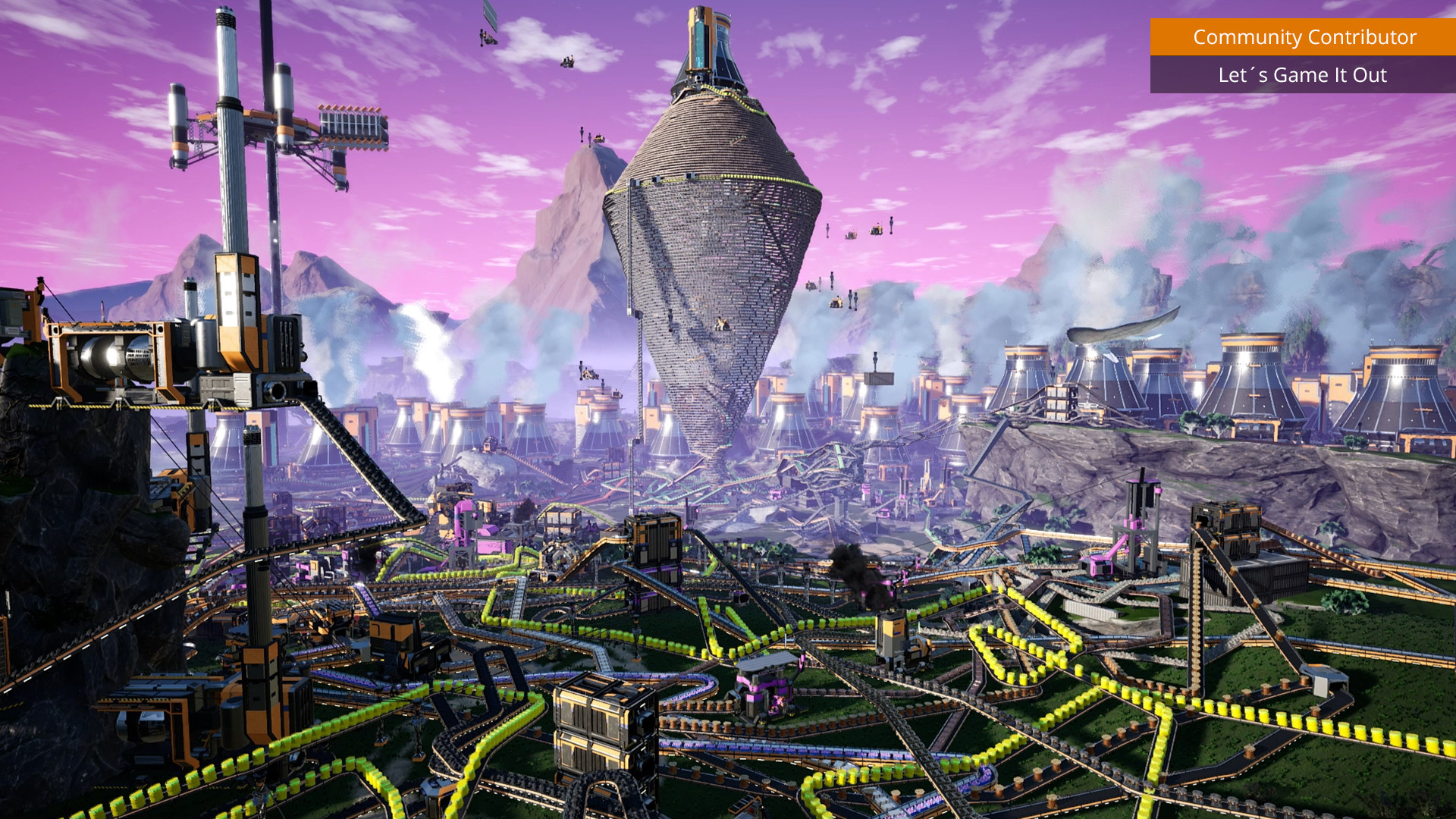
Power is the heartbeat of every Satisfactory factory. Belts stop, machines freeze and your carefully tuned production line goes dark the moment demand outruns supply. The good news is that power progression in Satisfactory is a clear, staged ladder: you start by hand-feeding leaves into a burner and finish with reactors pumping out thousands of megawatts. This guide walks the full progression, lists the verified outputs of every generator, and explains how to plan consumption and buffer your grid so a single new machine never trips the whole factory. All figures here are from the official wiki and reflect the current Update 1.2 build.
How power works in Satisfactory
Production and consumption are both measured in megawatts (MW). Stored energy is measured in megawatt-hours (MWh), and the raw energy content of a fuel is measured in megajoules (MJ). Your grid only needs one rule satisfied: total generation must meet or exceed total consumption at all times. If consumption exceeds production and you have no stored energy to cover the gap, the grid trips. Every generator and consumer on that grid shuts off, a power-trip sound plays, and you have to walk to any power pole or generator and pull the breaker lever to reset it.
A useful planning habit is to read the power graph on any power pole. It shows current production, current consumption and your remaining headroom. Leave generous headroom: a single Hoverpack, for example, draws 100 MW while in use and does not show up on the consumption chart, which is a classic cause of mysterious trips. You can also split a grid using a Power Switch, which lets you isolate sections so that one runaway subfactory cannot take down the rest of your base.
Stage 1: Biomass Burners (early game)
Your first power source is the Biomass Burner, which produces 30 MW at 100% clock speed. Unlike every other generator, it is not fully automatic by default and it scales its fuel use to demand rather than always running flat out. It accepts six fuels: Leaves, Wood, Mycelia, Biomass, Solid Biofuel and Packaged Liquid Biofuel. The catch is burn time. Raw leaves are consumed almost instantly (about half a second per item), so feeding leaves directly means constant babysitting.
The fix is to refine your fuel. Convert foliage into Biomass, then craft Biomass into Solid Biofuel in a Constructor (8 Biomass yields 4 Solid Biofuel). Solid Biofuel burns far longer per item and carries 450 MJ of energy each, so a stack lasts a long time. Burning Solid Biofuel instead of raw leaves dramatically reduces how often you need to refill, and it is the standard way to bridge the gap until coal.
Stage 2: Coal power (your first real grid)
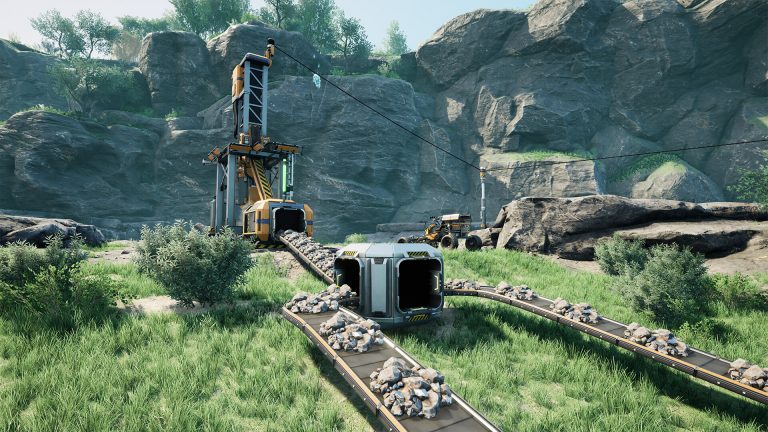
Coal Generators unlock in Tier 3 and are the turning point where power becomes truly automated. Each one outputs 75 MW and, like all non-biomass generators, runs at full capacity continuously as long as it has fuel and water. It accepts Coal, Compacted Coal or Petroleum Coke, and it consumes 45 m³ of water per minute regardless of which fuel you use. A single Coal Generator burns 15 Coal per minute, so a Coal node feeding a Miner can support several generators once you account for the belt and water supply.
The water requirement is what trips up new players. Each generator needs a steady 45 m³/min, supplied by Water Extractors and Pipes. Plan the water network with the same care as the coal belt, because a pipe that cannot keep up will starve the generators and cause flickering output. Building coal plants near a lake with the extractors close to the generators keeps the plumbing simple.
Stage 3: Fuel and geothermal
Fuel Generators unlock in Tier 5 (Petroleum Power) and produce 250 MW each, more than three times a coal plant. They burn liquid fuels and need no water. Standard Fuel and Liquid Biofuel are each consumed at 20 m³/min, while higher-energy fuels stretch much further: Turbofuel runs at 7.5 m³/min and Rocket Fuel at roughly 4.17 m³/min for the same 250 MW. Switching a fuel power plant to Turbofuel is one of the best efficiency upgrades in the mid game because you get the same output from far less liquid throughput.
Geothermal Generators are a free side income with a quirk: they must be built directly on a Geyser, they cannot be overclocked, and their output fluctuates. Average output scales with geyser purity, around 100 MW on impure, 200 MW on normal and 400 MW on pure geysers. Crucially, the output cycles between roughly half and one-and-a-half times that average over a one-minute period. Because of that swing, treat geothermal as a supplement to a stable grid rather than the backbone of a critical load, and pair it with storage to smooth the dips.
Stage 4: Nuclear power (end game)
The Nuclear Power Plant unlocks in Tier 8 and outputs a massive 2,500 MW each. It also consumes 240 m³ of water per minute and, with the basic fuel, produces radioactive waste you must store or process. A plant burns 0.2 Uranium Fuel Rods per minute and outputs 10 Uranium Waste per minute. Moving to Plutonium Fuel Rods cuts both consumption and waste (0.1 rods/min producing 1 Plutonium Waste/min), and the end-game Ficsonium Fuel Rod produces no waste at all. Nuclear is the densest power in the game, but it demands a serious water supply, robust logistics for fuel rods, and a plan for the waste before you ever flip the breaker.
Generator output reference table
| Generator | Output (100% clock) | Unlock | Water | Notes |
|---|---|---|---|---|
| Biomass Burner | 30 MW | Early game | None | Scales to demand; needs manual refuel |
| Coal Generator | 75 MW | Tier 3 | 45 m³/min | First fully automatic generator |
| Fuel Generator | 250 MW | Tier 5 | None | Turbofuel/Rocket Fuel stretch further |
| Geothermal | ~100–400 MW avg | On geysers | None | Fluctuates; cannot overclock |
| Nuclear Plant | 2,500 MW | Tier 8 | 240 m³/min | Produces radioactive waste |
Planning consumption and using power storage
The simplest way to avoid brownouts is to build generation in round, over-provisioned blocks. If a new production wing will draw, say, 200 MW, bring up enough generators to cover it plus a buffer before you switch the machines on. Read the power pole graph and keep meaningful headroom so spikes from intermittent consumers (the Hoverpack, particle accelerators, blenders cycling) never push you into the red.
Power Storage units are your safety net. Each stores 100 MWh, charges at up to 100 MW, and discharges with no rate limit, instantly covering any shortfall. They also act as an early warning: a storage unit sounds an alert when it discharges below 80% capacity, giving you time to bring more generation online before the grid trips. Daisy-chaining several units gives both a larger buffer and a bigger combined audible warning, which is invaluable for smoothing the fluctuating output of geothermal or absorbing the start-up surge of a big new factory block.
Frequently asked questions
Why does my whole factory keep shutting off?
That is a grid trip. It happens when consumption exceeds production and you have no stored energy left to cover the gap. Everything on that grid stops until you reset the breaker at any power pole or generator. Add more generation or Power Storage and leave headroom on the power graph to prevent it.
What is the best fuel for Biomass Burners?
Solid Biofuel. It burns far longer per item than raw leaves or wood and packs 450 MJ each, so you refill the burner far less often. Craft it from Biomass in a Constructor while you work toward coal.
Do all generators need water?
No. Coal Generators (45 m³/min) and Nuclear Plants (240 m³/min) require water, but Biomass Burners, Fuel Generators and Geothermal Generators do not. Plan a water network early for any coal or nuclear build.
Power planning gets a lot easier when you also keep your builds tidy and your supply chains predictable. For wiring clean generator banks and avoiding spaghetti, see our factory layout tips, and to know when each generator unlocks on the tech tree, check the progression and milestones guide. If you are just getting started, the beginner guide covers your first power setup step by step.
Building a shared megafactory is far more fun with friends, and a persistent always-on world means your power grid keeps running even when you log off. You can spin up a dedicated Satisfactory world to play with friends in minutes, and our Satisfactory server documentation walks through setup and configuration.
Ready to play?
Run your own Satisfactory server with XGamingServer
Spin up an always-on Satisfactory server your friends can join in minutes — no port-forwarding, no tech headaches.