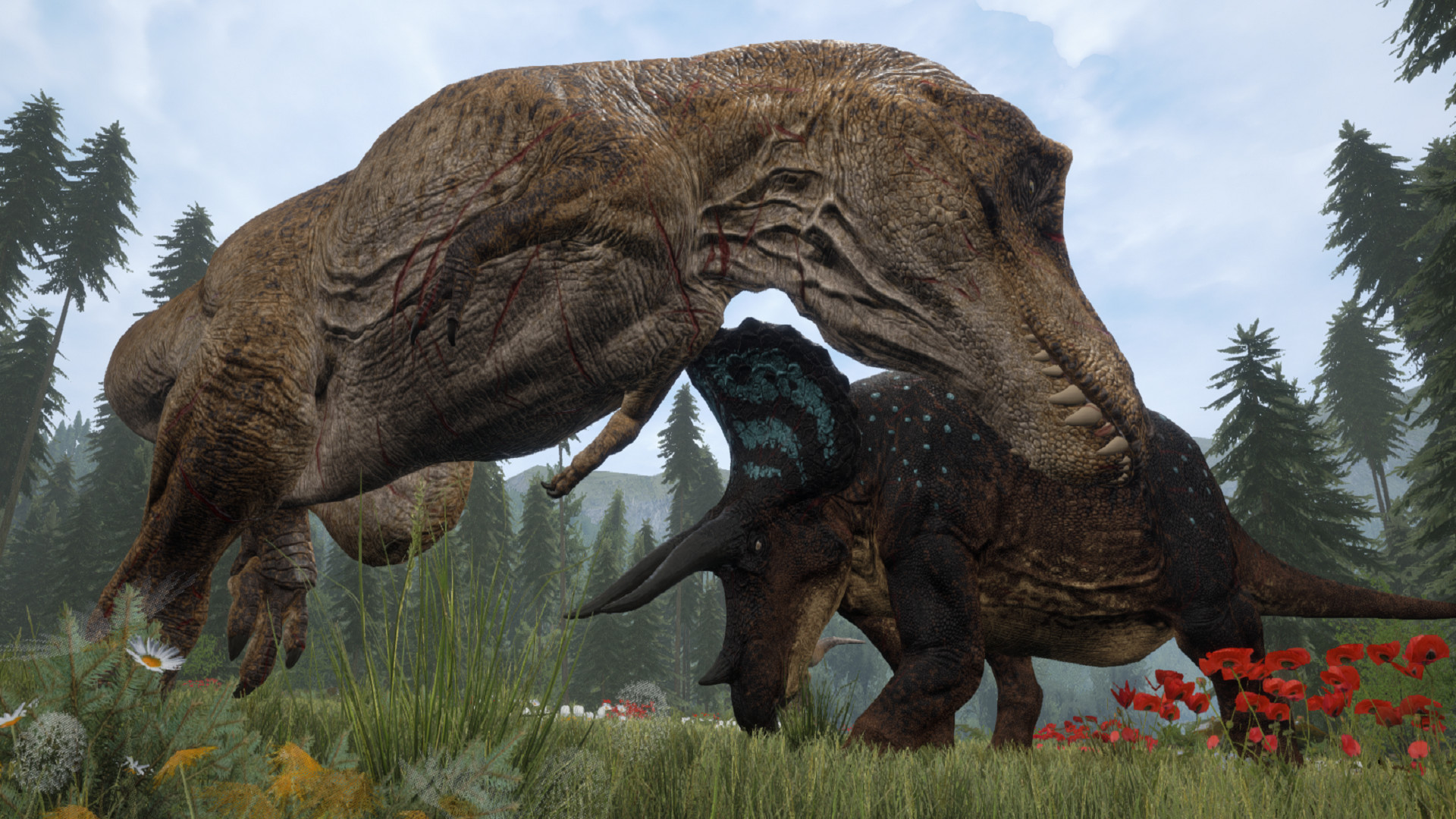
In The Isle Evrima, stamina is not a stat you check now and then — it is the resource that decides whether you finish a hunt, lose a chase, or die mid-fight. An empty stamina bar means you cannot sprint to disengage, cannot buck off an attacker, and often cannot land your next bite. This guide breaks down how the stamina bar actually behaves in the current Evrima build: sprinting versus trotting, the regeneration thresholds that catch most new players off guard, when to rest, and how to manage stamina well enough to outlast a predator instead of feeding one.
The stamina bar and your movement modes
Stamina is shown by a claw-style icon on your HUD and ties directly to how fast you are moving. Evrima gives you three core ground gaits, and each one treats stamina very differently:
- Walking — the default slow gait. Costs no sprint stamina and gives you the tightest turn radius, which matters in close combat.
- Trotting — toggled with the Z key. A middle-speed cruise that most players use as their everyday travel and combat pace. It is widely considered the sweet spot: faster than walking, far cheaper than sprinting.
- Sprinting — held with Shift. Your top speed, but it drains stamina quickly, commits you to wide turning arcs, and speeds up bleeding if you are already wounded.
The takeaway most veterans repeat: do not sprint everywhere you go. Travel at a trot, keep your bar topped up, and save your sprint reserve for the moment you actually need to close a kill or break away from danger. If you arrive at a confrontation already gassed, the fight is usually over before it starts. For a broader survival primer, see our Evrima first-life survival guide.
How stamina regeneration actually works
This is the part that confuses newcomers most. In Evrima, your current movement state sets a ceiling on how much stamina you are allowed to regenerate. You cannot refill stamina while sprinting at full tilt, and each slower gait only lets you recover up to a certain percentage of the bar. To regenerate past that ceiling, you have to slow down further.
| Activity | Stamina regen range | Practical use |
|---|---|---|
| Resting (H) | 0–100% | Full recovery, even from empty |
| Standing still | 25–100% | Quick top-up between moves |
| Walking / crouching | 40–100% | Recover while staying mobile |
| Trotting | 60–100% | Top off the last sliver on the move |
| Sprinting (Shift) | No regen | Drains only — never recovers |
Read that table carefully, because it explains a lot of frustrating chase deaths. If your bar is at 10% and you are trotting, it will not climb — trotting only regenerates once you are already above roughly 60%. To pull a near-empty bar back up, you must drop to walking, standing, or resting first. The lower and slower you go, the more of the bar you can refill.
Recovery speed is also heavily species-dependent. Some semi-aquatic and apex creatures recover almost absurdly fast when resting, while small, fast runners can take several minutes to refill from empty. Diet and nutrient buffs further shorten regen times, so a well-fed dinosaur recovers meaningfully faster than a starving one. Because exact numbers shift between patches, treat the table above as the rule for which gait allows regen, and check current patch notes for your specific species’ timing.
When and how to rest
Pressing H makes your dinosaur rest, which is the only state that regenerates stamina from 0% and is the fastest way to recover overall. Holding H puts you to sleep, which is also how you perform a safe logout (a “safelog”) — your character settles down to nap before it is safe to leave.
Resting is powerful but vulnerable. Two rules keep it from getting you killed:
- Rest in cover, not in the open. Use bushes, tree lines, riverbanks, or terrain folds. A resting dinosaur on an open plain is a free meal.
- Never instant-log to escape. If you simply quit, your body stays in the world for several minutes and can still be killed. Always safelog by holding H in a hidden spot.
Resting also accelerates healing for other conditions — if you have taken a fall or a hit that broke a bone, staying put and resting speeds the mend, while continuing to move on a fracture drags it out. See our broken bones and injuries guide for the full breakdown.
Stamina in combat and chases
Stamina is both your offense and your defense. Bites, charges, and bucking all draw from the same bar, so a fight is partly a contest of who manages reserves better. Conserve aggressively: pace your bites instead of mashing attack, and avoid sprinting between strikes unless you are genuinely closing for the kill.
Turning also depends on gait. Walking gives the sharpest turns and sprinting locks you into wide arcs — so against a more agile attacker circling you, drop to a trot or walk rather than burning sprint into a wide, predictable loop. When you are the one fleeing, do the math: can you reach cover on your remaining bar, or should you stop early, drop to a slower gait, and rebuild enough sprint to break line of sight? If you are bleeding, remember sprinting bleeds you faster, so a measured trot to a hiding spot often beats a panicked full sprint. For more on closing distance efficiently, read our hunting and ambush guide.
Frequently asked questions
Why won’t my stamina regenerate while I’m trotting?
Because trotting only regenerates stamina once your bar is already above roughly 60%. Below that, trotting holds steady or drains. To recover a low bar, slow to walking, standing, or resting (H), which allow regen from much lower thresholds — resting works all the way from empty.
Does weight or being overweight affect stamina?
Carrying state and overweight handling are patch-sensitive in Evrima and differ by creature, so we won’t quote a fixed penalty. The reliable, build-independent rule is gait-based: your movement mode sets your regen ceiling, and sprinting never regenerates. Check current patch notes for any weight-specific stamina effects on your species.
What’s the fastest way to escape a predator on low stamina?
Don’t blow your whole bar in a straight sprint. Use terrain to break line of sight, drop to a gait that lets you regenerate (walking or standing), and rebuild a sprint reserve before the next burst. Mud wallows can also help mask your scent so a tracker loses you — more on that in our scent and smell system guide.
Running your own Evrima server
Stamina tuning, growth rates, and other survival values can be adjusted on community servers, so if you want a build that fits your group’s playstyle, it pays to run your own. You can set up a dedicated Isle Evrima server in minutes, and our Isle server configuration docs walk through the settings file step by step.
Free The Isle Tools
Speed up your server with our free The Isle tools:
Ready to play?
Run your own The Isle Evrima server with XGamingServer
Spin up an always-on The Isle Evrima server your friends can join in minutes — no port-forwarding, no tech headaches.