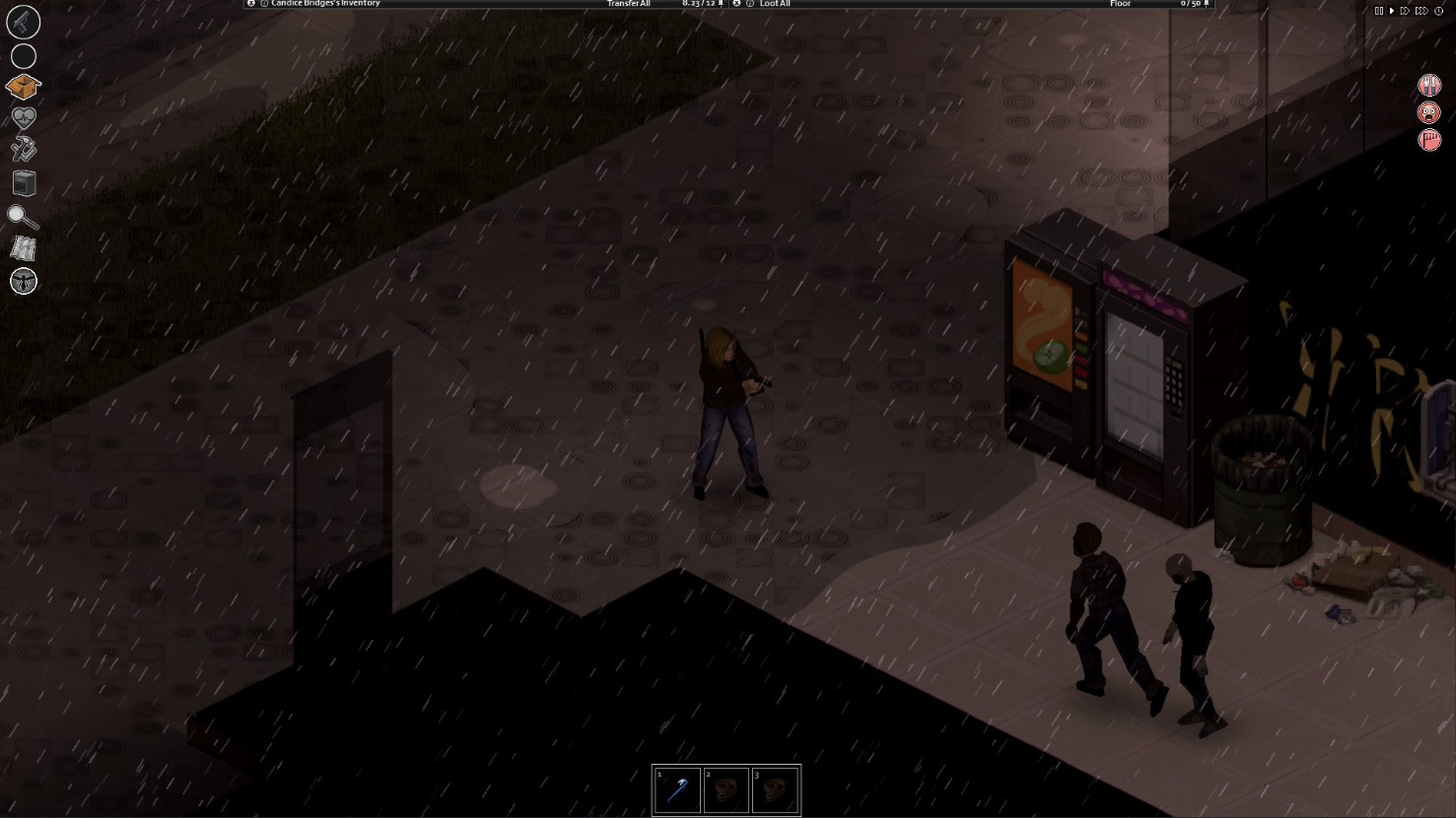
Choosing where to build your base is one of the most consequential decisions in Project Zomboid. A good safehouse balances four things: defensibility, access to loot, a sustainable water and power plan, and distance from the wandering hordes. This guide walks through the strongest spots across Knox County’s four spawn towns, plus the rural farms that veterans love, and explains the trade-offs behind each. All mechanics below are verified against the official PZwiki. Where a feature belongs to the unstable Build 42 beta rather than the stable Build 41 release, it is flagged as such.
What makes a base location good
Before picking a spot, understand the systems that will dictate your long-term survival. On the default Apocalypse mode, electricity shuts off on a random day between day 0 and day 30, and water shuts off independently on its own random day in the same window. The two events are not linked, so one can happen well before the other. On the gentler Survivor mode these utilities can last roughly 6 to 12 in-game months instead. Power loss is announced on the radio via the Automated Emergency Broadcast System up to two days ahead, but water loss is not announced. Plan a water source from day one.
Defensibility matters just as much. A key fact: zombies will not target naturally generated tall fences. They prioritise weak points first, like doors, windows, low fences, or simply walking around a tall fence. This is why pre-built gated communities and fully fenced lots are so prized, and why player-built metal walls (which act like tall fences when there is no roof above them) are the gold standard for late-game defense. A high-level welded metal wall can reach into the thousand-plus HP range, far tougher than wooden walls.
Rosewood: the beginner’s choice
Rosewood sits in the southern part of Knox County and has the lowest zombie population of the four spawn towns, which makes it the most forgiving starting town. The main street is the densest part; the surrounding woods and farmland hold many zombies, leaving the town vulnerable to migration over time, so don’t get complacent.
The standout base is the Rosewood Fire Department, on the edge of town south of the main street, directly across from the police station. It’s a defensible building with valuable firefighter gear and tools on site. The police station opposite contains an armory and a locker room with body armor. North of the police station is a gated community that the wiki calls the most profitable location in Rosewood for loot, with skill books in bookshelves, weapons and military boots in closets, and large food supplies in kitchens. The catch: avoid the Kentucky State Prison to the west, which is infamous for its sheer zombie numbers.
Riverside: loot-rich and quiet suburbs
Riverside lies in the north of Knox County on the Ohio River, with Fallas Lake to the south. It is an easy-to-medium difficulty town. Its zombie population is not particularly large, and roughly two-thirds of it congregates in the coastal business district and the eastern gated community. The suburbs are considered very safe by comparison, letting newer players gather supplies without being overrun. Some map cells here reportedly contain relatively few zombies while still being rich in loot.
For bases, Riverside’s large gated community offers houses behind tall fences that zombies won’t attack directly, so you mainly need to wall off the road entrances. The river and lake also make a water plan trivial. Riverside is a strong all-round pick if you want loot density without West Point’s lethality.
Muldraugh: warehouses and self-storage forts
Muldraugh sits toward the east of Knox County and is the classic “industrial” town. Its signature base options are the many self-storage lots, warehouses and outskirts factories on the northern and edge areas of town. Several of these are surrounded by tall fences with a single, open entrance you can watch and wall off, exactly the defensive shape you want. The outskirts factories are particularly rich: some hold large amounts of weapons, tools and crafting materials in wooden crates, and a couple have garage doors so you can drive a vehicle inside.
Muldraugh’s wider loot map is excellent for self-sufficiency: Cortman Medical in the east stocks medical supplies, McCoy Logging Co. and the warehouses supply tools and weapons, and the police station rounds out the armory needs. The town is busier than Rosewood, so a fenced storage lot on the outskirts is the sweet spot, near the loot but buffered from the densest streets.
West Point: high risk, high reward
West Point is the easternmost spawn town with Louisville a short drive away, and it is widely considered one of the hardest places to survive in all of Knox County. Large zombie crowds are found practically everywhere, and the suburbs are relatively short on quality melee weapons. The wiki explicitly does not recommend spawning here for new players.
The upside is loot: West Point’s dense population correlates with abundant loot, especially firearms and ammunition, much of it from the large suburban houses that often include garages. If you can survive the early days, basing on the quieter outskirts (isolated houses on the town’s fringes) lets you raid the firearm-rich interior. This is a town for experienced players with combat skills and a clear escape route.
Rural farms: the safest long-game
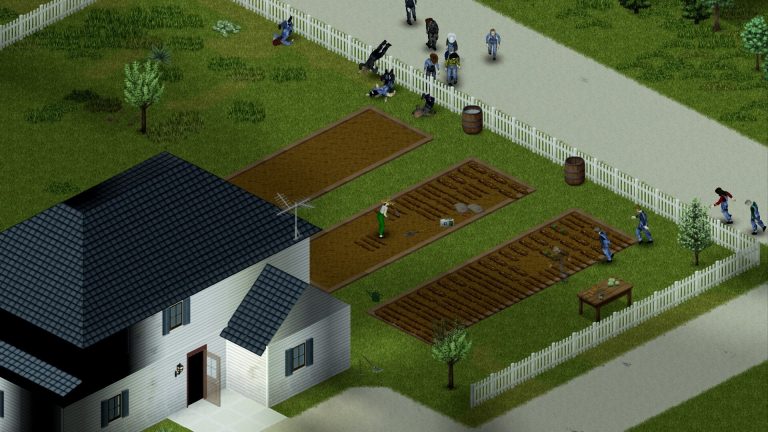
Isolated farmhouses between towns are perennial favourites for the late game. Their appeal is distance: fewer zombies wander to remote properties, giving you room to wall up, farm, and store loot from multiple towns. The trade-off is the long drive to resupply and the need to be fully self-sufficient on water and food early. Place rain-collecting containers or build rain collector barrels outdoors before water shutoff, and scavenge a generator (plus fuel) to keep a freezer running and lights on after the power dies. A farm with existing sheds and outbuildings reduces how much you have to build yourself.
| Location | Difficulty | Best base spot | Loot access | Water plan |
|---|---|---|---|---|
| Rosewood | Easiest (lowest zombie count) | Fire dept / north gated community | Fire dept, police armory, gated loot | Build rain collectors early |
| Riverside | Easy–medium | Gated community | High in business district + gated area | Ohio River / Fallas Lake nearby |
| Muldraugh | Medium | Fenced self-storage / outskirts factory | Warehouses, Cortman Medical, factories | Rain collectors |
| West Point | Hard (dense everywhere) | Isolated outskirts houses | Very high, firearms & ammo | Rain collectors |
| Rural farm | Safest long-term | Fenced farmhouse with sheds | Low locally; drive to towns | Rain collectors + generator |
Build 42 changes to consider
If you’re playing the unstable Build 42 beta rather than stable Build 41, base planning shifts. Build 42 adds randomly generated basements in homes and buildings across the map, structures up to many floors tall, and deeper crafting systems including pottery, blacksmithing and stonework, all of which open new fortification and self-sufficiency options. It also added explorable cities such as Brandenburg, Ekron and Irvington. Note that Echo Creek is a small new town added in Build 42 and is selectable as a starting location (easy-medium difficulty — easier than Muldraugh, a touch harder than Rosewood or Riverside). Build 42 remains unstable as of 2026, so treat these features as work-in-progress rather than final.
Frequently asked questions
What is the best base town for beginners?
Rosewood. It has the lowest zombie population of the four spawn towns and packs a fire station, police armory and a loot-rich gated community into a compact, manageable area. Just stay clear of the Kentucky State Prison to the west.
Will zombies break through a tall fence around my base?
Not directly. Zombies do not target naturally generated tall fences; they look for weak points like doors, windows and low fences, or walk around. That’s why gated communities and fenced storage lots are so strong, and why player-built metal walls (with no roof above them) are the toughest late-game barrier.
How long until water and power shut off?
On default Apocalypse mode, both shut off on separate random days between day 0 and day 30. Power loss is broadcast on the radio up to two days early; water loss is not announced. Set up rain collectors and find a generator with fuel before then. Survivor mode stretches this to roughly 6 to 12 in-game months.
Once you’ve secured a spot, the next steps are kitting out your survivor and keeping the lights on. See our Project Zomboid Best Traits & Occupations Guide, the Project Zomboid Farming Guide for self-sufficiency, and the Project Zomboid Map Guide for a full tour of Knox County. If you’re going long on the beta, the Project Zomboid Build 42 guide covers basements and crafting in depth.
Bases are far more fun defended with friends. If you want a persistent world where your safehouse stays standing while you’re offline, you can set up a shared Project Zomboid server for your group, and our Project Zomboid server documentation walks through configuring water and electricity shutoff timing, mods and more.
Ready to play?
Run your own Project Zomboid server with XGamingServer
Spin up an always-on Project Zomboid server your friends can join in minutes — no port-forwarding, no tech headaches.