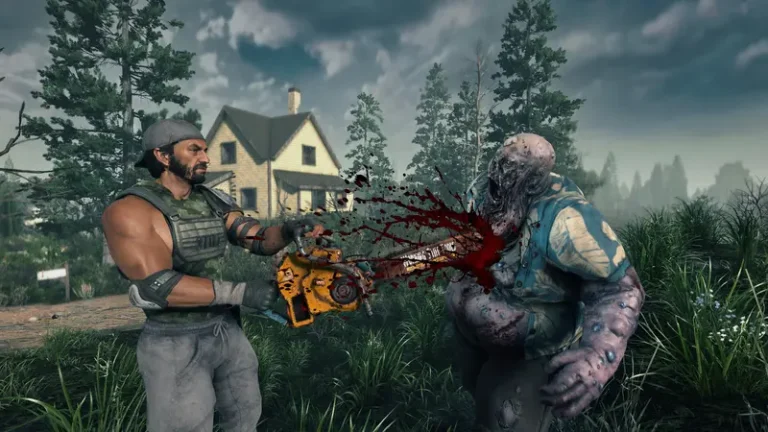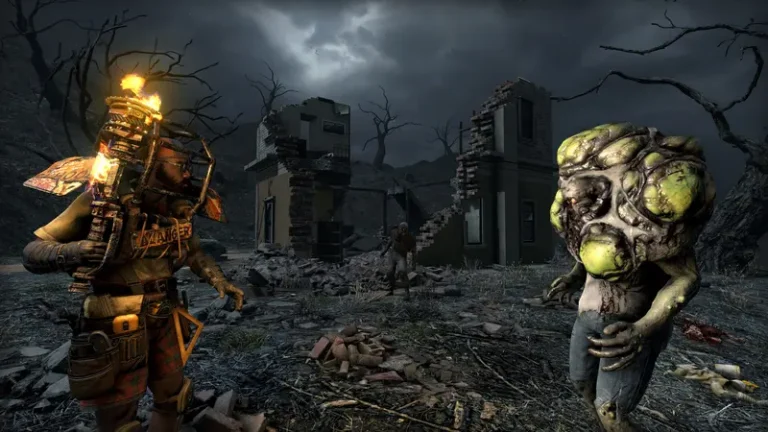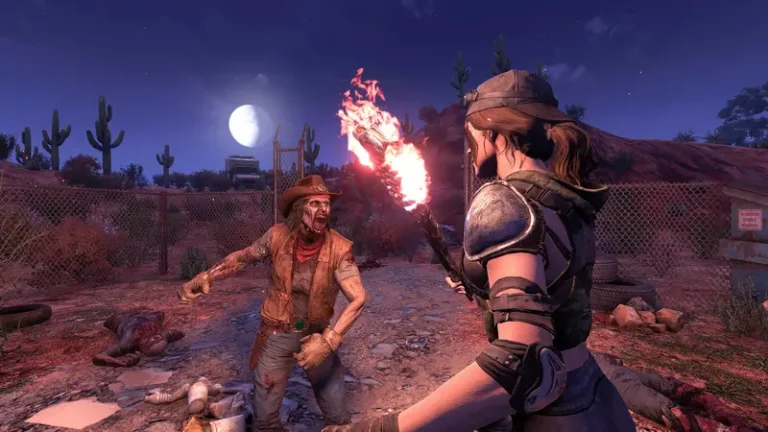
Two hidden numbers quietly run almost every fight and every loot drop in 7 Days to Die: your Game Stage and your Loot Stage. They sound similar and they often climb together, but they are separate systems with separate jobs. Game Stage decides how nasty the zombies get; Loot Stage decides how good the stuff you find is. Understanding the difference is the key to surviving the Blood Moon and knowing why your level-40 friend keeps pulling steel tools while you scrape iron.
What is Game Stage?
Game Stage is the difficulty value the game uses to build hordes. According to the official wiki, Game Stage determines “the size and composition of sleeper, screamer/scout, and special-purpose hordes” as well as the make-up of every Blood Moon Horde. A higher Game Stage means more zombies, more dangerous variants (cops, demolishers, ferals, radiated types) and tougher waves on the seventh-day horde night.
The two main inputs are your character level and your days survived (days alive). In broad terms, your Game Stage combines your player level and your adjusted days alive (plus biome-based modifiers), multiplied by a difficulty factor of about 1.2. The wiki lists that difficulty factor as 1.2, a constant that has not changed with your in-game difficulty setting since Alpha 19. Fractional results are discarded rather than rounded up.
Two details matter a lot here. First, days alive is capped at your player level — so simply surviving for hundreds of days without leveling will not endlessly inflate your Game Stage. Second, dying carries a penalty: each death subtracts from your adjusted days alive (the default is roughly two days per death, set in the game’s config files), and the value cannot fall below zero. So a careful, leveled-up player and a reckless one of the same level can end up with very different Game Stages.
Game Stage in multiplayer
On a shared server, Blood Moon and nearby hordes use a party Game Stage with diminishing returns rather than a flat sum. The highest individual Game Stage counts at full weight, the next-highest at half, the one after that at a quarter, and so on. The wiki’s own example: players with stages of 100, 80, and 60 produce a party stage of (100 × 1.0) + (80 × 0.5) + (60 × 0.25) = 155.
This is why a group’s horde night is harder than any single member would face alone, but not punishingly so — the math deliberately softens the contribution of each extra player so a four-person team isn’t slammed with four times the zombies. Players are treated as a party during Blood Moon when they’re near each other, and the calculation locks in even if someone logs in or out mid-event.
What is Loot Stage?
Loot Stage is a separate value, formalized as its own mechanic in Alpha 20, that decides the quality and quantity of items inside a previously-unopened container. The single most important distinction from Game Stage: days alive does not affect Loot Stage. Only your character level and your loot-specific modifiers feed into it.
Loot quality scales across four broad tiers as Loot Stage rises:
| Tier | Typical items at that Loot Stage band |
|---|---|
| Tier 0 | Primitive gear — stone tools, padded/early armor |
| Tier 1 | Iron-based tools and weapons |
| Tier 2 | Steel items, the best melee weapons, the rarest schematics |
| Tier 3 | Best firearms, top-end tools, and vehicles |
Importantly, the wiki notes that after Loot Stage 290 the probabilities stop changing — that’s effectively the ceiling where loot tables are fully unlocked. Note too that mundane containers use fixed probability tables and are not influenced by Loot Stage at all; the system only governs proper lootable containers.
Loot bonus: the modifiers that push your loot up
On top of the base Loot Stage, several sources add a loot bonus that nudges results toward better and more plentiful items:
- Lucky Looter perk — adds to your loot bonus for containers you open personally (the wiki lists 5% at rank 1 up to 25% at rank 5) and also speeds up search time. Since Update 2.0 it sits in the General Perks group and is no longer tied to a specific attribute.
- Lucky Goggles — eyewear that raises your loot bonus while worn.
- Eye Kandy — a consumable candy that grants a percentage and a flat loot bonus for about five minutes.
- Biome, POI and container type — your biome can raise Loot Stage by both a percentage and a flat amount, and specific points of interest or container types can shift results too.
In a party, when any member opens a container the game uses the highest Loot Stage in the group. That’s exactly why a lower-level newcomer who loots alongside a veteran finds gear far above their solo Loot Stage — a great reason to run dungeon-style POIs together.
How this fits the 1.0 learn-by-reading system
Since the Alpha 21 / 1.0 era, crafting recipes are unlocked by reading magazines rather than the old skill-point unlocks, and most tiered loot — tools, weapons, armor, books, schematics, mods, ammo, recipes and parts — is gated by Loot Stage. A higher Loot Stage doesn’t just hand you finished steel gear; it improves the odds on the magazines and parts that feed the learn-by-reading progression, accelerating your whole crafting tier climb. For the full reading system, see our 7 Days to Die Magazines Guide: Learn-by-Reading and Crafting Tiers and the 7 Days to Die Skills, Attributes & Perks Guide.
Why higher Game Stage means harder hordes
Because Game Stage is fed by both level and survival time, it climbs naturally as you play — and the horde-building logic reads that number to scale spawn counts and unlock tougher zombie types. The practical lesson: a Blood Moon at Game Stage 50 is a world apart from one at Game Stage 150. If you push your level fast but neglect your defenses, your seventh-night horde can outscale your base. Plan your defenses around your current Game Stage, not the one you had last week. Our 7 Days to Die Horde Base Guide: Designs to Survive Blood Moon and the 7 Days to Die Base Building Guide: Blocks, Upgrades and Integrity cover builds that keep pace.
FAQ
Does staying alive longer make loot better?
No. Days alive feeds Game Stage (horde difficulty), but the wiki is explicit that days alive does not affect Loot Stage. Better loot comes from leveling up plus your loot bonus (Lucky Looter, Lucky Goggles, Eye Kandy, biome and POI), not from surviving more days.
Does dying make my game easier?
Slightly, and only temporarily. Each death subtracts from your adjusted days alive (roughly two days by default), which lowers your Game Stage a little and can soften upcoming hordes. It won’t reduce your level, and the days-alive value can’t go below zero — so it’s a small effect, not a reset.
How does loot work when I play with friends?
When any party member opens a container, the game uses the highest Loot Stage in the group, so lower-level players benefit from looting alongside higher-level ones. Hordes, meanwhile, use a diminishing-returns party Game Stage that scales up difficulty as your group grows.
If you want everyone’s Game Stage and Loot Stage to keep climbing on the same map, an always-on world helps — a dedicated 7 Days to Die server you can share with friends keeps progression persistent whether or not the host is online. For setup walkthroughs, see the 7 Days to Die server documentation. You may also like our 7 Days to Die Traders & Quests Guide: Rewards and Tiers for another reliable source of tier-scaled loot.
Ready to play?
Run your own 7 Days to Die server with XGamingServer
Spin up an always-on 7 Days to Die server your friends can join in minutes — no port-forwarding, no tech headaches.