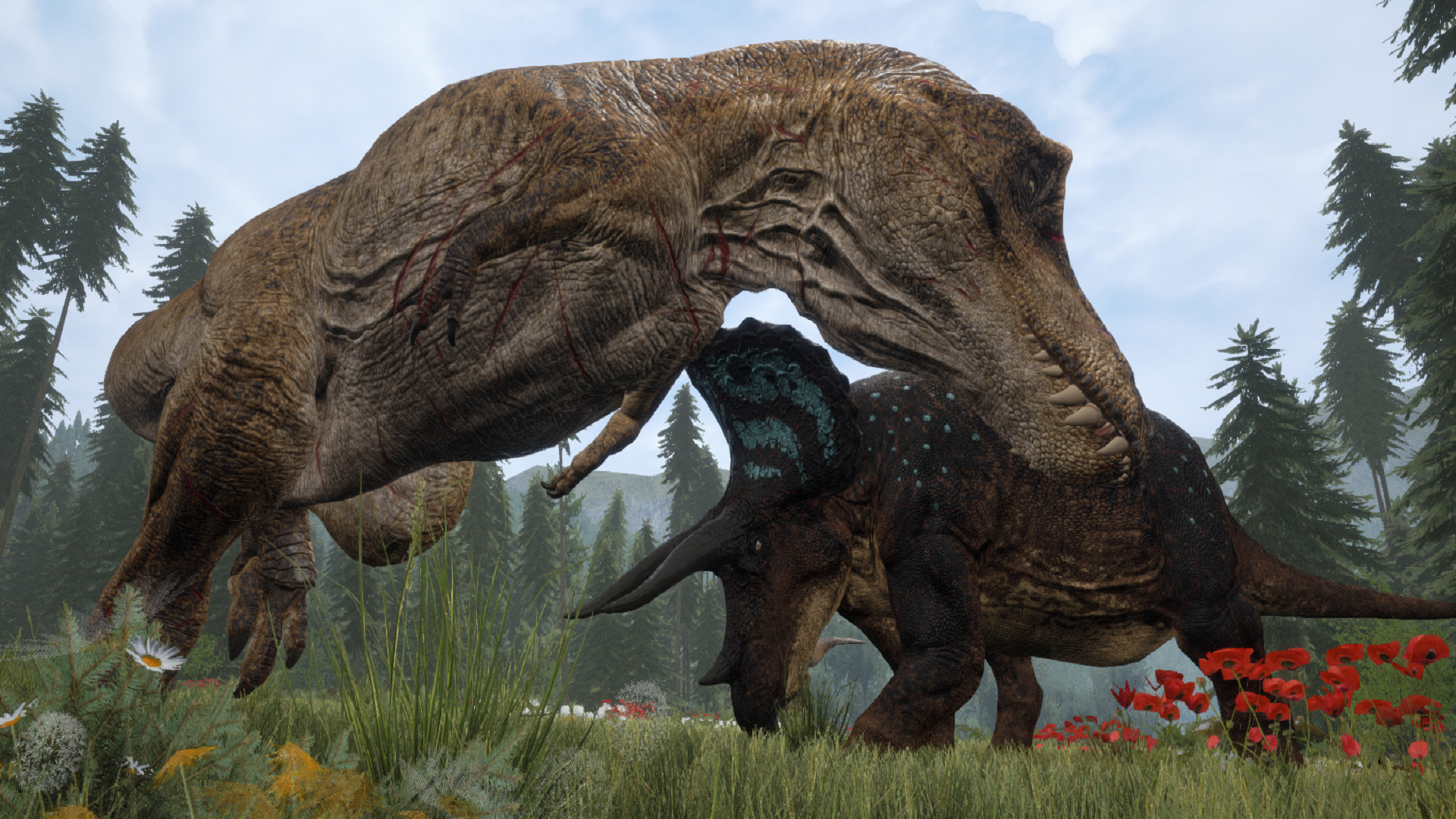
Raising a clutch of healthy babies is one of the most rewarding loops in The Isle: Evrima — and one of the most misunderstood. Breeding is not a single button; it’s a chain of courting, gestating, laying, incubating at the right temperature, hatching, and then feeding hungry hatchlings until they can fend for themselves. This guide walks through every step of nesting and parental care on the current Evrima branch, with the exact keybinds and the mechanics that actually matter. (Everything here is Evrima, not the deprecated Legacy branch.)
The breeding loop at a glance
Before the details, here’s the full sequence so you can see where each step fits. Every stage has a default keybind, all of which are rebindable in Settings → Key Bindings.
| Step | Action | Key |
|---|---|---|
| 1. Court | Male initiates, female responds | Hold N (both) |
| 2. Gestate | Open the egg/nest UI, choose egg count | Tab |
| 3. Lay | Place 100%-gestated eggs into the nest | E |
| 4. Incubate (warm) | Lie on the nest to raise temperature | Lie on nest |
| 4. Incubate (cool) | Cool the eggs down | Hold E |
| 5. Hatch | Invited players hatch from the eggs | Spacebar |
| 6. Feed | Feed a begging baby | Hold E over it |
Step 1: Courting and pairing a mate
Breeding requires a paired mate of the same species — there is no cross-species nesting. The male initiates by holding N while facing a female. The female responds by also holding N, with both dinos close together and facing each other. When it succeeds, the game automatically forms a party, so courting is best attempted while party-less.
Crucially, courting must happen in or near shallow water. (For Deinosuchus, the croc must be on the water surface.) Once the pair bonds, the relationship persists across logoffs, so you don’t have to re-court every session.
Step 2: Who can nest, and gestating eggs
Only females gestate and lay eggs. A female can begin pre-gestating at roughly 50%+ growth — she does not need to be a full adult. A female can gestate internally even without a mate, but laying eggs into a nest requires the male mate plus a built nest.
To gestate, open the egg/nest UI with Tab and choose how many eggs to grow. This is where your diet pays off directly. Each egg consumes hunger plus a portion of each nutrient bar, so you should eat a full preferred diet before gestating. The key rule: a better diet produces more eggs and fewer rotten ones. If you’re not yet confident in the β/γ/α nutrient system, our diet and nutrients guide breaks down exactly which organs and foods fill each bar.
Gestation takes a few minutes and is species-dependent. (A single community source cites roughly nine minutes to gestate plus nine to incubate, but that figure is unconfirmed — treat the timing as “a few minutes, varying by species.”)
Step 3: Laying the clutch
Only eggs that have reached 100% gestation can be placed. When ready, the female builds the nest, lies down on it, and places the eggs with E. There is no fixed clutch number — the count is capped by your available hunger and nutrients, which is why feeding to a full preferred diet beforehand directly increases how many viable eggs you can lay. No published per-species hard cap exists; it’s diet-dependent.
Step 4: Incubation — temperature sets the sex
This is the most important — and most overlooked — part of nesting. Egg temperature determines the sex of your hatchlings:
- Warm eggs → female
- Cool eggs → male
To warm the eggs, the parent lies on the nest. To cool them, hold E. The balancing act matters: don’t let the eggs get too cold, but excess heat is also harmful, so you’re managing the temperature toward your desired sex ratio rather than just cranking it one way. The incubation method varies by species — some species brood directly while others gather twigs.
While incubating, remember that eggs are vulnerable to predators and are scent-trackable — a hostile player can hold Q to pick up the egg scent on the directional compass. Pick a defensible, hidden nest site. Nests can also rot from a poor parent diet, wrong temperature, or abandonment, so don’t wander far.
Step 5: Hatching
Eggs are filled by invited players, who are placed into the eggs and then hatch by pressing Spacebar. On private nests, joining players use a code. This is how groups grow their pack or herd from the same bloodline — every hatchling that emerges is a real player ready to be raised.
Step 6: Feeding and raising babies
Hatchlings can’t reliably feed themselves at first — they rely on parental care. A baby begs by pressing E, and a caregiver holds E over the baby until a crunch or munch sound confirms a successful feed. (Deinosuchus is the exception — it doesn’t beg.)
The single most important raising mechanic: babies inherit the diet of whoever feeds them. A feeder with a strong, well-rounded diet passes faster growth straight to the hatchling, so the parent’s nutrient management keeps paying off well after the eggs hatch. The better your diet when you feed, the faster the baby grows.
Begging doesn’t last forever. At around 20% growth, babies can no longer beg and must start eating and drinking normally (the exact threshold is species-dependent). After that point, your job shifts from feeding to protecting while they self-sustain.
Nesting Grounds and growth bonuses
Beyond feeding, location matters. Nesting Grounds — designated areas on the map — improve hatchling growth rate. Raising your young inside these zones stacks with a good feeding diet to get juveniles to safety faster. To plan where to nest relative to spawns, water, and migration zones, our Gateway interactive map shows the terrain at a glance, and the Growth Calculator helps you estimate how long a clutch will take to reach key milestones under different diets.
Inherited mutations and offspring bonuses
Breeding isn’t just about numbers — it’s a way to pass power down a bloodline. Offspring inherit some of their parents’ mutations and can access up to 6 mutation slots (the extra “inherited” slots appear as smaller hexagons), compared to the 3 base lifecycle slots a fresh dino gets. This makes raised offspring potentially stronger than wild-spawned dinos of the same species. For the full breakdown of slots and which mutations are worth chasing, see our mutations guide.
A few breeding-relevant mutations stand out. Prolific Reproduction is a female-only mutation (earned by raising at least five offspring) that grants your offspring bonus health and stamina regen. Advanced Gestation cuts gestation time by 50% for females. Parthenogenesis lets a female nest without a mate at all. Note that documented breeding advantages are feeding-driven growth, the inherited 6-slot pool, and Nesting-Ground bonuses — claims of “stay-near-parent protection auras” are unconfirmed, so don’t count on them.
Common nesting mistakes to avoid
- Gestating on an empty stomach. Eggs cost hunger and nutrients — gestate hungry and you’ll get fewer eggs and more rotten ones.
- Ignoring temperature. Letting eggs run too cold gives you all males; cooking them all warm gives all females and risks heat damage. Manage toward the ratio you want.
- Nesting in the open. Eggs are scent-trackable with Q and predators will find an unguarded nest.
- Wandering off mid-incubation. Abandonment, wrong temperature, or a poor parent diet can rot the nest.
- Forgetting babies wean at ~20% growth. Once they stop begging, they need normal food and water — and protection.
Want a server where you control growth rates, nesting rules, and group sizes so your herd or pack can raise babies in peace? Our dedicated Isle Evrima hosting plans give you full admin control, and the Isle Evrima setup docs walk through configuring everything from spawn rates to mutation re-rolls.
Frequently asked questions
How do I start courting in The Isle Evrima?
The male holds N facing a female of the same species, and the female responds by also holding N while close and facing him. Do it in or near shallow water, and ideally while party-less since a successful courtship auto-forms a party.
How is the sex of my babies decided?
By egg temperature during incubation: warm eggs hatch as females, cool eggs hatch as males. Lie on the nest to warm them, or hold E to cool them — while avoiding both extreme cold and excessive heat.
How many eggs can I lay?
There’s no fixed clutch size. The number is capped by your available hunger and nutrients, so a fuller, better-balanced diet before gestating yields more viable eggs and fewer rotten ones. There is no published per-species hard cap — it’s diet-dependent.
Do I need to be a full adult to breed?
No. Only females gestate, and a female can begin pre-gestating at roughly 50%+ growth. However, laying eggs into a nest still requires the male mate plus a built nest.
How do I feed a baby, and for how long?
Babies beg by pressing E; you feed them by holding E over them until you hear a crunch. Babies inherit the diet of whoever feeds them, so a strong feeder diet means faster growth. At around 20% growth they stop begging and must eat and drink on their own.
Will my babies be stronger than wild dinos?
They can be. Offspring inherit some parent mutations and can access up to 6 mutation slots versus the 3 base slots of a fresh spawn. Combined with Nesting-Ground growth bonuses and a good feeding diet, raised young get a real head start.
Ready to play?
Run your own The Isle Evrima server with XGamingServer
Spin up an always-on The Isle Evrima server your friends can join in minutes — no port-forwarding, no tech headaches.