Quick answer: the /summon command spawns a single entity of a chosen type at a position, with optional NBT data to customize it. The basic form in Minecraft Java Edition 26.2 is summon . For example, summon creeper ~ ~ ~ {powered:true} drops a charged creeper right where you’re standing.
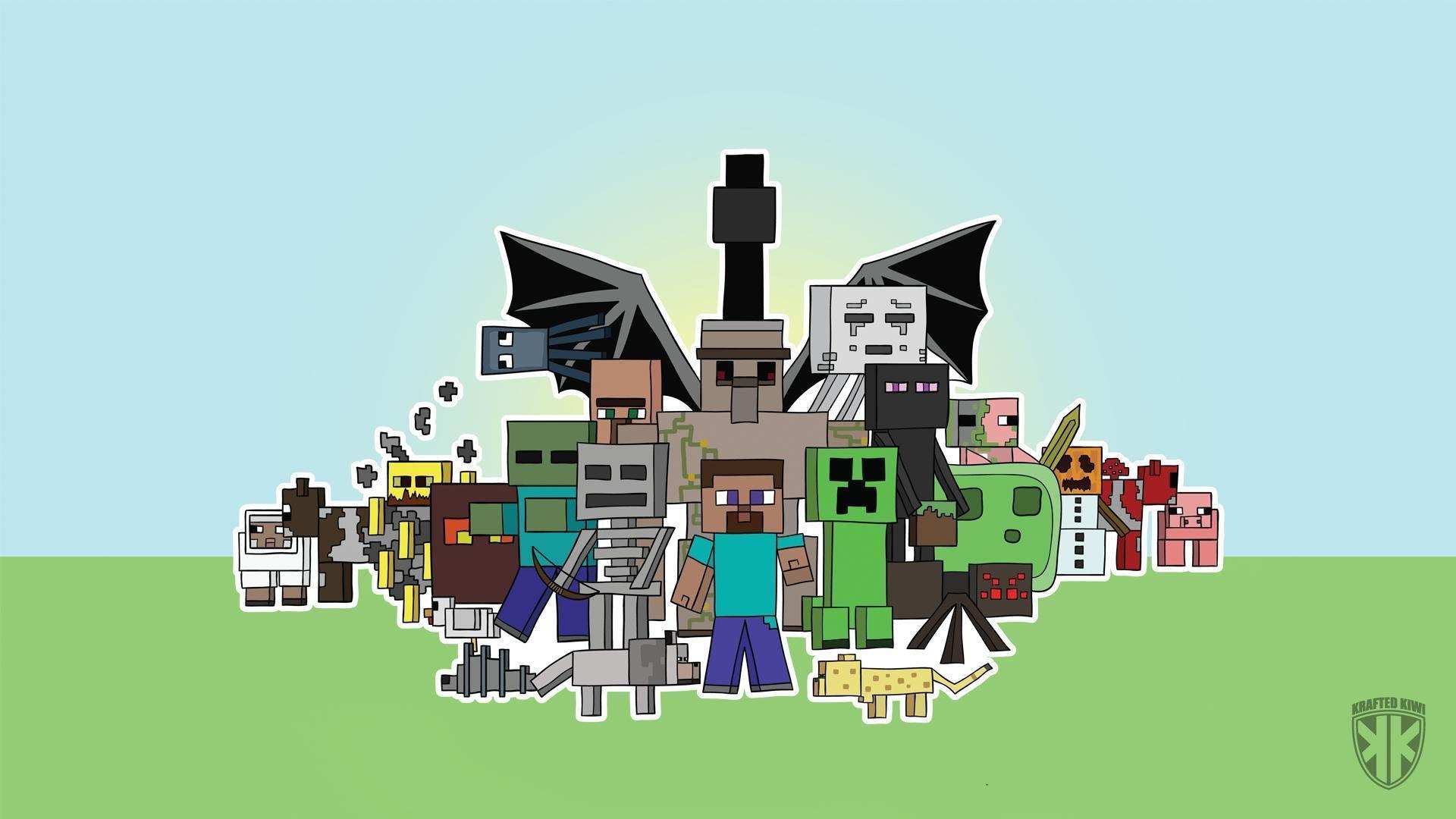
The /summon command is one of the most powerful world-building and redstone tools in the game. It can spawn mobs, lightning, TNT, armor stands, dropped items, and almost any of the roughly 164 registered entity types. It requires operator permissions, so you’ll want it enabled on your world or server. This guide covers the exact Java 26.2 syntax, real copy-paste examples, and the ways Bedrock Edition differs. Want a no-typing option? Build commands visually with our free Minecraft Summon Command tool.
Syntax
The full Java Edition 26.2 signature is:
summon
Only
| Argument | Type | Required? | Description |
|---|---|---|---|
| resource | Yes | A registered ID in the minecraft:entity_type registry, e.g. minecraft:creeper. The minecraft: namespace may be omitted. |
[ | vec3 | No | Spawn coordinates. Defaults to the command’s execution position when omitted. |
[ | nbt_compound_tag | No | An SNBT compound of Entity-format data tags, e.g. {NoAI:1b}. |
The entity ID must exist in the registry. Common IDs include minecraft:zombie, minecraft:skeleton, minecraft:creeper, minecraft:villager, minecraft:armor_stand, minecraft:item, minecraft:lightning_bolt, and minecraft:tnt. Java 26.2 (“Chaos Cubed”, released 2026-06-16) added the Sulfur Cube mob (minecraft:sulfur_cube) to the registry.
The position supports three notations: absolute numbers like 100 64 100, tilde-relative like ~ ~ ~ (the executor’s position) or ~-10 ~ ~ (10 blocks west), and caret-local like ^ ^ ^5 (relative to the executor’s facing direction). Coordinate limits are enforced in 26.2: X and Z must be within [-30000000, 30000000), and Y within [-20000000, 20000000).
The NBT compound applies Entity-format data tags. Important for 26.2: /summon still takes genuine entity NBT here — not data components. Only item stacks nested inside that NBT (such as equipment) use the newer component format. For a broader reference, see our full Minecraft commands list and target selectors guide.
Examples
These are copy-paste ready for Java 26.2. Run them from a chat box (with cheats/op) or a command block.
1. Strike lightning 10 blocks west:
summon lightning_bolt ~-10 ~ ~
Spawns a lightning bolt using tilde-relative coordinates, offset 10 blocks along the X axis from wherever the command runs.
2. A named, charged creeper:
summon creeper ~ ~ ~ {powered:true,CustomName:'"Powered Creeper"'}
powered:true makes it charged, and CustomName takes a JSON text component wrapped in single quotes. Add CustomNameVisible:1b if you want the name to always render above the mob.
3. A baby zombie at fixed coordinates:
summon zombie 100 64 100 {IsBaby:true}
Uses absolute coordinates and the IsBaby tag to spawn a baby variant.
4. A frozen evoker facing east:
summon evoker ~ ~ ~ {Rotation:[-90f,0f],NoAI:1}
Rotation is a list of two floats — yaw then pitch (here -90f yaw faces east, 0f pitch is level). NoAI:1 disables the mob’s AI so it won’t move, attack, or pathfind.
5. An armored zombie with an enchanted sword:
summon zombie ~ ~ ~ {equipment:{head:{id:"minecraft:diamond_helmet",count:1},mainhand:{id:"minecraft:iron_sword",count:1,components:{enchantments:{sharpness:3}}}}}
The unified equipment compound maps slot names (head, chest, legs, feet, mainhand, offhand, body, saddle) to item stacks. Note the nested items use the modern {id, count, components} format. Pair this with the item IDs list and the enchantments hub to build custom gear.
Permissions, mechanics, and NBT rules
Permission level: in Java Edition, /summon requires permission level 2 (operator). That means it’s available in singleplayer when cheats are on, from command blocks (which run at level 2), and to server ops with level 2 or higher.
What can’t be summoned: players and fishing bobbers cannot be spawned — those commands always fail.
NBT vs data components (the key 26.2 detail): unlike /give and /item, which switched to [data components] in 1.20.5, /summon still takes real entity NBT as its third argument. The component format only matters for item stacks nested inside that NBT. A few tags to use in their modern form:
| Modern (26.2) | Legacy (pre-1.20.5, invalid) | Notes |
|---|---|---|
active_effects, with id:"minecraft:speed" | ActiveEffects, numeric Id | Effect id is now a namespaced string. |
equipment:{...} | ArmorItems[] / HandItems[] | One unified compound replaced the two arrays. |
count, components | Count, tag | Item-stack keys are lowercase now. |
Booleans accept either 1b/0b or true/false. Effect durations use ticks (20 ticks = 1 second), and duration:-1 means infinite. For example: summon zombie ~ ~ ~ {IsBaby:true,active_effects:[{id:"minecraft:speed",amplifier:1b,duration:-1,show_particles:true}]}. Running summon in loops on a live server can spawn a lot of entities fast — a solid host helps, and our Minecraft server hosting handles command-block-heavy worlds without lag.
Java vs Bedrock
The two editions handle /summon very differently. The biggest difference: Bedrock has no NBT argument at all. The deep entity customization Java does with {...} NBT simply isn’t possible with Bedrock’s /summon.
| Java Edition | Bedrock Edition | |
|---|---|---|
| Signature | summon | summon |
| Customization | Full entity NBT compound | nameTag string + spawnEvent only |
| Rotation | Rotation:[yaw,pitch] in NBT | Separate yRot / xRot args, or facing |
| Permission | Level 2 (op / cheats) | Game Directors / cheats enabled |
Bedrock also offers overloads like summon and summon . So while /summon creeper ~ ~ ~ {powered:true} works in Java, the closest Bedrock can get to a plain spawn is /summon creeper ~ ~ ~ — with no way to make it charged via the command alone.
FAQ
What op level do I need to use /summon?
In Java Edition you need permission level 2. That’s granted by op status on a server, by enabling cheats in singleplayer, or automatically inside command blocks.
Can I summon a player or a fishing bobber?
No. Players and fishing bobbers cannot be summoned — the command will always fail if you try either one.
Does /summon use data components like /give does?
No — the third argument to /summon is still genuine entity NBT in 26.2. Data components only appear inside nested item stacks, such as items in the equipment compound. This is different from our give command guide, where the whole item uses components.
How do I give a summoned mob armor or a weapon?
Use the equipment compound, mapping slots like head or mainhand to item stacks in {id, count, components} form. This replaced the old ArmorItems[] and HandItems[] arrays.
Are the coordinates limited?
Yes. In 26.2, X and Z must be within [-30000000, 30000000) and Y within [-20000000, 20000000). Omit the position entirely to spawn at the command’s execution point.
Related guides: summon command reference, teleport commands, gamerules list, and keep inventory. Or skip the syntax entirely with the free Minecraft Summon Command generator.
Ready to play?
Run your own Minecraft server with XGamingServer
Spin up an always-on Minecraft server your friends can join in minutes — no port-forwarding, no tech headaches.