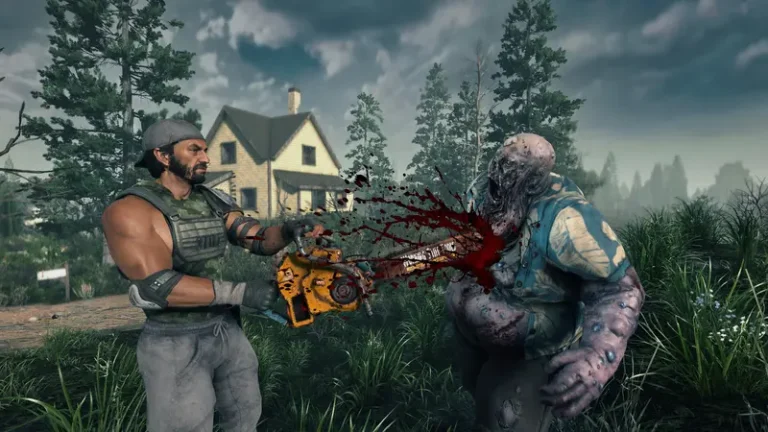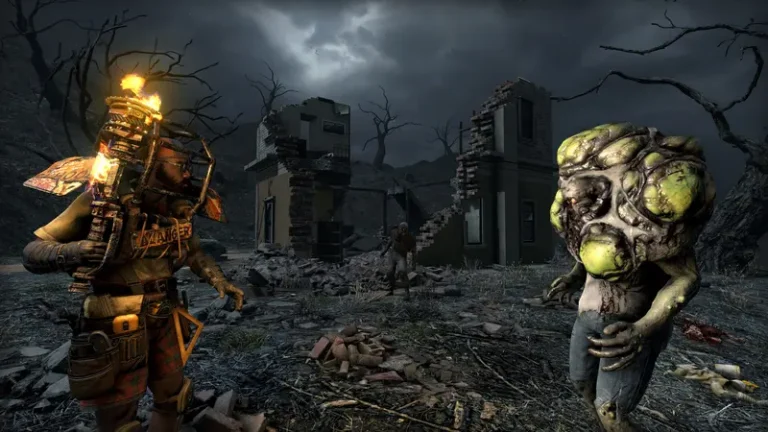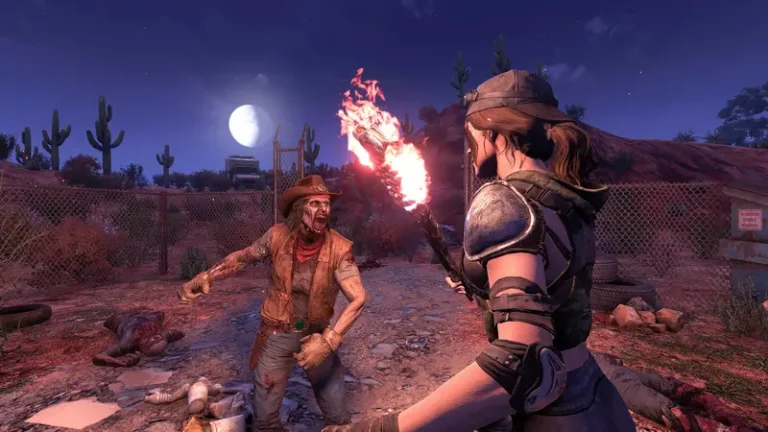

The modern 7 Days to Die Console Edition is not the game you might remember. If you played the old 2016 Telltale port on PS4 or Xbox One, forget it entirely: that legacy version is frozen, unsupported, and runs a much older, completely different weapon set. The version you want — the one launched by The Fun Pimps on July 25, 2024 for PS5 and Xbox Series X|S — shipped simultaneously with PC 1.0 and is built on the exact same 1.0 foundation. That means its arsenal, its crafting rules, and its two-axis weapon system are the same ones PC players got when the game finally left twelve years of Early Access.
This guide breaks down how weaponry actually works in the Console Edition: the dual Tier-and-Quality system, how to chase Q6 Legendary gear, every weapon category from clubs to the Desert Vulture, and — critically — where Console may differ from the rapidly-evolving PC 2.x branch. Whether you’re prepping for your first Blood Moon or optimizing a dedicated server full of survivors, this is the most complete answer you’ll find for “7 days to die console weapons.”
First, Which Version Are You Playing?
Version context matters more in 7 Days to Die than in almost any other survival game, because the game is on a fast-moving release line and Console can lag behind PC.
- 1.0 — July 25, 2024. The big exit from Early Access. Unified build across PC, PS5, and Xbox Series. This is the content base the modern Console Edition launched on.
- 1.2 — December 10, 2024. Added crossplay between PC, PS5, and Xbox Series.
- 2.0 “Storm’s Brewing” — Stable June 30, 2025 (PC). Introduced biome-progression hazards, a Dynamic Storm system, new zombies, and reworked content.
- 2.6 — the current stable branch in mid-2026 (PC). The line is best summarized as “1.0 and beyond, 2.x series, 2026.”
Here’s the catch for console players: the Console Edition launched on the 1.0 base, and historically console has trailed PC by a patch or two. Any weapon balance changes, new firearms, or reworks that arrived in PC 2.0 through 2.6 may not yet be present on console, depending on the exact patch your platform has received. Throughout this guide, we describe weapons against the verified 1.0 baseline and flag where PC 2.x content may not have reached console yet. Always check your in-game version screen at the time you read this — the 1.0 fundamentals below are stable, but the cutting-edge PC additions are the part to verify.
The Two-Axis System: Tier vs. Quality
Every weapon in 7 Days to Die is defined by two independent values, and understanding the difference is the single most important thing for new players. People constantly confuse them, then wonder why their “high-level” gun feels weak.
Axis 1 — Tier (the material / model class)
Tier describes what the weapon fundamentally is — its material and model class. For melee, that’s a progression like stone → iron → steel. For firearms, it runs from improvised pipe weapons up through proper military-grade guns. Tiers are generally labeled Tier 1, Tier 2, and Tier 3. A higher tier means a better base ceiling: a Tier 3 weapon has more raw potential than a Tier 1, all else being equal.
Axis 2 — Quality (Q1 to Q6)
Quality is a per-item value with color coding that scales a weapon’s stats — damage, durability, and the number of mod slots. Since the 1.0 release, the quality cap is Q6. The scale runs Q1 through Q6, and Q6 is “Legendary”, the top tier. Legendary Q6 gear is craftable using Legendary Parts, a special component you’ll be hunting in the late game.
The crucial insight: the two axes interact. A high-quality lower-tier weapon — especially one loaded with the right mods — can outperform a low-quality higher-tier weapon. A Q6 iron club with mods can be a better day-to-day tool than a beat-up Q1 steel one. Don’t tunnel on tier alone; quality and mod slots often decide real-world performance.
| Axis | What it represents | Range | How you improve it |
|---|---|---|---|
| Tier | Material / model class (stone→iron→steel; pipe→military) | Tier 1 – Tier 3 | Craft or loot a better model; level crafting skills |
| Quality | Per-item stat scaling + mod slots, color-coded | Q1 – Q6 (Q6 = Legendary) | Loot higher quality, craft up, use Legendary Parts for Q6 |
Weapon Categories on Console Edition
The Console Edition’s roster matches PC 1.0, since both launched together. Below is the full category breakdown. Remember the PC-vs-console flag: any new firearm or rework added in PC 2.x is the part that may be missing or different on your console build — verify against your version screen.
Melee Weapons
Melee is your silent, ammo-free backbone, and it splits into archetypes that lean on different attributes and stamina costs:
- Blunt — clubs, sledgehammers, and batons. Sledgehammers stagger and ragdoll zombies, great for crowd control on horde night.
- Blade — knives and machetes for fast, bleed-focused damage; ideal for stealth kills.
- Spears — reach weapons that let you hit through gaps and poke from relative safety; they can be thrown.
- Stamina archetype — heavy blunt weapons trade big damage for high stamina cost, so manage your bar carefully.
Pistols & Handguns
- Pistol — semi-automatic, 12-round 9mm. Your reliable starter sidearm.
- .44 Magnum — high-impact revolver, big single-shot punch.
- Desert Vulture — the heavy-hitting top-tier handgun.
- SMG-5 — full-auto submachine gun for sustained close-range fire.
Rifles
- Hunting Rifle — bolt-action workhorse, strong against animals and ferals.
- Lever-Action Rifle — faster follow-up shots than the bolt-action.
- Marksman / Sniper Rifle — long-range precision and headshot reach.
- Tactical Assault Rifle / AK-47-type — automatic fire for horde control.
Shotguns
- Pump-Action Shotgun — devastating point-blank damage, the classic horde-night defender.
- Sawed-Off (Double-Barrel) — two barrels of burst damage, brutal up close.
- Auto Shotgun — the top of the line for sustained close-range carnage.
Bows, Crossbows & Explosives
- Bows and crossbows — silent ranged options that won’t generate Heat (more on that below), perfect for stealth builds and avoiding Screamers.
- Explosives — pipe bombs, grenades, and similar tools for crowds and structures.
- Pipe-weapon tier — the improvised early-game class (pipe pistol, pipe rifle, pipe shotgun, pipe machine gun) that bridges you from melee into proper firearms.
Crafting, Modding & the Road to Legendary
Weapons don’t just appear — they’re gated behind crafting components and skill progression. The most important intermediate component is Mechanical Parts, which represent the gears and moving metal inside weapons, tools, workstations, vehicles, and traps. You harvest them most efficiently by disassembling vehicles and appliances (refrigerators, air conditioners, radiators, washers/dryers, sinks) with a Wrench, Ratchet, or Impact Driver, and by looting hardware stores, Working Stiffs crates, garages, factories, and air drops.
The Wrench itself becomes craftable after you read the “Scrapping 4 Fun” magazine, and its recipe uses forged iron, mechanical parts, and duct tape. Because mechanical parts gate so much of mid-to-late progression — including the workbench you’ll use to craft better weapons — securing a steady supply is one of your early priorities. For a deep dive on farming them efficiently, see our complete mechanical parts farming guide.
To reach the apex — a Q6 Legendary weapon — you’ll need Legendary Parts. Combine these with the right tier recipe at the appropriate workstation to craft gear at the top of the quality scale. Beyond raw quality, every weapon has mod slots (the count rising with quality), letting you bolt on scopes, suppressors, extended magazines, and barrel extensions to tailor each gun to its role. A well-modded Q5–Q6 weapon is the real endgame, not just a higher tier.
Heat, Screamers & Choosing Your Loadout
Your weapon choice has consequences beyond damage. Firing guns generates Heat, the same hidden system fed by forges and crafting. When Heat in an area gets high enough, a Screamer can spawn — and if it spots you, it screams to summon a horde, killing your sense of safety mid-loot-run. This is why bows, crossbows, and melee are prized by stealth players: they let you clear a building or defend quietly without inviting a wandering horde. Plan your loadout around the situation, not just the biggest number.
Different threats also demand different tools. The Demolisher — a massive, tanky zombie with a green explosive charge on its chest — is a perfect example. If you strike that chest charge directly, it turns red, beeps, and detonates (capable of devastating damage to entities and obliterating blocks in a roughly 5-block radius). The correct play is to hit it anywhere except the chest charge, which lets you kill it without triggering the explosion. Precision weapons that let you aim around the charge are worth their weight here. For the full bestiary, read our guide to zombie types and special infected.
Weapons & the Blood Moon Horde
Everything about your arsenal ultimately serves one event: the Blood Moon Horde, which by default arrives every 7th day and runs from 22:00 to 04:00. The horde scales with your hidden Game Stage (driven by player level, days survived, and zombies killed), the number of participating players, and difficulty — so as your gear improves, so does the threat.
For horde night specifically, your weapon strategy should favor crowd control and ammo economy: shotguns for the funnel, automatic rifles or SMGs for sustained fire, and traps to thin the waves before they reach you. Reinforced concrete or steel walls matter because zombies dig and pathfind toward you, destroying blocks along the way. Pair a strong loadout with a prepared kill corridor and you’ll survive nights that would otherwise overwhelm you. Our Blood Moon Horde strategy guide covers base design and defense in depth, and the biomes guide explains how loot tiers (and danger) rise from the Pine Forest up to the Wasteland — which is also where the highest-tier weapons drop.
Running Your Own Console-Friendly Server
If you want full control over how weapons, hordes, and loot behave for your group, a dedicated server is the answer. Thanks to crossplay (added in 1.2), PC, PS5, and Xbox Series players can share the same world. A hosted server lets you tune the experience through serverconfig.xml, where each setting is written as
Here are the key defaults that affect combat pacing and weapon relevance:
| Property | Default | Effect on combat |
|---|---|---|
GameDifficulty | 2 | 0–5 scale; raises zombie health/damage, making weapon quality matter more |
BloodMoonFrequency | 7 | Days between hordes; 0 disables them entirely |
BloodMoonRange | 0 | Random ± day variance around the frequency |
BloodMoonEnemyCount | 8 | Max zombies alive per player during a horde |
ServerPort | 26900 | Primary game port (also uses 26901–26902 UDP) |
ServerMaxPlayerCount | 8 (verify on 1.0+) | How many survivors can fight together |
If you plan to run weapon-rework or overhaul mods, you’ll typically need to disable Easy Anti-Cheat by setting EACEnabled to false (it defaults to true). To set up the server tool yourself via SteamCMD, the dedicated server app ID is 294420 (the game client is 251570):
steamcmd +force_install_dir /path/to/7dtd-server +login anonymous +app_update 294420 validate +quitFor step-by-step setup, config walkthroughs, and panel-based controls, our 7 Days to Die server documentation has the full reference. And if you’d rather skip the manual SteamCMD work entirely, you can spin up a managed 7 Days to Die server in minutes with crossplay-ready configuration out of the box. For broader admin tasks, see our guides on adding an admin and disabling EAC for mods.
Frequently Asked Questions
Does the 7 Days to Die Console Edition have the same weapons as PC?
Yes, as a baseline. The modern Console Edition launched July 25, 2024 on the same 1.0 content base as PC 1.0, so its weapon roster, the Q1–Q6 quality system, and Legendary Parts crafting all match PC 1.0. The caveat is forward-looking: any weapon balance changes, new firearms, or reworks introduced in PC 2.0 through 2.6 may not yet be present on console if your platform’s patch is behind PC. Console may lack PC 2.x weapon changes — check your in-game version screen to confirm what’s currently live on your build.
What is the highest weapon quality, and how do I craft it?
Since the 1.0 release, the quality cap is Q6, called “Legendary.” You reach it by crafting with Legendary Parts, a late-game component combined with the appropriate tier recipe at a workstation. Higher quality boosts damage, durability, and the number of mod slots — so a Q6 weapon stacked with mods is the true endgame, often outperforming a lower-quality weapon of a higher tier.
What’s the difference between Tier and Quality?
Tier is the weapon’s material and model class — like stone → iron → steel for melee, or pipe weapons → military firearms for guns, running Tier 1 to Tier 3. Quality (Q1–Q6) is a per-item value that scales that specific weapon’s stats and mod slots. They’re independent: a high-quality, well-modded lower-tier weapon can beat a low-quality higher-tier one, so don’t judge a weapon by tier alone.
Should I avoid guns to prevent attracting hordes?
It’s situational. Firing guns generates Heat, and high Heat can spawn a Screamer, which screams to summon a horde if it spots you. During quiet looting or stealth play, bows, crossbows, and melee weapons let you stay silent and keep Heat low. For the Blood Moon Horde or open combat, guns are essential — just manage your base Heat and kill any Screamers quickly before they call reinforcements.
Is the old 2016 console version the same game?
No. The 2016 Telltale-published version on PS4 and Xbox One is a separate, frozen, no-longer-developed game with a much older and different weapon set. The modern Console Edition by The Fun Pimps (PS5 and Xbox Series X|S, July 2024) is the supported, up-to-date title that shares its foundation with PC. Owners of the old digital version received a 25% discount on the new release. Don’t conflate the two — this guide is entirely about the modern edition.
How do I get better weapons faster?
Prioritize three things: loot tougher biomes (loot tier rises from Pine Forest up to the Wasteland), secure a steady supply of Mechanical Parts to unlock the workbench and craft upgrades, and invest in the relevant crafting skills via magazines. Reading “Scrapping 4 Fun” unlocks the Wrench for efficient salvage, and disassembling vehicles and appliances feeds your parts economy. From there, chase Legendary Parts for that final Q6 jump.
Final Word
The Console Edition gives PS5 and Xbox Series players the full, modern 7 Days to Die weapon system: a two-axis Tier-and-Quality model, six quality grades topping out at Legendary Q6, and a deep roster spanning melee, handguns, rifles, shotguns, bows, and explosives. Master the difference between tier and quality, manage your Heat, and tailor your loadout to the threat — and you’ll be ready for whatever the seventh night throws at you. Just keep one eye on your version screen, because the PC 2.x branch keeps adding content that console is still catching up to.
Related tool: the full 7 Days to Die Items & Weapons Database — searchable weapon stats, ammo and trader values.
Ready to play?
Run your own 7 Days to Die server with XGamingServer
Spin up an always-on 7 Days to Die server your friends can join in minutes — no port-forwarding, no tech headaches.