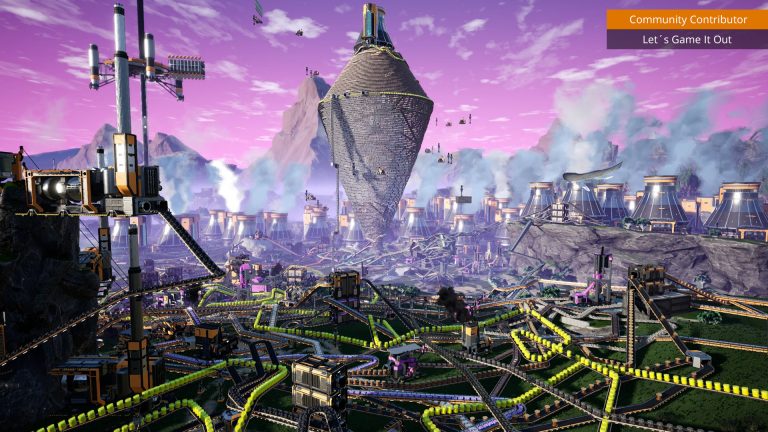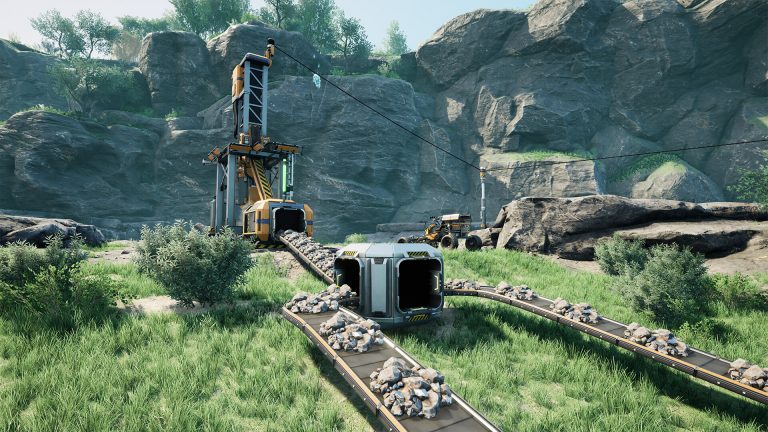

Configuring a Satisfactory dedicated server is the difference between a buttery-smooth co-op factory and a stuttering megabase that drops players mid-build. This guide is the most complete, current walkthrough of every setting that matters on the live build — Update 1.2 (patch 1.2.2.2, released June 2, 2026), now shipping simultaneously on PC, PlayStation 5 and Xbox Series S/X. Update 1.2 introduced Game Modes (cost/power multipliers, world randomization of resource node purities, and world seeds), a rebuilt vehicle path automation system, Fluid Trucks and Fluid Stations as a Tier 5 pipeline alternative, and an improved rain system — so getting your server config right matters more than ever.
Everything below uses the current architecture. If you have read older host guides citing legacy UDP ports like 15000 and 15777, those are out of date — the live build uses the 7777 + 8888 scheme documented here. Want to skip the manual setup entirely? Our managed Satisfactory hosting plans handle the install, ports and config files for you.
Installing the server with SteamCMD
The Satisfactory Dedicated Server has its own Steam app ID: 1690800. It is a separate download from the game client and installs anonymously through SteamCMD — no account login or game ownership required on the server box. A typical anonymous install looks like this:
steamcmd +login anonymous +force_install_dir +app_update 1690800 validate +quit The base install is roughly 12.4 GB on Windows and 8 GB on Linux. Run the same command again any time you need to update the server after a new patch — validate repairs any corrupted files at the same time.
Claiming and managing the server (Server Manager flow)
Unlike many dedicated servers, Satisfactory has no admin password baked into a config file at install time. Instead you claim a fresh server through the in-game Server Manager. The official sequence is:
- Launch the Satisfactory game client and open the Server Manager from the main menu.
- Add the server by its IP address (or hostname).
- Set a name for the server.
- Set the administrator password — this is the action that claims the server and binds it to you as admin.
- Pick or create a session, or import an existing save (covered below).
Once claimed, everything from save management to player limits is reachable through that same Server Manager panel. If you are running managed hosting, the claim step is the only part you do yourself — the rest is pre-installed.
Ports: the 7777 + 8888 scheme
This is where most outdated guides will trip you up. The current architecture uses just two ports, and one of them carries both protocols. Forward these on your router or firewall:
| Port | Protocol | Purpose |
|---|---|---|
| 7777 | TCP and UDP | Server traffic / HTTPS API (TCP) + game traffic / Lightweight Query API (UDP) |
| 8888 | TCP | Game traffic, Reliable messaging |
Two rules to remember. First, port redirection is not supported for the standard port — the external and internal port numbers must match on your router. You cannot map an external 27015 to an internal 7777, for example. Second, ignore any guide telling you to open separate 15777 query and 15000 beacon UDP ports; that was the pre-1.0 model and does not reflect the live build. Whether the launch binary still accepts legacy -ServerQueryPort or -BeaconPort flags is not confirmed for 1.2, so do not rely on them.
The config files: Engine.ini and Game.ini
Two INI files hold the settings you will actually tune. Before you touch either of them, internalize the single most important gotcha:
Edit INI files only while the server is stopped. Satisfactory rewrites these files on a graceful shutdown, so any change you make to a running server gets overwritten when it next stops. Stop the server, edit, save, then start.
Engine.ini — networking and tick rate
Engine.ini controls how often the server simulates and replicates the world. The default tick rate is 30, and this is an upper limit — the server only reaches it if the hardware has headroom. Raising it on a saturated CPU does nothing.
[/Script/OnlineSubsystemUtils.IpNetDriver]
NetServerMaxTickRate=30
LanServerMaxTickRate=30

[/Script/SocketSubsystemEpic.EpicNetDriver]
NetServerMaxTickRate=30
LanServerMaxTickRate=30

[/Script/Engine.Engine]
NetClientTicksPerSecond=30
Engine.ini also holds the number of rotating autosave slots the server keeps on disk:
[/Script/FactoryGame.FGSaveSession]
mNumRotatingAutosaves=XX
Lowering mNumRotatingAutosaves reduces disk churn from save writes — useful on a large factory where each serialization pass is heavy. Keep at least a couple of slots so you always have a rollback point.
Game.ini — player count
The maximum player count lives in Game.ini. The default is 4. The official note is blunt: “Up to 127 players are theoretically possible, but not practically.” Set a realistic number based on your hardware.
[/Script/Engine.GameSession]
MaxPlayers=8
You can also set the same value as a startup argument instead of editing the file:
-ini:Game:[/Script/Engine.GameSession]:MaxPlayers=8Autosave interval
The autosave interval is not an INI key — it is a console command, FG.AutosaveInterval , and the default is 300 seconds (5 minutes). Raising this value spaces out the periodic world serialization that causes brief autosave hitching on big bases. The Advanced Game Settings toggles (no unlock cost, god mode, flight, and similar cheat-style options) are configured per-session in the Server Manager rather than in an INI file.
Hardware: how much RAM and CPU you need
| Component | Minimum | Recommended |
|---|---|---|
| CPU | x86-64 Intel i5-3570+ / AMD Ryzen 5 3600+, single-thread rating 2000+ | Highest single-thread rating you can get |
| RAM | 8 GB | 16 GB for larger saves or more than 4 players |
| Storage | 12.4 GB (Windows) / 8 GB (Linux) base install | More for save rotations and backups |
The key insight for Satisfactory hardware is that the simulation is heavily single-thread-bound. A high single-thread CPU rating (the wiki specifies 2000+) matters far more than raw core count. A 16-core server with weak per-core performance will simulate a megabase worse than a 4-core box with strong single-thread speed.
Uploading an existing single-player save
You do not transfer files by hand — the whole flow runs through the in-game Server Manager. As the server’s admin:
- Main menu → Server Manager → select your server.
- Open Manage Saves.
- Go to the Upload Save tab → click Upload Game (bottom-right).
- Switch to the Load Save tab, select the uploaded save, and click Load Game.
- The server restarts automatically — wait about a minute before reconnecting.
Your local saves live in %LOCALAPPDATA%\FactoryGame\Saved\SaveGames\ as .sav files on Windows. One caveat: a Tier 0 (Onboarding) save will have Tier 0 auto-unlocked when loaded on a dedicated server, because the onboarding tutorial does not run in dedicated mode. For the full walkthrough with screenshots, see our dedicated guide on how to upload a game save to your Satisfactory server.
Fixing lag and stutter
Lag on a Satisfactory server almost always traces back to one of a handful of causes. The dominant one is simply factory size — high object counts saturate that single CPU thread. Insufficient RAM for a big save, autosave serialization stutter, and tick-rate pressure under load round out the list.
Your tuning levers, in order of impact:
- Use a high single-thread CPU and add RAM toward the 16 GB recommendation. This is the real fix for a CPU-bound megabase — software tweaks cannot rescue under-spec hardware.
- Lengthen the autosave interval with
FG.AutosaveInterval(push it above the 300 s default) and lowermNumRotatingAutosavesto cut save-write stutter and disk churn. - Raise
NetServerMaxTickRateonly if your hardware has genuine headroom — it is an upper bound, not a cure for an already-saturated server. - Optimize the factory itself: fewer redundant machines, lower belt and object density, and split sprawling bases across logical regions.
For a deeper troubleshooting checklist, read our guide on how to fix lag in a Satisfactory server. Full configuration reference and panel-specific steps live in the Satisfactory documentation.
How Satisfactory compares to other factory builders
If you are choosing what to host, it helps to know where Satisfactory sits. Factorio (by Wube Software) is the deep 2D top-down logistics-and-defense king, with circuits, blueprints and megabases extended by the Space Age expansion. Satisfactory is the polished 3D first-person builder with a full console release. The newcomer, StarRupture — an Early Access first-person co-op factory builder from Creepy Jar (the Green Hell devs), launched January 6, 2026 — adds a survival and combat layer on an alien planet, with co-op for up to 4 players. It is still early and lighter on content. We break down all three in our StarRupture vs Satisfactory vs Factorio comparison.
Frequently asked questions
What is the Satisfactory dedicated server Steam app ID?
The dedicated server app ID is 1690800. Install it anonymously through SteamCMD with +app_update 1690800 validate — it is a separate download from the game client and needs no account login.
Which ports does a Satisfactory server use?
Two: 7777 on both TCP and UDP (server/HTTPS API plus game/query traffic) and 8888 on TCP (reliable messaging). Port redirection is not supported, so external and internal numbers must match. The old 15000/15777 UDP ports are legacy and no longer apply.
How many players can a Satisfactory server hold?
The default MaxPlayers in Game.ini is 4. Up to 127 is theoretically possible but not practical — set a value your hardware can actually simulate, and budget 16 GB of RAM beyond 4 players.
Why do my config changes keep reverting?
Because Satisfactory rewrites Engine.ini and Game.ini on a graceful shutdown. Always stop the server before editing the INI files, then start it again — otherwise your changes are overwritten.
What is the default autosave interval and tick rate?
The autosave interval defaults to 300 seconds (5 minutes), set via the FG.AutosaveInterval console command. The server tick rate defaults to 30 (NetServerMaxTickRate), which is an upper limit reached only when hardware allows.
How much RAM does a Satisfactory server need?
The minimum is 8 GB; 16 GB is recommended for larger saves or more than 4 players. Because the simulation is single-thread-bound, a high single-thread CPU rating (2000+) matters even more than RAM for late-game megabase performance.
Ready to play?
Run your own Satisfactory server with XGamingServer
Spin up an always-on Satisfactory server your friends can join in minutes — no port-forwarding, no tech headaches.