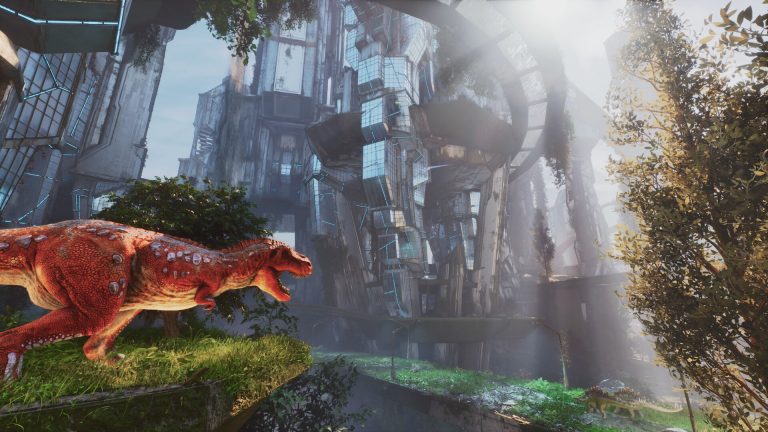

A strong base keeps your tames, loot and progress safe in ARK: Survival Ascended. This guide covers the building tiers, how foundations and snapping work, defending against wild creatures and raiders, and where to build for safety and resources.
Building tiers compared
| Tier | Strength | Use it for |
|---|---|---|
| Thatch | Very weak, flammable | First-night shelter only |
| Wood | Weak — big creatures break it | Brief early step-up |
| Stone | Immune to most wild creatures | Your real first base |
| Metal | Raid-resistant | PvP loot protection |
| Tek | Strongest + tech features | Endgame |
Building tiers
- Thatch — your first-night shelter; weak and flammable.
- Wood — a step up, but still vulnerable to bigger creatures.
- Stone — the early safe standard; immune to most wild creatures, so this is your real first base.
- Metal — raid-resistant; the PvP standard for protecting loot.
- Tek — the endgame tier with the strongest structures and tech features.
Foundations, snapping & stability
Start with level foundations on flat ground, then snap walls, ceilings and pillars to them. Use pillars and ceilings to extend over uneven terrain and water. ARK also enforces structural stability — pieces too far from support will collapse, so support large overhangs with pillars. Plan your footprint before you build up, because expanding later is awkward.
Defending your base
- Gates & gateways — so your big tames can get in and out.
- Plant Species X — a defensive turret-plant that snares and damages attackers.
- Auto-Turrets & Heavy Turrets — the backbone of PvP defence (they need power — see your server settings for limits).
- Layered rooms — keep breeding stock and your best loot in a protected interior, never against an outer wall.
Where to build
Pick a spot near water and resources but defensible — cliffsides, peninsulas and elevated plateaus are popular because they limit approach angles. On PvE servers, avoid blocking key resource nodes, cave entrances or obelisks. Many players keep a small starter base on the beach and build a larger main base inland once they have a flyer.
Frequently asked questions
What building tier is safe from wild dinos in ARK?
Stone. Thatch and wood can be broken by larger creatures, but stone structures are immune to most wild dino damage, which is why stone is your real first base. Upgrade to metal only when you need to resist player raids.
Why do my ARK structures keep collapsing?
Structural stability — pieces too far from a support collapse. Large overhangs, long ceiling spans and unsupported floors need pillars underneath. Plan your foundation footprint first and add pillars to anything that extends out over terrain or water.
Where’s the best place to build a base?
Near water and resources but defensible — cliffsides, peninsulas and plateaus limit approach angles. Start with a small beach base, then move inland to a stronger main base once you have a flyer. On PvE, don’t block resource nodes, caves or obelisks.
ARK: Survival Ascended hosting from $7/month — 30% off with code XGAMEON.
Free ARK Tools
Speed up your server with our free ARK tools:
Ready to play?
Run your own ARK: Survival Ascended server with XGamingServer
Spin up an always-on ARK: Survival Ascended server your friends can join in minutes — no port-forwarding, no tech headaches.