Romestead launched into Steam Early Access on May 25, 2026, and it has been getting steady attention from survival-craft fans looking for something with a little more flavor than the usual chop-wood-build-base loop. If you are weighing whether to buy in now or wait for 1.0, this review breaks down exactly what the game is, what is actually in the current build, how reception is shaping up, and who should jump in today versus who should hold off. Everything below is grounded in the official Steam store page and the official Romestead Wiki, with a few honest “not confirmed yet” notes where the public record is genuinely thin.
What Romestead actually is
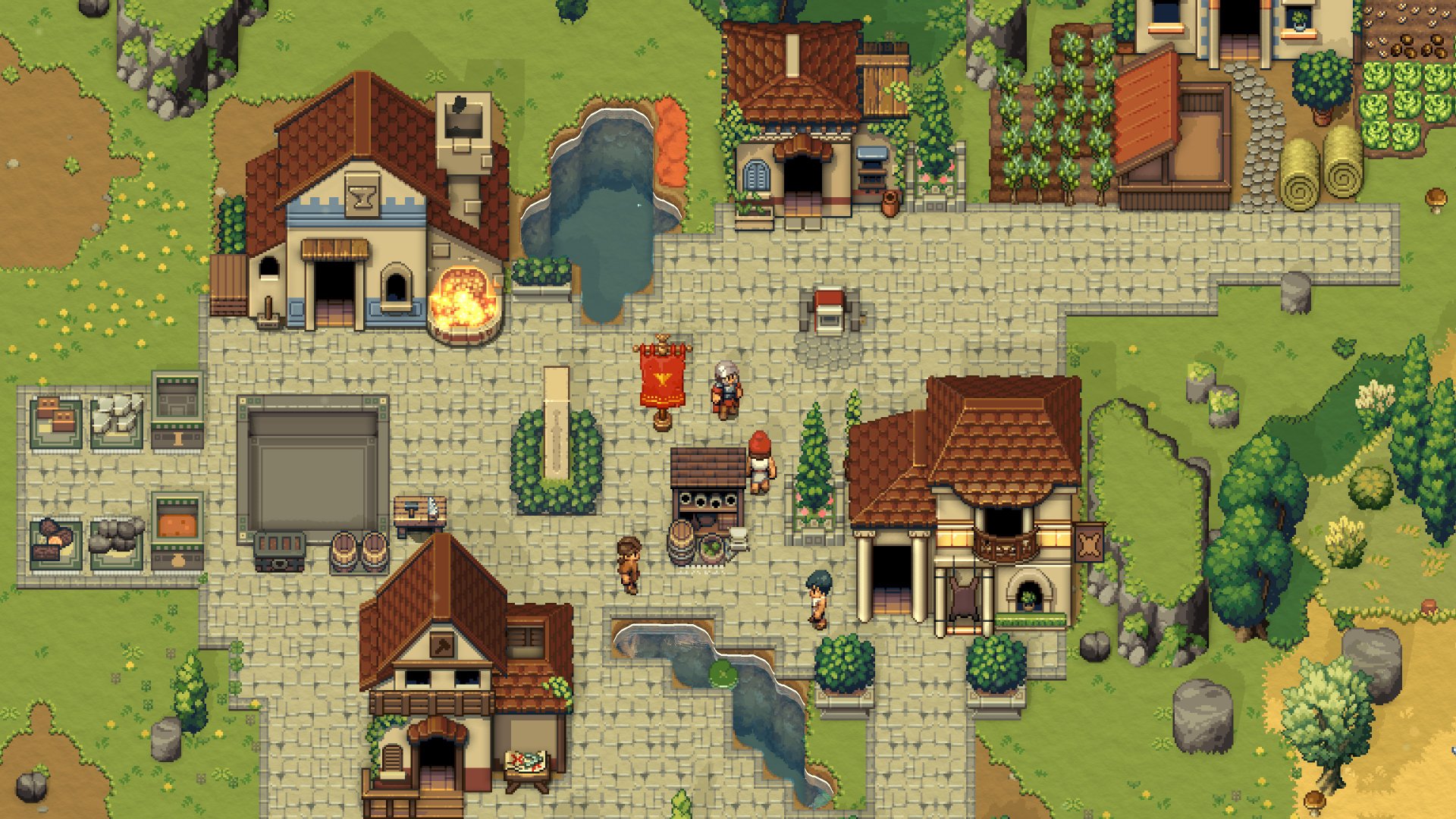
Romestead is a top-down 2D pixel-art open-world game that blends survival, town-building, and light action-RPG progression with co-op. It is developed by Beartwigs (a Swedish studio) and published by Three Friends. The setting is a survival sandbox built on the ruins of a fallen, apocalyptic Roman Empire: you arrive to rebuild civilization, fight the undead when night falls, and earn favor with the Roman gods as you grow.
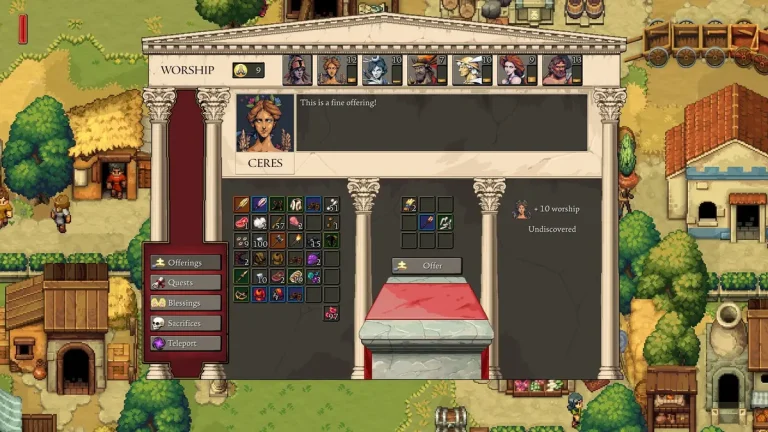
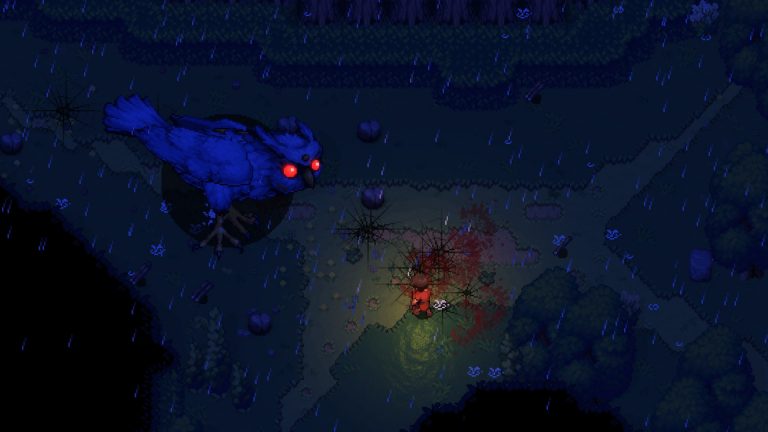
The core loop is a clean day/night split. By day you explore a procedurally generated world, gather resources, farm, and clear handcrafted dungeons and points of interest. By night, the dead rise and you defend your settlement. Layered on top is the signature hook: a Roman mythology progression system where you earn the gods’ favor through offerings and heroic deeds, unlocking gameplay advantages as your town expands. You can play it solo or with up to eight people in online or LAN co-op.
| Detail | What the official sources say |
|---|---|
| Genre | Top-down 2D pixel survival / town-builder / action-RPG with co-op |
| Developer / Publisher | Beartwigs (Sweden) / Three Friends |
| Steam App ID | 1805320 |
| Early Access release | May 25, 2026 (May 26 in some regions due to global unlock timing) |
| Players | 1–8, single-player plus online and LAN co-op |
| Anticipated EA duration | 1–2 years, per the developers |
| Platform | PC / Steam only (Windows client) |
One bit of context worth knowing: launch press reported that publisher Three Friends is associated with industry veterans linked to Valheim and Minecraft. That attribution comes from press coverage rather than the Steam page itself, so treat it as reported pedigree rather than a hard credit — but it does explain the “host a world with friends and survive together” feel that Romestead shares with Valheim.
How the early-access build plays right now
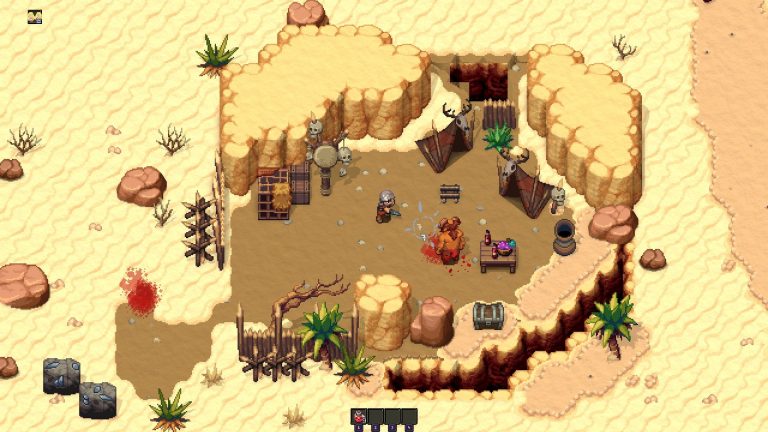
This is a genuinely playable game, not a tech demo. The current build includes exploration, combat, crafting, farming, town-building, and progression across three biomes, plus co-op, a procedurally generated world, and handcrafted dungeons and POIs. The mythology favor system is in and functioning as the spine of long-term progression.
The honest caveat is content breadth. Three biomes is the launch baseline, and the developer’s own roadmap lists more biomes, bosses, additional progression tiers, more POIs, decorations, balancing, performance work, expanded accessibility, and full controller support as still planned for 1.0. So you are buying into a solid foundation with a clear, dev-stated runway of one to two more years of additions — not a finished, content-complete game.
Co-op and how hosting works
Co-op is the headline reason most people buy Romestead, and it supports up to eight players in both online and LAN modes. There are two distinct ways to play together:
- Listen server (host from the game): one player chooses to host a world, and friends join via Steam invite or by IP. It needs zero setup, but the world only exists while the host is online.
- Dedicated server: standalone server software runs a persistent world that stays up with no host player present. Players join by IP (and a password if one is set). This is the right choice for a group that wants their town to keep ticking when no single person is online.
Romestead is PC/Steam only at this stage, so there are no console versions and cross-platform play is not a factor. If you want the always-on experience without keeping your own PC running, a managed Romestead server handles the persistent world for you. For a deeper look at the join methods and trade-offs, see our Romestead multiplayer and co-op guide.
Running your own dedicated server
Romestead ships an official dedicated server, distributed through SteamCMD under its own App ID, 4763510 — note that this is separate from the game’s App ID of 1805320. The server is cross-platform: there is a native Windows binary (Server.exe) and a Linux binary (Server.dll) you run via dotnet, so no Wine is required on Linux. It needs the .NET 8 Runtime, and on Linux also the curl and expect packages. The default port is UDP 8050, which you will need to allow through your firewall and forward on your router.
The download command documented on the official wiki is:
steamcmd +login anonymous +app_update 4763510 validate +quitOn Linux you then launch it with:
dotnet Server.dllConfiguration lives in a config.json file. The official wiki documents these options: AutoStartWorldName (world to load on startup), AutoCreateAndLoadWorld (auto-create without menu navigation), AutoCreateWorldSize (0 = Small, 1 = Standard, 2 = Large), Password (server access password), Port (default 8050), MaxPlayers (concurrent player limit), and EnableCheats, which the wiki notes is reserved for future use. A full step-by-step walkthrough is in our install a Romestead server on Linux guide, and the panel-specific setup is documented in the Romestead hosting docs.
Console commands and cheats: what’s real and what isn’t
This is an area where misinformation circulates, so it is worth being precise. There are server-side console commands, confirmed on the official wiki, that run in the server’s own console (a panel Console tab or attached terminal): stop / quickstop, save / quicksave, list, say , and player management via kick , ban , and unban . The EnableCheats server option mentioned above is listed as reserved for future use, so a full server-side spawn/cheat command table does not yet exist.
On the player side, there is no officially documented in-game developer console. The official wiki does not describe how to open one or list any single-player cheat, spawn, or time commands, and claims floating around third-party sites (an EnableDeveloperConsole toggle in a profile file, a backslash key, commands like .ui or .imgui) could not be verified against the official wiki or developer — treat those as unconfirmed. If you want that kind of control today, the realistic route is community mods, and you should check the in-game settings or the official Romestead Discord for any newer toggle. We keep a verified-only breakdown in our Romestead console commands guide.
Mods
Modding in Romestead is community-driven, not official. There is no Steam Workshop support; a developer reply in pre-launch discussions described Workshop as possible but not yet looked at (that exact quote is age-gated and worth re-reading before anyone repeats it). What does exist is an active Nexus Mods community, including a BepInEx-style ModLoader and various mods such as cheat menus and resource tweaks. These mods are client-side, intended for single-player or listen-server play, and there is no server-side Workshop modding for Romestead. If you want to experiment, our Romestead mods guide covers the community tooling.
Review reception
Reception has been warm. As of mid-2026, Steam shows Very Positive on recent and English-language reviews — roughly 91% positive across about 820 or more English reviews — and Mostly Positive across all languages, with around 3,275 total reviews. Review counts and percentages move daily, so check the live store page for the current numbers, but the trend is clearly favorable for an early-access title. Independent early-access coverage exists too, which is useful if you want a critique-focused take beyond user reviews.
System requirements
The game client is Windows-only, and the requirements are modest. Steam does not specify a GPU model in either tier — only DirectX 11 — so any DirectX 11–capable card should be fine.
| Tier | Spec |
|---|---|
| Minimum | Windows 10 (64-bit), Intel Core i5, 8 GB RAM, DirectX 11, 2 GB storage |
| Recommended | Windows 10 (64-bit), Intel Core i7, 16 GB RAM, DirectX 11, broadband connection, 4 GB storage |
Full details and notes are in our Romestead system requirements guide.
So, is Romestead worth playing?
If you enjoy top-down survival-craft mixed with colony and town-building and a touch of action-RPG, and you like the Valheim-style “host a world with friends” loop, Romestead is an easy recommendation right now. The day-explore / night-defend rhythm is satisfying, the Roman-god favor system gives progression a distinct identity, and Very Positive recent reviews suggest the current build holds up.
Hold off if you need a content-complete game with a deep boss roster, many biomes, or full controller support today — all of those are on the roadmap rather than in the build, and the developers expect one to two more years in Early Access. For everyone in between, the low entry cost and the strong co-op foundation make it a reasonable buy-in, especially if you have a group ready to defend a Roman town together.
Frequently asked questions
Is Romestead a finished game?
No. It launched into Steam Early Access on May 25, 2026, and the developers anticipate one to two years in EA. The current build is fully playable across three biomes, with more biomes, bosses, progression tiers, and full controller support still planned for 1.0.
How many players can play Romestead together?
Up to eight players, in single-player, online co-op, or LAN co-op. You can host a listen server from inside the game or run a persistent dedicated server.
Does Romestead have a dedicated server?
Yes. There is an official dedicated server distributed via SteamCMD under App ID 4763510. It runs on Windows and Linux (via .NET 8), uses default UDP port 8050, and is configured through a config.json file.
Does Romestead support mods or Steam Workshop?
There is no Steam Workshop support. Modding is community-driven through Nexus Mods and a BepInEx-style loader, and those mods are client-side for single-player or listen-server play. Check the official Discord for any future Workshop news.
Does Romestead have an in-game cheat console?
There is no officially documented player-facing developer console in Early Access. Server admins manage worlds with confirmed server-console commands, while the server’s EnableCheats option is reserved for future use. Players wanting cheats currently rely on community mods — verify anything else against the in-game settings or official Discord.
Ready to play?
Run your own Romestead Dedicated server with XGamingServer
Spin up an always-on Romestead Dedicated server your friends can join in minutes — no port-forwarding, no tech headaches.