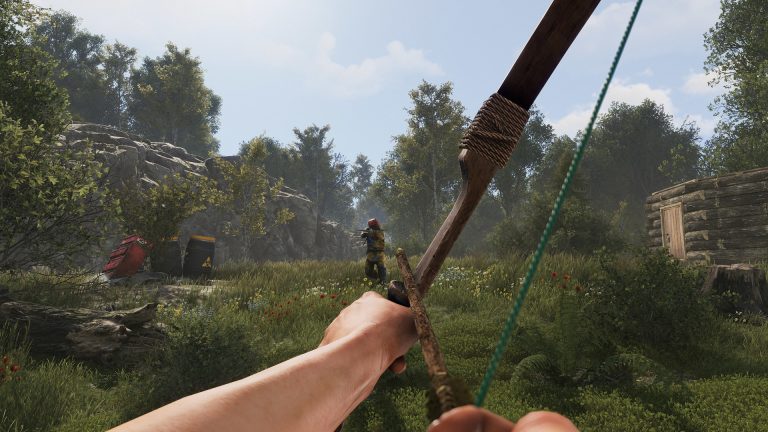

If you’re modding a Rust server, you’ll choose between two frameworks: Oxide (uMod) and Carbon. Both load plugins and both give you the permissions, commands and admin tooling that make a modded server, but they differ in performance, post-wipe update speed and plugin compatibility. This guide compares them head-to-head so you can pick the right one — and shows why a lot of admins now run both.
Carbon vs Oxide at a glance
| Oxide / uMod | Carbon | |
|---|---|---|
| Released | ~2013 — the original | Newer, performance-focused successor |
| Plugin library | 1,400+ plugins on uMod | Runs ~99% of Oxide plugins via a compat layer |
| Performance | Heavier; more legacy overhead | Higher FPS, lower RAM; boots ~30–40% faster |
| Hooks | Loads all hooks | Loads only hooks plugins actually use |
| Post-wipe updates | Can lag after a force wipe | Usually updates very fast on patch day |
| Development | Mature, in maintenance mode | Actively developed |
| Best for | Proven stability, max plugin coverage | Performance + being online first post-wipe |
Oxide / uMod
Oxide is the long-established framework with the largest plugin library — over 1,400 plugins on uMod — and the most community support. If a Rust plugin exists, it almost certainly targets Oxide first. It’s mature and extensively tested, but it now sits in maintenance mode with limited active development. The trade-offs: it carries more legacy overhead (higher RAM, lower server FPS under load) and it can take longer to update after a Rust force wipe, leaving modded servers down until plugins catch up.
Carbon
Carbon is the newer framework built for performance and fast updates. Its hooks load dynamically — only the hooks your plugins actually call get loaded — which eliminates redundant calls, so servers typically run at higher FPS and lower RAM, and boot 30–40% faster than an equivalent Oxide setup. It ships a backward-compatibility layer that runs roughly 99% of Oxide plugins out of the box, so you usually keep your existing collection. The headline win is update speed: Carbon is often patched within hours of a Rust update, which matters enormously on force-wipe day when the first servers online grab the players.
Which should you run?
- Maximum plugin compatibility and a proven track record → Oxide. A handful of plugins are still written Oxide-first, and a vanilla-ish or lightly modded server has no reason to switch.
- Best performance and fastest post-wipe updates → Carbon. Heavily modded, high-pop or performance-sensitive servers benefit most.
- Running both: many admins default to Carbon for the FPS and update speed while keeping their Oxide plugin list, since most run unchanged. If a specific plugin misbehaves on Carbon, that’s usually the reason to fall back to Oxide.
On XGamingServer you can switch between Oxide and Carbon from the panel in a click, so you can try both and keep whichever your server runs better on. For plugin picks, see our best plugins by server type.
Frequently asked questions
Is Carbon better than Oxide for Rust?
For raw performance and post-wipe update speed, yes — Carbon runs at higher FPS, uses less RAM and patches faster after Rust updates. Oxide still wins on sheer plugin coverage and a longer proven track record. For most modded servers Carbon is the better default; for a lightly modded or stability-first server, Oxide is perfectly fine.
Do Oxide plugins work on Carbon?
Roughly 99% of them, thanks to Carbon’s backward-compatibility layer — most Oxide plugins run unmodified. A small number that hook deep or unusual game code may need a Carbon-specific version, so test your critical plugins after switching.
Can I switch between Carbon and Oxide?
Yes. They’re mutually exclusive (you run one at a time), but on XGamingServer you can swap between them from the control panel in a click and keep the same plugin folder. That makes it easy to A/B test which performs better for your population and plugin set.
Which updates faster after a Rust force wipe?
Carbon, almost always. It’s typically patched within hours of a Rust update, while Oxide can take longer. On force-wipe Thursday that update gap decides who’s online first to capture players, which is why competitive modded servers lean Carbon.
Rust server hosting from $7/month on Ryzen 9 hardware — switch Oxide/Carbon in a click. 30% off with code XGAMEON.
Free Rust Tools
Speed up your server with our free Rust tools:
Ready to play?
Run your own Rust server with XGamingServer
Spin up an always-on Rust server your friends can join in minutes — no port-forwarding, no tech headaches.