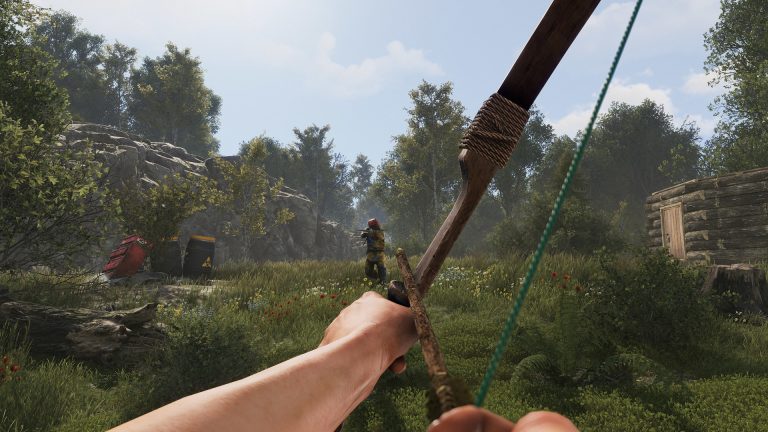

Farming keeps you fed, supplied with cloth, and stocked on the tea buffs that give real combat and gathering edges in Rust. This guide covers planter boxes, water and sprinklers, what to grow, indoor grows, and the genetics system that separates a few stems of hemp from an industrial cloth farm.
Planter boxes, water & the standard setup
Grow crops in large planter boxes — they hold the most plants and are the standard. Plants need water: pipe it from a water source, pump or rain catcher, and use a sprinkler on a timer above each planter to keep soil saturation high without hand-watering. Add fertilizer (from a composter fed scrap food, or animal dung) to speed growth, and ceiling lights for indoor grows.
The classic layout is a 2×2 grow room: four large planters, one lamp and one sprinkler on a timer above each. A single water barrel can feed up to four sprinklers, and upgrading to a pump and purifier makes the whole farm hands-off.
What to grow
| Crop | Why grow it |
|---|---|
| Hemp | Cloth for sleeping bags, gear, bandages — the most-grown crop on every server. |
| Berries | The base ingredient for teas (farming, healing, scrap, ore and wood buffs). |
| Pumpkins & Corn | Portable food and water; good calories per harvest. |
| Potatoes | Reliable, long-lasting food that doesn’t spoil fast. |
Plant genetics explained
Every seed carries six gene slots, each filled by one of these gene types. The goal is to breed a strain stacked with the good genes.
| Gene | Effect | Want it? |
|---|---|---|
| G — Growth Rate | Plant matures faster | ✅ Yes |
| Y — Yield | More resources per harvest | ✅ Yes |
| H — Hardiness | Survives poor light/water | Situational |
| W — Water Intake | Higher water demand | ❌ Avoid |
| X — Empty/null | Does nothing (filler) | ❌ Avoid |
To build a strain: plant clones, read each plant’s genes, keep the ones closest to GGGYYY, and crossbreed by planting strong genes next to weaker ones so empty slots get overwritten. Over a few generations you converge on a near-perfect strain that massively out-yields wild seeds per planter.
Growth stages & harvest timing
Plants move through fixed stages. Clone from the Crossbreed/Mature stages; harvest at Ripe for full yield (and don’t let it tip into Dying).
| Stage | What to do |
|---|---|
| Seedling → Sapling | Keep watered and lit; growing |
| Crossbreed | Take clones; genes are readable |
| Mature → Fruiting | Take more clones; nearly ready |
| Ripe | Harvest now — full yield (hemp turns bright yellow) |
| Dying | Too late — yield drops, then it dies |
Indoor grows
Indoor farms are far safer from raiders than outdoor planters but need ceiling lights for artificial sunlight — which means power (see the electricity & wiring guide). A sealed grow room with lights, sprinklers on a timer and a composter is the standard secure setup, and it keeps your cloth supply hidden from roof campers.
Frequently asked questions
What are the best plant genes in Rust?
GGGYYY — three Growth and three Yield genes — gives the fastest-growing, highest-output plants. GGYYYY is a popular variant that yields slightly less but is easier to keep cloning.
How long does hemp take to grow?
About 40–60 minutes from planting to ripe with good Growth genes, fertilizer and a sprinkler keeping water saturation high. Poor genes or dry soil can more than double that.
How many sprinklers can one water barrel run?
Up to four sprinklers per barrel, which is why the 2×2 four-planter grow room is the standard module. Add a pump and water purifier to automate refills.
Rust server hosting from $7/month on Ryzen 9 hardware — 30% off with code XGAMEON.
Free Rust Tools
Speed up your server with our free Rust tools:
Ready to play?
Run your own Rust server with XGamingServer
Spin up an always-on Rust server your friends can join in minutes — no port-forwarding, no tech headaches.