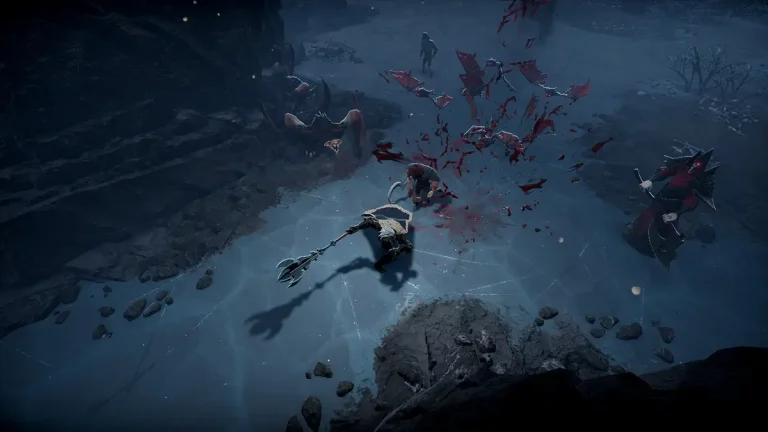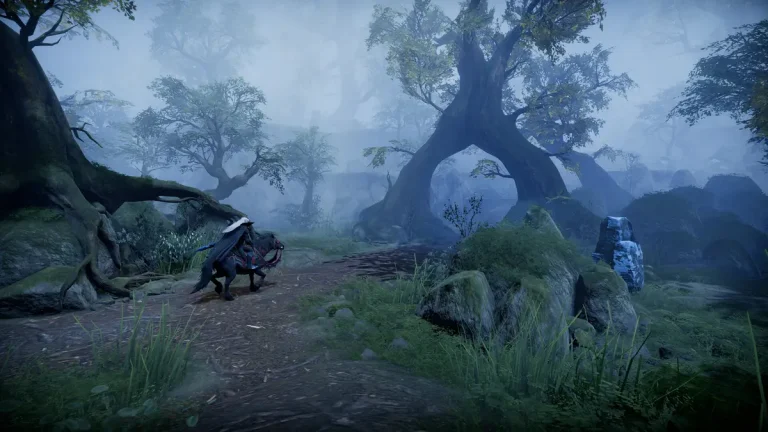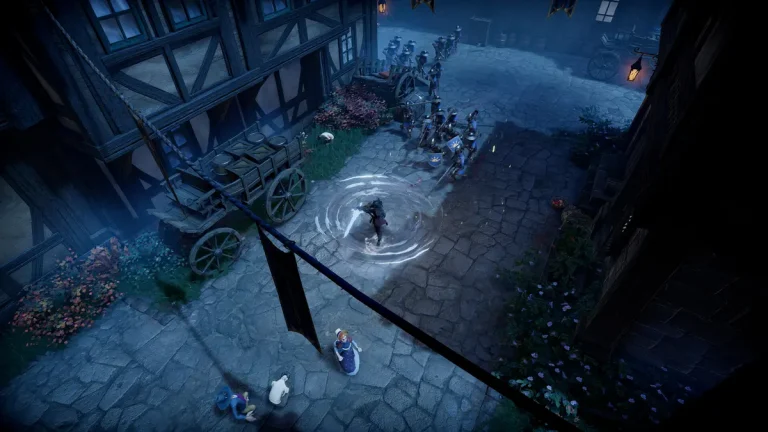
Running your own V Rising dedicated server is the difference between a co-op session that vanishes when the host logs off and a persistent vampire kingdom that keeps growing while you sleep. As of mid-2026 the game sits on version 1.1 “Invaders of Oakveil” (released April 28, 2025), a large free update that added the Oakveil woodlands region, the boss Megara the Serpent Queen, three new weapons, seven new spells, and a reworked blood system. This guide walks through standing up a self-hosted server from scratch using SteamCMD, explains both config files, covers RCON, and shows you how to wipe safely without nuking progress by accident.
If you would rather skip the manual setup entirely, you can spin up a managed V Rising server in a couple of clicks and let the panel handle ports, updates, and config files for you. But if you want full control on your own hardware, read on.
What You Need Before You Start
The single most important thing to understand up front is the platform situation. Stunlock Studios’ official dedicated-server instructions state plainly that “at the moment there is only a Windows version of the server available.” There is no officially supported native Linux build. Linux hosting exists only through community Wine/Proton wrappers (the kind your host provider or a GloriousEggroll-style runtime supplies), and that is not a target Stunlock supports or tests. If you are planning a home setup, plan on a Windows machine.
- A Windows machine or VPS that stays online (the server software is Windows-only).
- SteamCMD, Valve’s command-line Steam client, for installing and updating the server.
- The ability to open/forward UDP ports 9876 and 9877 on your router or firewall.
- A few GB of free disk space for the server files plus your save data.
You do not need to own V Rising on the account installing the server. The dedicated server tool installs anonymously — no Steam login, no ownership check.
Step 1: Install the Server with SteamCMD
V Rising actually has two relevant Steam app IDs, and mixing them up is the most common early mistake:
| Item | App ID | Notes |
|---|---|---|
| V Rising game (client) | 1604030 | The game players buy and launch. |
| V Rising Dedicated Server tool | 1829350 | The server software you install via SteamCMD. |
You install the server tool (1829350), not the game. Once SteamCMD is installed and running, enter the following commands. The validate flag verifies file integrity and is worth keeping for every install and update:
login anonymous
app_update 1829350 validate
quit
After the download finishes, the install folder contains an executable named VRisingServer.exe and a batch file named start_server_example.bat. That example batch file is your launch template.
Step 2: Create Your Launch Script and First Run
Stunlock’s recommended workflow is to copy start_server_example.bat to start_server.bat and edit your own copy. This keeps your customizations safe — the example file may be overwritten on updates, but your renamed copy will not. At a minimum, set a serverName inside it so your server is identifiable.
Now run the server once by launching start_server.bat. This first boot is important: the server generates its config files on startup. If you try to customize settings before this first run, there are no active config files to edit yet. Let it start, confirm it comes up cleanly, then shut it down before you begin editing settings.
The launch script also controls the -persistentDataPath parameter, which tells the server where to read configs and write saves. On a default Windows install this points at %USERPROFILE%\AppData\LocalLow\Stunlock Studios\VRisingServer\, but you can override it — most host panels point it at a tidy save-data/ folder. Remember wherever this path points, because that is where the files the server actually reads live.
Step 3: Understand the Two Config Files
V Rising splits configuration into two JSON files:
ServerHostSettings.json— network and identity: server name, ports, password, max players, save name, RCON.ServerGameSettings.json— gameplay rules: PvP/PvE mode, clan size, castle damage windows, resource and craft multipliers.
There are two physical locations for these files, and editing the wrong one is a classic trap:
- Template copies live in
VRisingServer_Data/StreamingAssets/Settings/inside the install folder. Do not edit these. They get overwritten on every game/server update, and the running server does not read them. - Active copies live in the persistent-data path’s
Settings/folder — by default%USERPROFILE%\AppData\LocalLow\Stunlock Studios\VRisingServer\Settings\(host panels expose this assave-data/Settings/). These are the files the server actually reads. Edit these.
Settings are loaded at boot, not hot-reloaded, so you must restart the server for any change to apply. For a deeper walkthrough of individual fields and multipliers, see our companion guide on how to configure your V Rising server.
Key fields in ServerHostSettings.json
| Field | Default | What it does |
|---|---|---|
Name | “V Rising Server” | Public server name in the browser. |
Port | 9876 | Game traffic. |
QueryPort | 9877 | Steam server-list query. |
MaxConnectedUsers | 40 | Player slot cap. |
MaxConnectedAdmins | 4 | Reserved admin slots. |
ServerFps | 30 | Server tick rate. |
SaveName | “world1” | Names the save folder. |
Password | “” (none) | Optional join password. |
AutoSaveCount | 50 | How many auto-saves to keep. |
AutoSaveInterval | 600 | Seconds between auto-saves. |
There are also visibility toggles — ListOnMasterServer, ListOnSteam, and ListOnEOS — set to true to list publicly, and a Secure flag (default true). ServerHostSettings.json also exposes a GameSettingsPreset field. Setting it to a named difficulty preset (the official Standard PvP, Standard PvE, Duo, and Hard-style templates) makes the server load that preset’s rules instead of your custom game settings. Presets exist and are selectable; check the live config file for the exact preset string names before relying on a specific one.
Key fields in ServerGameSettings.json
GameModeType—"PvP"(player combat enabled) or"PvE"(player-vs-player combat disabled). A Duo PvP mode also exists.ClanSize— defaults to 4, configurable up to roughly 50 on private servers (Duo mode locks clans to 2).CastleDamageMode—"Always","Never", or"TimeRestricted"for scheduled raid windows.- Multipliers such as
CraftRateModifier,BloodDrainModifier,MaterialYieldModifier_Global, andInventoryStacksModifier. Any key you omit falls back to the built-in default.
Step 4: Open the Right Ports
For players to find and connect to your server, forward these on your router and allow them through the firewall:
- 9876 — game traffic.
- 9877 — Steam query (server-list visibility).
A quick warning: some generic guides quote 27015/27016, the Steam default query ports. Those are not V Rising’s defaults. V Rising uses 9876 and 9877 as confirmed in ServerHostSettings.json — use those unless you deliberately change them in the config.
Step 5: Enable RCON for Remote Administration
RCON lets you issue admin commands remotely without being logged into the game. You enable it inside ServerHostSettings.json using the Rcon object:
"Rcon": {
  "Enabled": true,
  "Password": "yourStrongPassword",
  "Port": 25575
}Enabledmust betrue.Passwordis required — RCON refuses connections without one, so never leave it blank.Portdefaults to 25575 (TCP), the standard Source-style RCON port. Open or forward this port too.
Connect with any standard RCON client — mcrcon, rcon-cli, or a web RCON panel — using your server IP, the RCON port, and the password. For a step-by-step setup including client examples, follow our dedicated guide on enabling RCON on your V Rising server.
Step 6: How to Wipe the Server Safely
A wipe in V Rising means deleting or replacing the save folder. ⚠️ This permanently removes all world progress and cannot be undone without a backup. A wipe destroys every castle and castle heart, every player vampire character and all progression (gear, V Blood unlocks, research), and the entire world state for that save. Treat it with respect.
Saves live under the persistent-data path in a versioned folder. For 1.1.x the current persistence version is v4 (older guides referencing v3 are outdated):
%USERPROFILE%\AppData\LocalLow\Stunlock Studios\VRisingServer\Saves\v4\\ On a host panel this is exposed as save-data/Saves/v4/. Before you do anything destructive, copy the entire Saves\v4\ folder somewhere safe. Auto-saves accumulate inside that folder according to AutoSaveCount and AutoSaveInterval — but because they live inside the save folder, they are deleted right along with it when you wipe. An external copy is your only real safety net.
There are two ways to wipe:
- Delete the
Saves\v4\and restart the server — it generates a fresh world. - Change
SaveNameinServerHostSettings.jsonto a new value — the server creates a brand-new world while leaving the old save untouched on disk. This is the safer, reversible option.
For a more detailed run-through including scheduled wipe strategies, see our guide on how to wipe your V Rising server.
Step 7: Keeping the Server Updated
When Stunlock pushes a patch, your clients will be on a newer version than your server until you update. Stop the server, re-run the SteamCMD install command (app_update 1829350 validate), and restart. Because you edited the active config copies in the persistent-data path rather than the StreamingAssets templates, your settings survive the update untouched — which is exactly why the template-versus-active distinction matters so much.
For full official setup references and panel-specific walkthroughs, our V Rising documentation covers everything in a managed context.
Tuning Your World for Players
Once the server is live, the real fun is shaping the experience. A few things worth knowing as an admin so you can answer player questions and tune settings sensibly:
Castle placement drives a lot of early conflict on PvP servers. Defensible plateaus with a single approach near resource-rich zones — the western edge of Farbane Woods early, central Dunley Farmlands mid-game, and the entrance to Silverlight Hills late — are perennial favorites. Our guide to the best base locations in V Rising breaks down each biome.
Progression revolves around the blood system — nine core blood types (Frail, Creature, Worker, Warrior, Scholar, Brute, Rogue, Mutant, Draculin), each with quality-scaled passives across tiers (Tier 1 at 1–29% up to Tier 5 at 100%). Version 1.1 also introduced “Corrupted Blood” as part of a rework. Our breakdown of V Rising blood types explains why drained quality matters so much. Spells, meanwhile, span six schools (Blood, Chaos, Frost, Illusion, Unholy, Storm) and unlock from V Blood bosses — worth understanding if you plan to balance multipliers for your community.
Frequently Asked Questions
Can I run a V Rising dedicated server on Linux?
Not officially. Stunlock only ships a Windows server build. Linux hosting is possible only through community Wine/Proton wrappers, which Stunlock does not support or test. For a reliable setup, use Windows or a managed host that handles the compatibility layer for you.
Which Steam app ID do I install — 1604030 or 1829350?
Install 1829350, the dedicated server tool. App ID 1604030 is the playable game client. The server installs anonymously in SteamCMD with no Steam login or ownership required.
What ports does V Rising use?
By default 9876 for game traffic and 9877 for the Steam query/server-list port, both UDP. RCON, if enabled, uses TCP 25575. Ignore guides that cite 27015/27016 — those are not V Rising’s defaults.
Why aren’t my config changes taking effect?
Two likely causes. First, you may be editing the template copies in StreamingAssets/Settings/ instead of the active copies in the persistent-data Settings/ folder — only the active copies are read by the running server. Second, settings load at boot and are not hot-reloaded, so you must restart the server for changes to apply.
Where are my saves stored, and how do I back them up?
Under the persistent-data path in Saves\v4\ (the current version folder for 1.1.x is v4). To back up, copy that entire folder elsewhere. Always do this before a wipe, because auto-saves live inside the save folder and are deleted with it.
Do I need to run the server before editing config files?
Yes. Run start_server.bat once on first install to generate the config files, then shut down and edit the active copies. Trying to configure before the first run leaves you with no active files to edit.
Wrapping Up
That is the complete path from a fresh Windows box to a persistent V Rising world: install the server tool (app ID 1829350) anonymously via SteamCMD, copy start_server_example.bat to start_server.bat, run once to generate configs, edit the active ServerHostSettings.json and ServerGameSettings.json in the persistent-data path, open ports 9876/9877, optionally enable RCON on 25575, and always back up Saves\v4\ before wiping. Get those fundamentals right and your server will run cleanly through every Oakveil-era patch.
Ready to play?
Run your own V Rising server with XGamingServer
Spin up an always-on V Rising server your friends can join in minutes — no port-forwarding, no tech headaches.