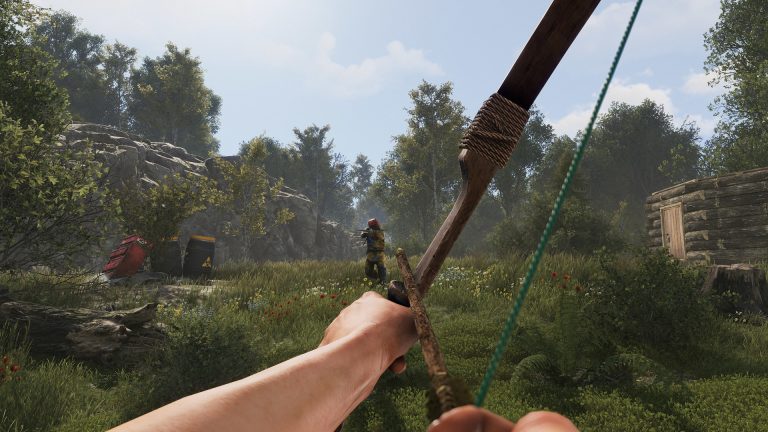
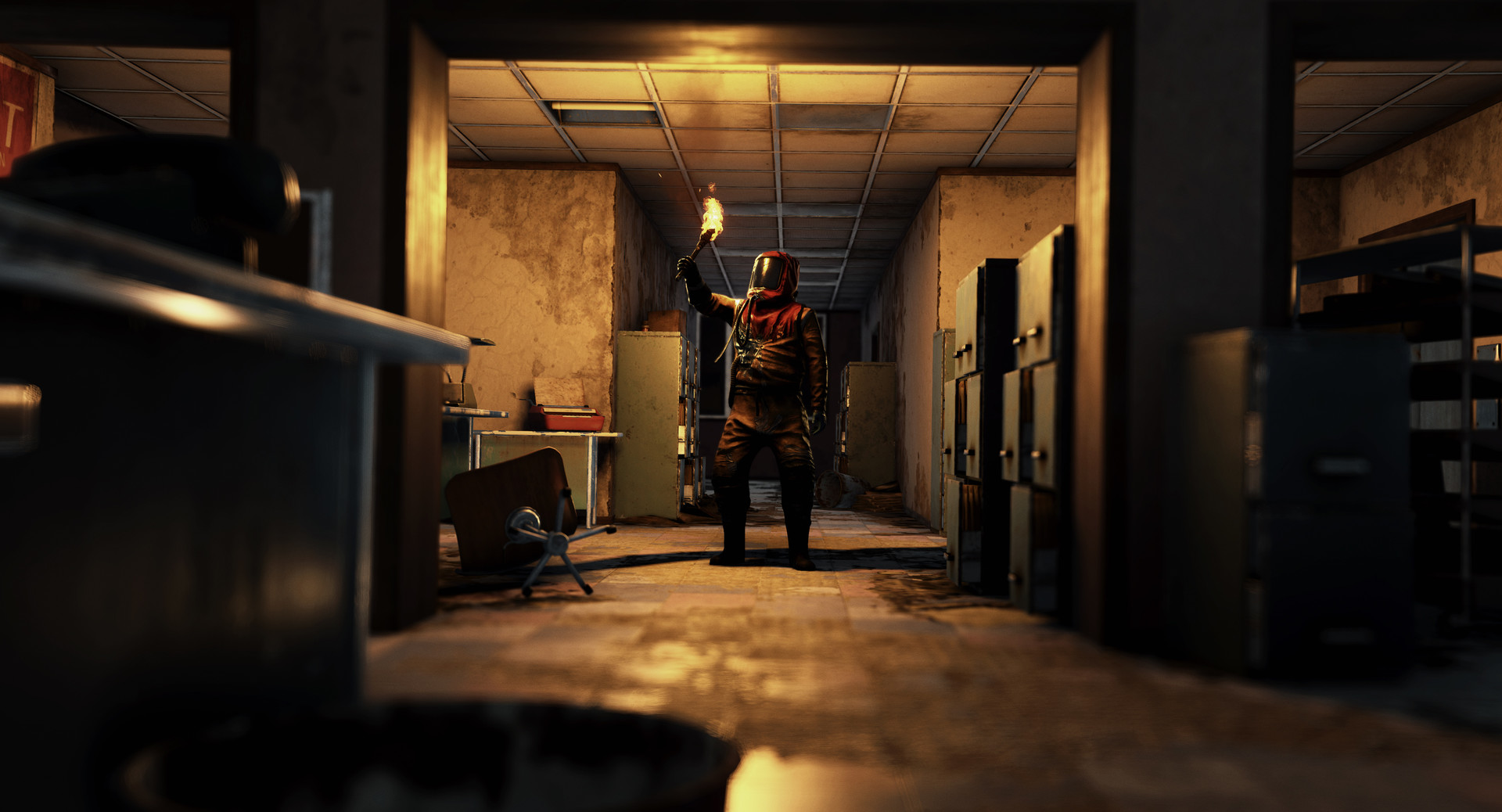
Stone, metal, sulfur and high quality metal are the backbone of every Rust wipe. You need them for tools, gunpowder, bullets, base upgrades and raiding. There are two ways to get them: swing a tool at ore nodes by hand, or let a machine do it for you. This guide covers both, including the node hotspot bonus, the best gathering tools, and how the quarry and pump jack systems work after recent changes. Rust patches monthly, so treat the exact numbers below as version-dependent and confirm against the current wiki before you plan a wipe around them.
Ore nodes: the three types
Ore nodes are the rocks scattered across the map that you mine by hand. There are three varieties, and each yields a specific resource set per the Facepunch wiki:
- Stone nodes give Stones.
- Metal nodes give Metal Ore plus a small amount of High Quality Metal Ore.
- Sulfur nodes give Sulfur Ore.
Metal nodes are the most valuable hand-mining target early because they hand you both metal and a trickle of HQM, which is otherwise scarce. Smelt ore in a furnace to turn it into usable Stones, Metal Fragments, Sulfur and High Quality Metal.
Hotspots vs the sweet spot
Two different mechanics get confused constantly, so it is worth separating them clearly.
The hotspot is a glowing point that appears on a node while you mine it. According to the wiki, hitting a hotspot yields 150% of resources per hit, and consecutive hotspot hits stack the bonus up to 300%. Missing a hotspot resets the multiplier back down. Crucially, the node’s total resource pool does not increase — the bonus changes how fast you extract what is already there, so chaining hotspots gets you the same loot in fewer, bigger hits. Hotspots need illumination to be visible and can take a moment to render depending on your graphics settings, which is why night mining without a light is a guessing game.
The older “sweet spot” idea — an orange glow you hit to mine faster — primarily saves tool durability and time rather than handing out extra loot. Either way, the practical advice is the same: aim for the bright marker, keep your hits landing on it, and never break your chain.
The best mining tools
Your tool choice changes how fast you clear a node and, to a small degree, how much you pull from it. From slowest to fastest for ore, the ranking is Stone Pickaxe, Pickaxe, Salvaged Icepick, then Jackhammer. The Salvaged Icepick is the standout craftable option: the Fandom wiki cites it clearing a node in roughly 14 seconds versus about 27 seconds for the regular Pickaxe, while the Pickaxe pulls very slightly more per node. Over a full mining run, speed wins, so the Icepick is the go-to.
The Jackhammer is the fastest ore tool in the game. It cannot be crafted — you find it in loot or buy it from the Outpost — requires no fuel to swing, and ignores the hotspot mechanic entirely because it shreds a node in seconds. If you can get one, it is the single biggest upgrade to your gathering speed.
Quarries and pump jacks: passive resource machines
Machines do the mining for you while you do other things. Historically you could survey the ground with a Survey Charge and deploy your own quarry or pump jack on a good deposit. That has changed: pump jacks stopped being player-deployable long ago, and as of Devblog 189 the Mining Quarry is no longer craftable either. Both now exist as static monuments that spawn around the map and are typically shared by everyone on the server.
The Survey Charge still exists in game files (crafted from Gun Powder and Metal Fragments) and works by detonating to reveal what is in the ground at that spot — a crater with ore means a mining location, while fuel and a crater means an oil spot. With craftable quarries gone, its role on most modern servers is limited, though some modded servers re-enable player-placed quarries.
Fuel: diesel, not low grade
This is the change that trips up returning players the most. Quarries and pump jacks used to run on Low Grade Fuel. After the Big Quality of Life update they were brought in line with the Giant Excavator and now run on Diesel Fuel instead. You load diesel into the machine’s fuel barrels and flip the engine switch to start extraction.
Diesel is bought from the Outpost for 300 Low Grade Fuel each, or looted from monuments like oil rigs, junkyard, water treatment, power plant, military tunnels, airfield and dome. One diesel powers a machine for about two minutes. Per the Corrosion Hour reference guide, each quarry type produces the following per diesel unit (roughly 2 minutes 10 seconds per cycle):
| Machine | Output per diesel fuel | Approx. time per fuel |
|---|---|---|
| Stone Quarry | ~5,000 Stones + ~1,000 Metal Ore | ~2 min 10 s |
| Sulfur Quarry | ~1,000 Sulfur Ore | ~2 min 10 s |
| HQM Quarry | ~50 High Quality Metal Ore | ~2 min 10 s |
| Pump Jack | ~60 Crude Oil + ~170 Low Grade Fuel | ~2 min 10 s |
Notice how the HQM quarry trades a lot of fuel for a tiny output — that reflects HQM’s rarity and is exactly why high quality metal stays a bottleneck for tier-3 base building and good gear. The pump jack is the only way to passively produce Crude Oil, which you refine into Low Grade Fuel for vehicles, furnaces, flamethrowers and more.
A practical mining loop
- Early wipe, hand-mine metal nodes with a Salvaged Icepick and chain hotspots for the HQM trickle.
- Bank Low Grade Fuel so you can buy diesel at the Outpost.
- Run the static Sulfur and HQM quarries when you need raiding materials or tier-3 components — guard them, since they are public.
- Use the pump jack monument for Crude Oil when you are scaling vehicles or production.
- Grab a Jackhammer from loot or the Outpost as soon as you can afford to fast-track all hand mining.
From here, feed those resources straight into your build with the Rust Base Building Guide: Tiers, Stability and Tool Cupboard, then turn that sulfur stockpile into action with the Rust Raiding Guide: Tactics, Tools and Raid Costs.
FAQ
Does hitting the hotspot give me more total resources from a node?
No. Hotspot hits give up to 300% resources per hit and let you clear a node in fewer swings, but the node’s overall yield does not increase. The benefit is speed and tool durability, not extra loot. You get the same total — just faster.
Can I still build my own quarry or pump jack?
On vanilla servers, no. Pump jacks were removed as a deployable long ago, and the Mining Quarry stopped being craftable as of Devblog 189 — both are now static monuments anyone on the server can use. Some modded servers re-enable player-placed quarries, so check your server’s rules.
What fuel do quarries use now?
Diesel Fuel, not Low Grade Fuel. One diesel runs a machine for about two minutes. Buy diesel at the Outpost for 300 Low Grade Fuel each, or loot it from oil rigs and industrial monuments.
Mining is a lot more fun when you have a crew splitting nodes and guarding the quarry — spin up a Rust server for you and your friends and run your own wipe. For panel walkthroughs and server tweaks, see the Rust server documentation.
Free Rust Tools
Speed up your server with our free Rust tools:
Ready to play?
Run your own Rust server with XGamingServer
Spin up an always-on Rust server your friends can join in minutes — no port-forwarding, no tech headaches.